SPONSORED BY:


Good morning.
Hope this email finds you well…

Here’s today’s stack:
🤖 Amazon blocks Meta’s AI shopping assistant
Amazon has blocked Meta’s new Muse AI agent from shopping on its site, citing security, privacy, and transparency concerns.
Muse can access connected accounts, fill out forms, and complete purchases after receiving user approval. Amazon says Meta did not request permission before giving Muse access and that the agent does not identify itself while browsing.
The dispute raises a much larger question about who controls the shopping journey when an AI agent acts on the customer’s behalf. Amazon generates billions from shoppers browsing product pages and sponsored placements, giving it a strong incentive to keep outside agents from becoming the interface between customers and its marketplace.
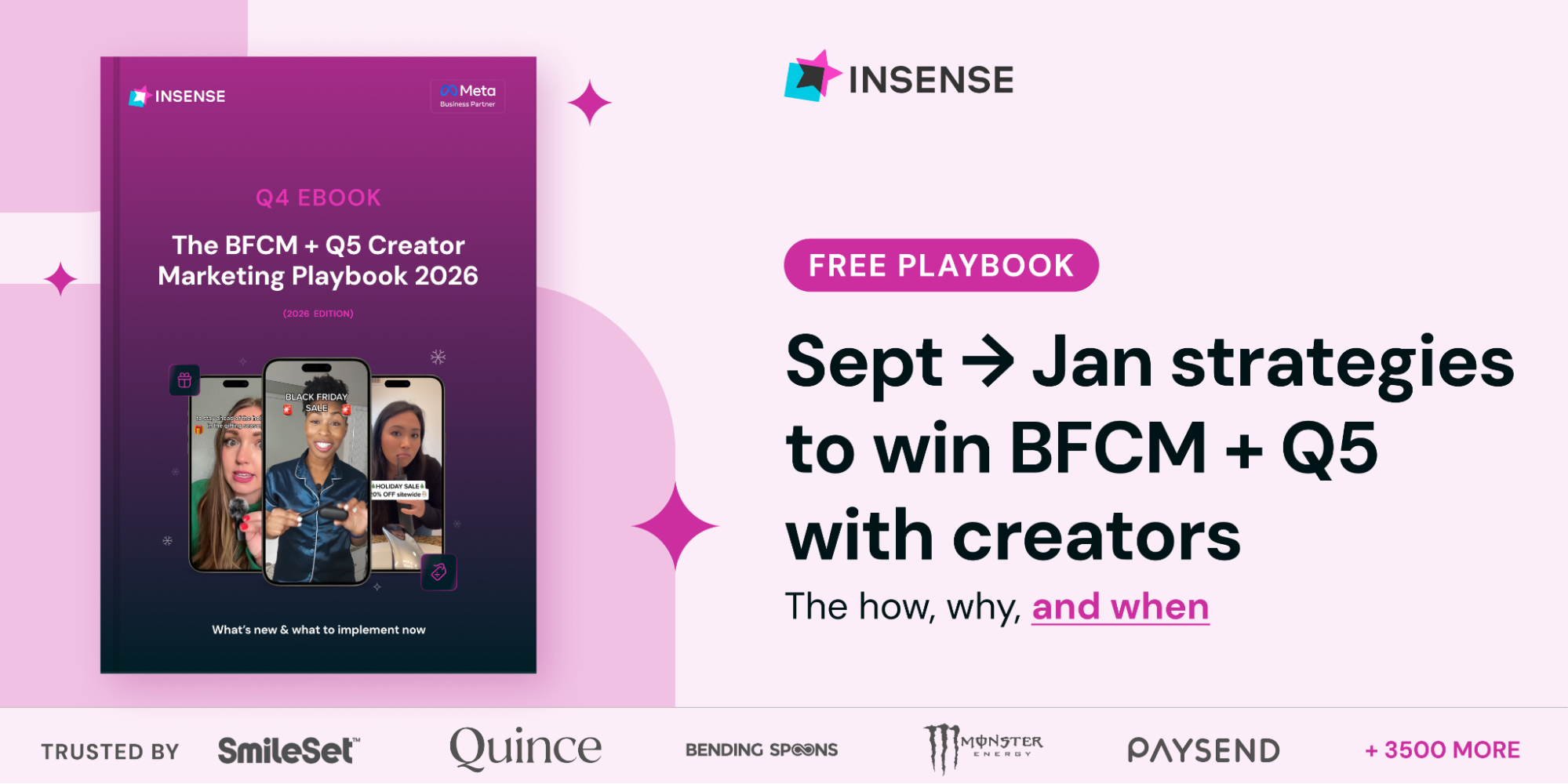
🚨 Your September-to-January creator plan for BFCM + Q5
Most Q4 guides give you a list of tactics and leave the timing and the how vague.
According to Insense, CPMs are already up 20–60% by October. That makes November an expensive time to finish sourcing creators or figure out your campaign calendar.
Insense mapped the full September-to-January timeline in one free playbook, including:
Insense is built for consumer brands scaling past $2M in annual revenue and says its platform can save teams 40+ hours on creator operations each month.
P.S. Book a strategy call by October 2 and Insense will put $200 toward your first campaign.
* sponsored
🔗 Facebook tests charging Pages to share more links
Some Facebook Pages are being limited to two link posts per month unless they subscribe to Meta One for Business.
Meta began testing the restriction with a smaller group in December 2025 and appears to be expanding it following the launch of its new business subscription packages. Publisher Pages are currently exempt.
Check whether your Page has received the restriction before changing your strategy or paying for a subscription.
🛍️ Google removes free product listings across Europe
Google has removed free product listings and product carousels from Search across the European Economic Area as part of its response to the Digital Markets Act.
The change removes an important source of organic visibility for retailers selling across Europe. Products can still appear through paid placements and eligible comparison-shopping partners, but merchants may need to rethink how they earn visibility for commercial searches.
Check how much traffic and revenue your free Google listings generated across the EEA. If the channel was meaningful, review your comparison-shopping partnerships, paid Shopping coverage, and performance by country before reallocating budget.
🪝 Five ways to write stronger ad hooks that stop the scroll
@KanishDigital shared five ways brands can make their opening seconds more compelling.
Start with a statement that creates a question in the viewer’s mind. “I sleep seven hours and wake up before my alarm now” naturally makes someone wonder what changed.
For video, build three hooks together: what the viewer hears, what they see, and what appears in the text overlay. Each element should give them another reason to keep watching.
The opening can also focus on a specific trigger event, reveal something the brand would rarely admit, or identify a social pattern the audience has noticed without putting into words.
Before approving your next concept, review its first three seconds three separate ways. Read the voiceover without the visuals, watch the opening on mute, and inspect the text overlay alone. Each one should create enough curiosity to keep someone watching.
🤖 Run Neil Patel’s 5-step audit to see if AI recommends your brand
Your customers are asking ChatGPT what to buy.
The uncomfortable question is: What is ChatGPT telling them about you?
In our recent conversation with Neil Patel, he explained why AI visibility deserves its own strategy. A brand can rank well on Google and still struggle to appear when someone asks an LLM for recommendations.
His advice? Start by figuring out exactly where you stand.
Here’s a practical five-step audit based on Neil’s approach:
1️⃣ See if AI actually recommends you
Start with questions your customers might ask before purchasing.
“What are the best running shoes for beginners?”
“What skincare brands are best for sensitive skin?”
“What’s a good alternative to [competitor]?”
Build a list of 5–10 high-intent questions and run them through LLMs like ChatGPT, Gemini, Claude, and Perplexity.
Record whether your brand appears, where it appears, which competitors are mentioned, and whether the description is accurate.
You can also use AI visibility tools to track how often your brand appears in AI-generated answers, which competitors appear alongside it, and how your brand is described.
2️⃣ Inspect your technical foundation
Good technical SEO still matters.
Audit your structured data, site health, and content freshness. Neil explains that recent information can carry more weight in AI results, so an article that answered a question well three years ago may still need to be updated.
3️⃣ Find the questions you haven’t answered
Use Google Search Console, AnswerThePublic, or Ubersuggest to find the questions customers ask before reaching your site.
Compare those questions with the answers currently available on your product, category, and educational pages.
Where are the gaps?
What are customers asking that your website never clearly answers?
4️⃣ Answer those questions fast
LLMs need to understand what your page is saying.
He recommends answering important questions directly and early rather than burying useful information underneath several paragraphs of setup.
Review your key pages and ask: How quickly could an LLM extract a useful answer from this?
5️⃣ Audit what the internet says about you
Your website is only one source LLMs use to understand your brand.
Review your customer feedback, publisher coverage, listicles, product comparisons, and other third-party mentions.
Are people talking about you consistently?
Are those mentions recent?
Is the sentiment positive?
Are the descriptions accurate?
Neil’s simplified distinction is useful: traditional SEO places considerable weight on what happens on your website, while AI visibility places more emphasis on what the rest of the internet says about you.
Your next search optimization project may involve earning better reviews, comparisons, or publisher coverage beyond your own domain.
Run the five checks, identify where your brand disappears, then listen to our full DTC podcast episode with Neil Patel for his take on GEO, LLM discovery, and the future of search.
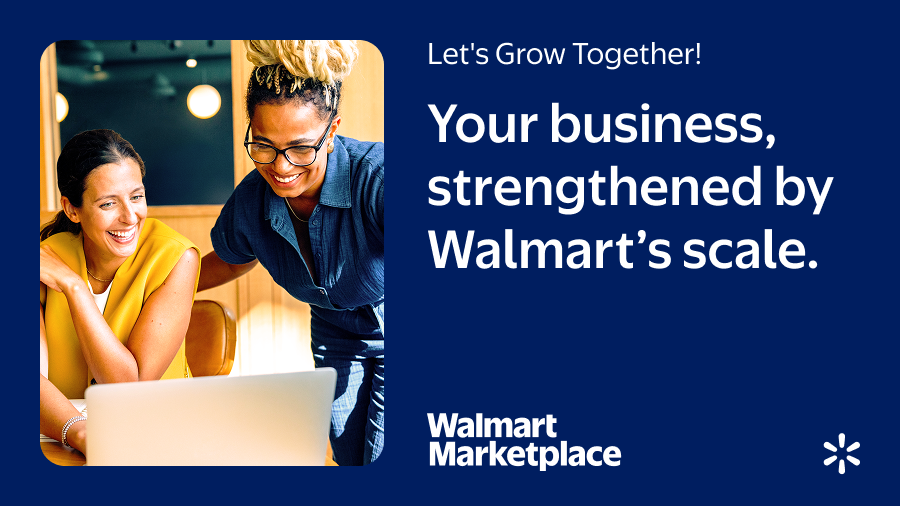
💰 New Seller Savings 2026
Sell better. Sell more. Sell with Walmart.
Sign up now to unlock up to $75K in New-Seller Savings to build your business on Walmart Marketplace*. 🛒
🛍️ Reach more customers. Shoppers on Walmart are looking for products like yours.
⚡ Tap into a network of millions. Each week more than 270 million customers shop with Walmart.*
🌐 Expand globally. Easily extend your business to any of their global marketplaces.
Maximize your reach with discounts on referral fees:
*Walmart first-party data.
*Conditions apply. Offer subject to eligibility criteria, promotional savings will vary by seller. See full terms and conditions for offer details.
* sponsored
🎧 Is branded search making your Google account look better than it is?
Your highest-ROAS Google campaign might be reaching people who were already looking for you.
In this episode of AKNF, Eric sits down with Zavire, Senior Google Media Buyer at Pilothouse, to examine how branded search can make an account look more efficient without bringing many new customers into the business.
In his recent audit of Wildflower Cases, Zavire estimated that the majority of the brand’s Google budget was going toward branded searches. That included “Wildflower,” an ambiguous keyword that may also capture searches unrelated to phone cases.
For this account, Zavire recommends cutting roughly 80% of branded search spend and testing that budget across higher-intent generic search and Shopping campaigns.
That could include searches for “cute iPhone cases,” specific phone models, colors, styles, and creator collaborations.
He also explains why each query should lead to the most relevant product or collection page, giving shoppers a clearer path from discovery to purchase.
▶️ Watch here | 🎧 Listen on Spotify
🎯 Refreshing creatives and adjusting bids won't fix a targeting problem. BFCM is around the corner and you need to fix what's actually driving your Meta costs up. Grab Clustie's free CPA Playbook. *
* sponsored
Did you find this valuable? Support us by checking out our businesses:
Please note that items in this newsletter marked with * contain sponsored content.
.svg)


.svg)


.svg)


.svg)
.svg)
.svg)