Good morning.
Almost spooky season, almost spooky vibes.
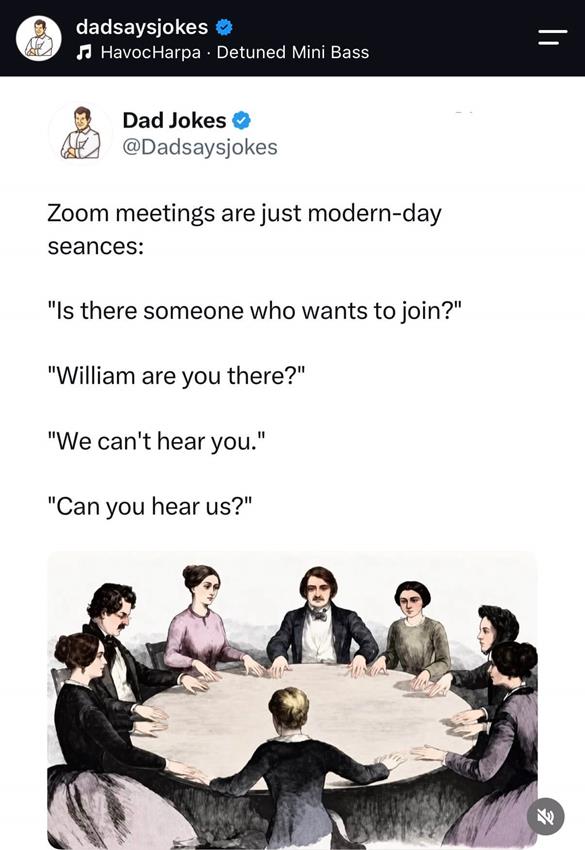
“Can you hear me now?” “Try saying something again”
There are too many lines that work. Anyways, I digress; let’s get into it.
📈 A $100M Meta buyer says CPMs nearly doubled for brands without a Labor Day offer
@rokhladnik says the last three weeks split his portfolio in two. Brands that ran strong Labor Day offers grew more than 30% YoY, with some nine-figure brands setting records.
Brands without one saw CPMs nearly double in three weeks while CTR held flat, so CPCs and traffic quality took the hit instead. He is seeing the same pattern in B2B lead generation, which makes him question whether seasonality explains the entire increase.
He suspects Meta changed something in the backend, though Meta has not confirmed an update. Pull your CPM trend by campaign since Labor Day before writing off a soft month as seasonality.
🌎 FedEx is bringing guaranteed duty costs into Shopify checkout
FedEx’s new Global Trade Navigator includes a Shopify app that can show shoppers a guaranteed duty and tax amount during checkout. The wider toolset covers HS-code lookup, estimated import costs, document requirements, customs issues, and shipment reporting.
FedEx says 68% of surveyed small and midsize businesses regularly encounter customers surprised by duties at delivery, while 60% have lost revenue through refunds or abandoned purchases. That ugly “your package is being held until you pay more” moment may finally be moving to a part of checkout where you can explain it.
📉 Google admits its own AI search reporting doesn't work yet
Impressions get counted even when a shopper doesn’t scroll down a page and see your link. At the same time, links hidden behind a “Show More” button may be undercounted. Position data measures where the whole AI Overview block sits on the page, not where your link sits inside it.
Google's John Mueller confirmed there's no better system yet, saying position "is hard to do in a way that makes it useful," so it's tracked as one block, the way Google handles other search features.
Search Console can't yet give you a clean read on where your brand appears inside AI Overviews. Use referral traffic and landing-page activity alongside its impression data before drawing conclusions about whether your AI search visibility is improving.
🤖 Nearly one-third of teens trust AI shopping picks over friends
Mastercard surveyed 26,000 parents and teens, finding that 31% of teens trust an AI product recommendation more than a friend’s recommendation, while 23% trust it more than their parents’ advice.
62% of teens already use AI monthly for product research versus 49% of parents, and 27% say they'd use a fully AI-run shopping assistant compared with 16% of parents.
This is the customer base you'll be selling to in five years, and they already rank an AI's opinion above their parents.
Check whether your product pages give an AI assistant enough to work with: materials, sizing, use case, and return policy spelled out in the copy itself, not buried on a separate FAQ page it may never crawl.
🛍️ Daydream turns your camera roll into a shoppable catalog using Apple Intelligence
Daydream has launched an image-based shopping feature powered by Apple Intelligence.
Upload an outfit from your camera roll, and the app matches each piece against roughly three million products from more than 300 retailers, including Nordstrom, Anthropologie, and Uniqlo.
When Daydream can’t find the exact item, it recommends alternatives from its retail catalog. For apparel and accessories brands, clean product images and detailed catalog data now influence whether a visual search tool can recognize and recommend the product.
🔍 Profound’s $180 million raise puts serious money behind AI search
Profound, which helps brands track and improve how they appear in AI-generated answers, raised $180 million at a $1.8 billion valuation. The round comes less than seven months after its $96 million Series C.
The two-year-old company says revenue tripled over the past six months and its customer list has passed 1,000 enterprises, including Estée Lauder and Walmart. AEO is still a young category with plenty left to prove, but investors and major brands are treating visibility inside AI answers as a serious new part of search marketing.
🤖 Four supplement brands building AI creative by funnel stage
Generative AI has made it easier than ever to produce ad creative at scale, but volume without craft still falls flat.
The brands getting the most out of AI aren't just producing more assets faster. The strongest examples use AI to create intentional visuals with clear composition, product context, and room for persuasive copy.
This week we're focused on the CPG vertical, specifically supplement brands, and how they're building AI-driven creative across each stage of awareness.
Pilothouse shares four brands doing it well and what you can take from each.
Lifestyle AI Product Focused with Copy
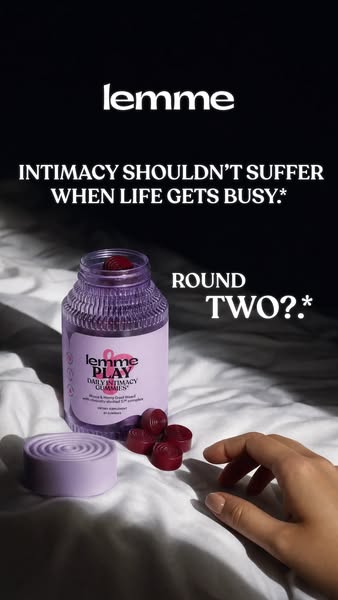
Lemme keeps the composition simple: a bedspread, an open product jar, and enough negative space for the copy to do the heavy lifting
The intimate setting gives you all the context you need about what the product is for, and the strong logo paired with a lifestyle background makes the whole thing feel more elevated than most AI-generated creative.
How to make it work:
Pay attention to details. If you're using generative AI in your creative process, focus on elevation rather than just output volume. Think carefully about the negative space you're leaving for copy and the environment you're placing your product in.
Give the in-creative copy a clear job. It should communicate the product, problem, benefit, or occasion within a few seconds.
When you're leaning on AI for the visuals, the copy needs to pick up the slack and help you stand out in the feed.
Lifestyle with Product-Focused Headline and Sale Badges
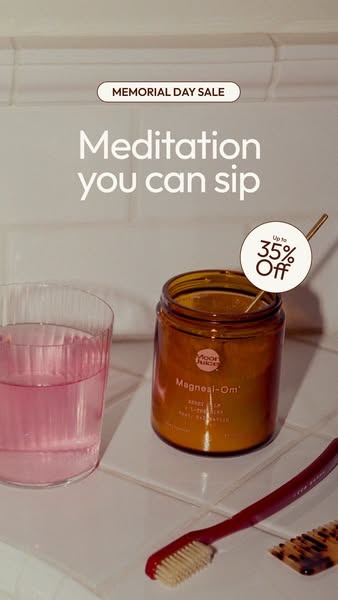
The layout here is straightforward, but the in-creative copy is what's worth paying attention to.
If you're running a promo at the top of the funnel on discovery platforms like Meta, a product-focused headline gives cold audiences enough context to understand your brand and compels them to click.
How to make it work:
"On sale" is not enough for cold audiences. Sale-focused copy alone won't convert someone who has never heard of you.
Pairing your promo information with a high-confidence product one-liner is usually the better approach for CPG brands running lifestyle overlays at the top of the funnel.
Give people context. Communicating what the product actually does pre-qualifies your traffic and sets expectations before someone even clicks.
Moon Juice does this well with the line "Meditation you can sip," which tells you exactly how the supplement works in four words.
AI Render with Conversion Friction Removing Copy
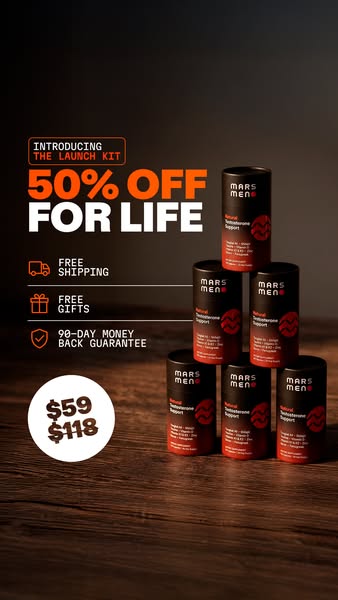
At the middle and bottom of the funnel, the ads that make or break performance are usually the ones that remove the last few reasons someone hasn't bought yet.
Mars Men loads this graphic with everything an indecisive customer needs to see: a strong discount, free shipping, free gifts, and a 90-day money-back guarantee.
How to make it work:
Identify purchase friction. Before building this kind of ad, think through what typically stops someone from buying your product for the first time.
Price concern? Uncertainty about results? Risk of committing to something new? The creative should address those objections directly.
MOF and BOF audiences already know you. These customers are familiar with your brand and product, so skip the brand education and focus entirely on giving them the information they need to complete the purchase.
AI Social Proof Focused
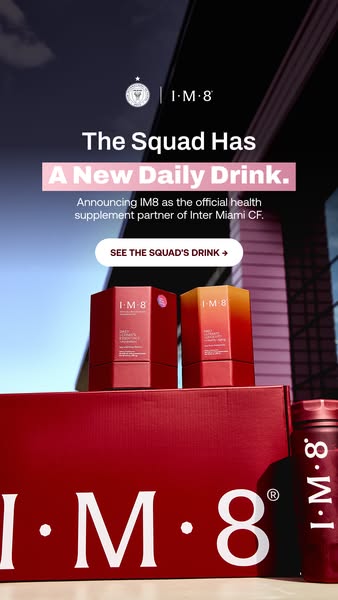
This IM8 ad uses clean lifestyle imagery to speak directly to its target audience by borrowing credibility from the brand's partnership with Inter Miami CF.
The language, the visual tone, and the framing all align with how that audience expects the team to show up.
How to make it work:
Use the partner's language. Borrow vocabulary and references associated with the organization or person you're partnering with.
For a sports partnership, something like "The Squad" lands differently with fans than generic fitness language would.
Verify the audience overlap. The real power of a partnership like this is in the targeting.
A good aesthetic fit matters, but the actual audience segmentation needs to line up too.
This applies especially to creator partnerships, where cultural fit is often prioritized over audience alignment.
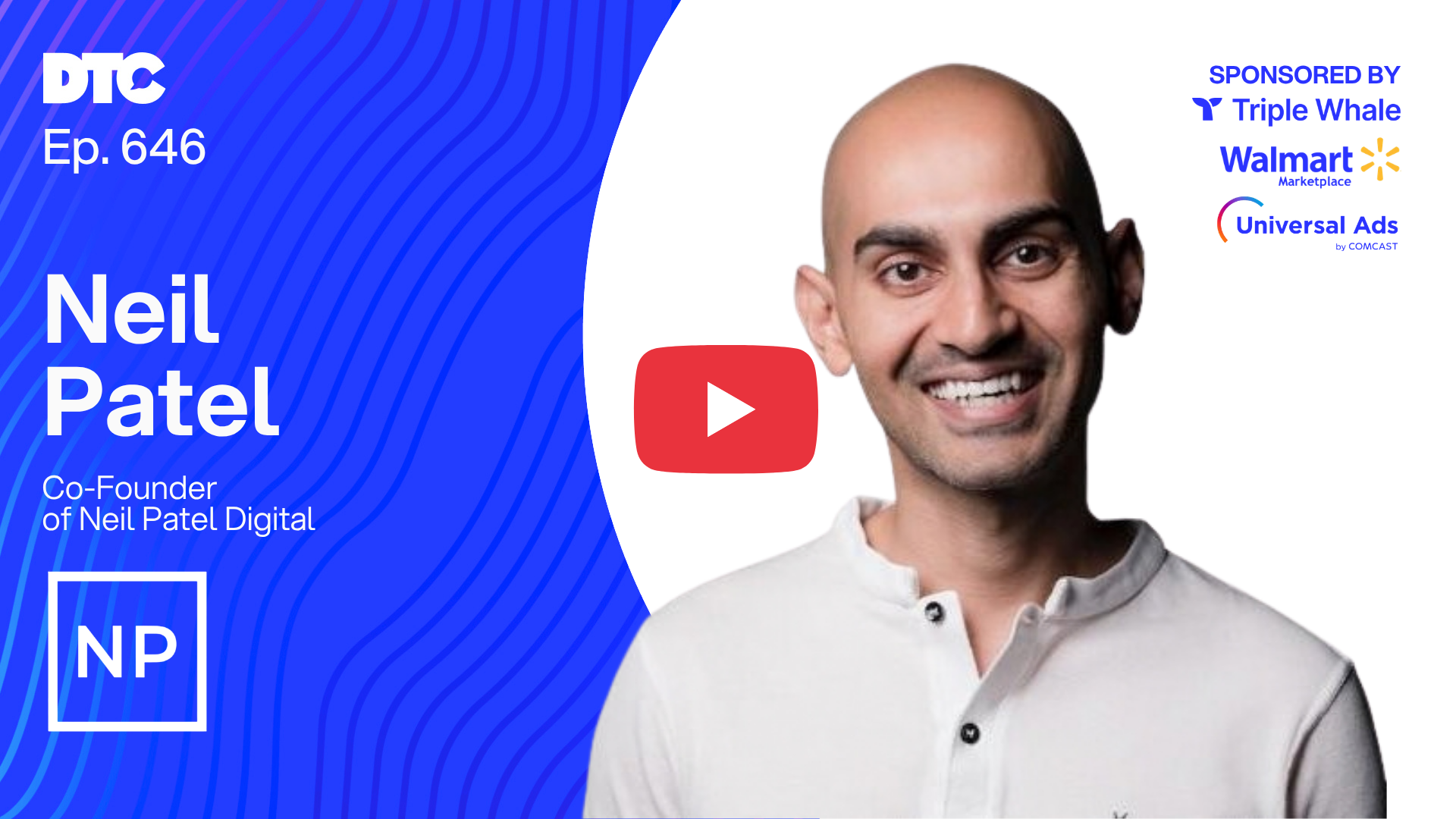
🎧 Neil Patel says search didn’t die. It multiplied.
A customer discovers your product on Instagram, checks reviews, asks ChatGPT to compare their options, watches a YouTube video and eventually arrives on your site ready to buy.
Which platform gets credit for that sale?
According to Neil Patel, that question is getting harder to answer because search is no longer a single destination, and the customer journey is getting considerably messier.
In this DTC episode, Eric sits down with Neil to unpack how LLMs are reshaping product discovery, why brands may see fewer clicks even as lead quality improves, and what marketers should be doing now to become more visible in AI-generated recommendations.
Neil’s argument is that tools like ChatGPT are increasingly doing the research customers once did themselves. A shopper can compare products, evaluate reviews and ask increasingly specific follow-up questions without visiting multiple websites.
By the time they finally click through, they may have already made their decision.
DTC is seeing this firsthand. Eric shares that more than 30% of Pilothouse referrals are now coming from ChatGPT, with those leads closing at higher rates and carrying larger average deal sizes.
So how does a brand earn its way into those conversations?
Neil walks Eric through his AI visibility audit, including how he evaluates a brand’s presence across LLMs, where technical SEO still matters, and why what other websites say about your products is becoming increasingly important.
He also explains why Google rankings and AI visibility should be treated as separate scores, which third-party mentions appear to matter most, and the surprising opportunity he sees in getting other publishers to talk about your products.
▶️ Watch here | 🎧 Listen on Spotify
🔔 BFCM is your busiest sales window. Lock in. Wati automates reminders, support, and order updates on WhatsApp so you can focus on achieving your biggest BCFM ever. Start your free trial. *
🤔 How deep should you discount this Q4? We asked hundreds of DTC brands and shoppers. See how your strategy compares in Beyond the Discount, our free benchmark report with insights from Smile.io. Download the free report. *
🎵 Going viral on TikTok Shop is easy. Profiting is not. Drivepoint's free forecasting template builds your P&L from content funnel to contribution profit, commissions included. Download the TikTok Shop template. *
* sponsored
Did you find this valuable? Support us by checking out our businesses:
Please note that items in this newsletter marked with * contain sponsored content.
.svg)


.svg)


.svg)


.svg)
.svg)
.svg)