Good morning.
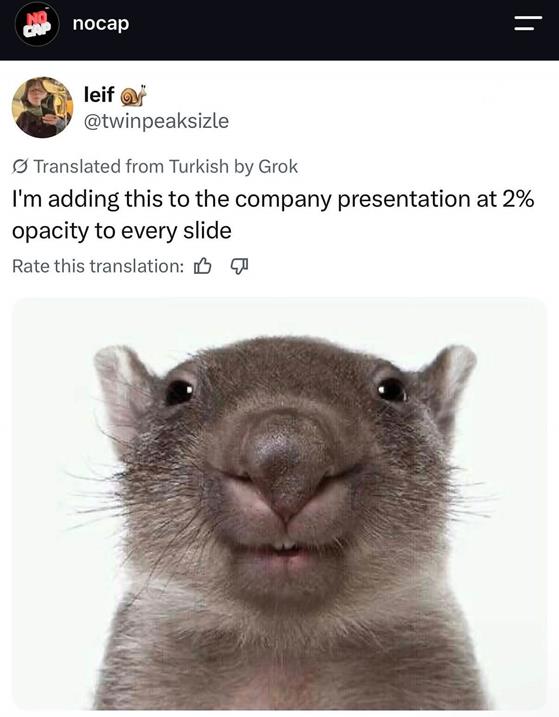
Corporate version of Where’s Waldo.
Here’s what we’ve got for you today:
Let’s dive in.
🔎 ChatGPT traffic still has some catching up to do
Everyone’s talking about AI shopping, but Google is still sending way more people to websites.
Marie Haynes dug into 12 months of analytics across 100 sites and more than 145 million sessions. ChatGPT sent 0.62% as many visits as Google organic search.
ChatGPT visitors did convert at a higher rate on the sites that track conversions. But Google organic still drove 27 times as many conversions as every LLM combined.
So keep an eye on AI referrals, sure. Just don’t take your eye off Google to do it.
There’s another wrinkle, though: referral traffic only tells you where the click came from. A shopper can get a recommendation from an AI assistant, leave, search the brand on Google, and buy later.
That makes AI influence a lot harder to see in your analytics. Which brings us to this. 👇
👻 53% of AI-assisted shoppers have bought a brand they’d never heard of
An AI assistant recommended it. They bought it. Your next customer could be choosing from an AI shortlist before they ever reach your site.
We surveyed 556 online shoppers and 146 DTC operators for The Invisible Shelf, our new AI Discovery Report.
Among brands surveyed, 26% can’t say how AI-referred traffic converts. Referral reports can also miss shoppers who read a recommendation, then buy through search or direct.
Inside the report:
📊 Three numbers to check before you pause a creative
@BenRadack shared the three Meta metrics he looks at to see what’s happening before the purchase:
If you’re seeing carts and checkouts but not many purchases, look at conversion lag and checkout friction before you kill the ad.
Cheap carts on their own don’t make a winner, though. Read these alongside purchase costs, revenue, and margin as BFCM spend picks up.
🎧 Don’t let your Black Friday bundle kill conversion
Black Friday is a great time to push AOV. Just watch how much you’re asking a brand-new customer to buy.
On this ep of Ad-venturous, Aves shared a simple rule for BFCM offers → if you don’t know how to sell a single product, you shouldn’t be thinking about bundling it yet.
With cold traffic, every extra product needs more explaining. Now your ad has to sell the hero product, explain why the other items belong with it, and convince someone the whole bundle is worth the bigger price. That’s a lot to ask of a first-time buyer.
There are exceptions. Aves points to jewelry, socks, and small accessories, where buying a few at once already feels normal. For most other categories, a higher AOV isn’t a win if fewer people check out.
▶️ Watch here | 🎧 Listen on Spotify
🎯 Google can now bid differently for lapsed, loyal, and high-value shoppers
Google Ads is rolling out new customer lifecycle controls across Shopping, Search, and Performance Max.
Shopping campaigns can now go after new customers Google expects to be worth more over time. And new retention modes let you target lapsed buyers, loyalty members, or specific groups of existing customers.
Google is also swapping fixed-dollar value boosts for percentage-based multipliers, so a bigger cart can send a bigger bidding signal.
Before BFCM, refresh your Customer Match lists and test one lifecycle goal at a time. No need to turn the dashboard into soup all at once.
🎨 Gemini wants to help run your business
Google is adding a business hub to Gemini with tools for brand visuals, financial analysis, and customer insights.
Upload your brand materials and Gemini will remember the style for future images. It’s also connecting to Shopify, Canva, Xero, and other business tools, and it can turn spreadsheets and receipts into financial graphics. It starts rolling out globally to all Gemini app users over the next few days.
If your team is stretched thin on holiday creative, give Gemini your brand kit and one narrow job, like resizing launch assets for every ad format you need. Just check what it makes before anything goes live.
🩺 Give your Meta catalog a checkup before BFCM
If you’re running catalog ads, your product feed is what Meta has to work with. Broken images, out-of-stock SKUs, and vague titles all make its job harder, and you’ll feel it more once holiday budgets go up.
The Pilothouse team shared four things to check.
1️⃣ Start with diagnostics and match rate
Open Meta Commerce Manager and go to the Feed Diagnostics tab. Look for warnings like missing descriptions or images in the wrong aspect ratio.
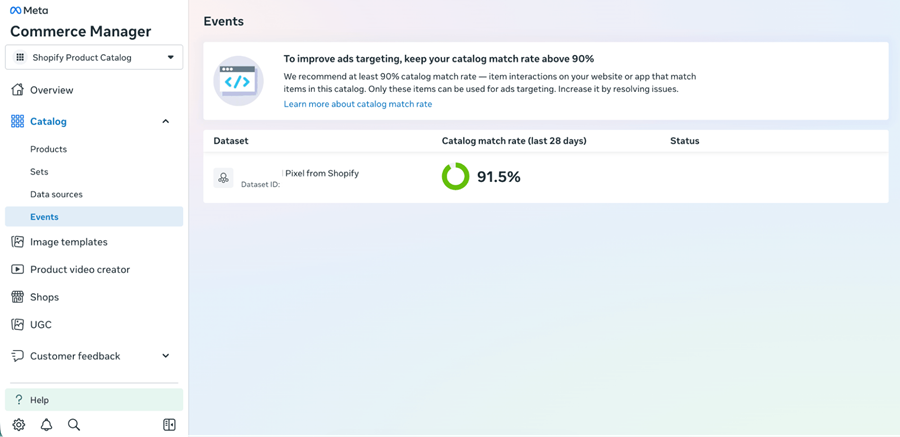
Then check your catalog match rate, which shows how many product IDs from your pixel and Conversions API line up with the IDs in your catalog. Meta recommends 90% or higher. If you’re below that, look for unmatched products and ID formats that don’t line up.
2️⃣ Make sure sold-out products stay out of your ads
Confirm Shopify inventory is syncing and sold-out variants are marked unavailable. If you use a separate feed tool, set an inventory threshold so out-of-stock SKUs drop out before anyone clicks through to a dead page.
3️⃣ Write titles a shopper would search for
Meta reads your catalog text to figure out who to show each product to. “Tribe Boots” doesn’t tell it much. “Women’s Waterproof Brown Leather Ankle Boot” does. Swap out internal names and SKU codes for descriptive titles, and fill in descriptions and categories while you’re there.
4️⃣ Check your main product images
Your primary image should be high quality and fill the frame without anything getting cut off. Scroll through the catalog and flag anything blurry, cropped, or off.
💸 Did your customer acquisition cost (CAC) actually go down?
Partnership ads can make your Meta CAC look better.
But did acquiring that customer actually get cheaper?
On this DTC podcast episode, Yash Chavan, founder of Saral and Saathi, argues brands need to look beyond the number showing up inside Meta.
He’s seeing partnership ads reduce on-platform CAC by 10–20% in some cases. The catch is that brands may also be paying creator commissions based on platform fees, product seeding costs, and the operational expense of managing all that creative.
Some of that CAC may have simply moved to another line on the P&L.
And because many creator commissions scale with GMV, those costs can grow alongside the campaign, potentially putting additional pressure on contribution margin.
Yash breaks down a different approach built around creators who already have an audience, organic content, affiliates, and boosting the creative that proves itself.
▶️ Watch here | 🎧 Listen on Spotify