SPONSORED BY:



Good morning, another Monday on the clock.
Please enjoy this very technical update on consumer spending:
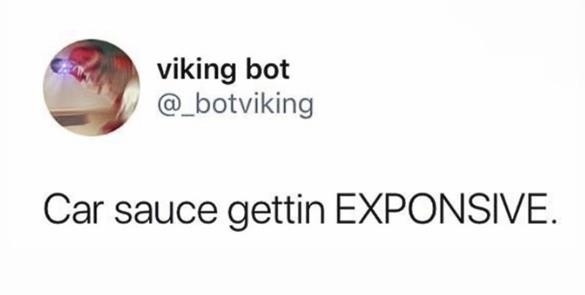
Anyways, it’s Monday; grab your second (third? fourth?) coffee and let’s jump in.
📦 Holiday shipping costs are climbing as a second trade route comes under threat
As we shared last week, U.S. diesel has crossed $6 per gallon, and the usual peak season fees are about to land on top of it. UPS starts charging September 27, USPS follows October 4, and Amazon’s highest fees run from November 22 through December 26.
Then Friday brought another problem. Houthi forces reached positions overlooking the Bab el-Mandeb Strait, raising the risk of longer routes and less reliable transit times between Asia and Europe. Anyone who finished their Q4 shipping math in August gets to open the spreadsheet again.

🆕 NEW: Audit your Q4 customer journey before the traffic hits
At this point, your Q4 plan probably has a discount, a launch date, and at least one spreadsheet that’s becoming harder to look at.
The harder question is whether the entire customer journey holds together.
We asked 575+ DTC operators what they’re planning for Q4, then asked 700+ shoppers what gets their attention, earns the first purchase, and brings them back. We pulled the findings into Beyond the Discount, along with additional insights from Smile.io on loyalty and repeat revenue.
Use it to check your promotional timing, offer depth, acquisition incentives, loyalty benefits, and post-purchase plan while there’s still time to fix the gaps you find.
* sponsored
🛍️ Gas prices are taking a bigger bite out of Q4 shopping budgets
The University of Michigan’s preliminary consumer sentiment index fell to 47.8 in September, down 7.5% from August and 13.2% from last year. Consumers’ expected inflation over the next year jumped from 4% to 4.6%, with fuel prices and trade tensions pushing expectations higher.
That concern is already showing up in household expenses. Reports showed that consumer prices rose 0.4% in August, including a 3.9% jump in gasoline. Expect shoppers to compare harder, wait longer, and need a clearer reason to choose your holiday offer over everyone else’s.
🏬 Google PMax can now put more budget behind shoppers near your retail locations
Brands with retail doors can use a new Performance Max setting to prioritize nearby shoppers across Maps, Waze, and local Search. Google is also adding Store Sales to Data Manager, where eligible advertisers will be able to connect a CRM or Google Sheet directly.
This closes part of the measurement gap for brands whose ads influence retail sales that never appear in their DTC dashboards. Local Customer Optimization is rolling out now, with the simpler store-sales connection coming in the next few weeks. Clean up that offline data before holiday campaigns start optimizing around an incomplete picture.
📺 Amazon can identify the sweater on Prime Video and send the sale to a similar listing
Amazon’s new Shop the Scene feature uses Amazon Lens to find products inspired by what someone is watching. It is live in the U.S. across more than 600 titles, while the broader Shop the Show catalog has grown from 1,300 titles to more than 8,000.
The product on screen does not automatically get the sale. Amazon can surface whichever listing its visual search considers similar, giving marketplace imagery and product data another place to win or lose discovery. This is early, but fashion, beauty, and home brands should test a few relevant scenes and see which competitors Amazon puts in front of the shopper.
🪤 Your worst ROAS campaign might be the reason your best one still works
@MenachemAni explains why you shouldn’t cut a campaign even when the ROAS is bad. An upper-funnel campaign creates the demand your bottom funnel closes later, so judging it on the same ROAS target will always make it look like it’s underperforming.
Cut that spend, and nothing breaks immediately; branded search and bottom-funnel conversions just start drying up a few weeks later, with no dashboard line connecting the two.
Before you pull back the budget from your worst-ROAS line this quarter, check what job it's doing first. Pilothouse shares more thoughts on why ROAS can be misleading and hide where your sales come from below. 👇
📊 What to measure when ROAS stops telling the whole story
A shopper sees a Meta ad, watches a TikTok creator, searches the brand on Google three days later, then buys through Amazon. Every platform reports the small piece of that journey it can see.
That makes platform ROAS useful context and a risky North Star. Before cutting a campaign with an ugly number, widen the view:
Pilothouse shared one example where a client intentionally kept running Meta at a reported 0.30 ROAS. The account was acquiring customers for $60 whose lifetime value reached $240. Measuring the campaign against the initial $60 purchase hid the revenue those customers generated later.
When a channel reports weak ROAS, watch what happens to blended CAC, new customer growth, contribution margin, and total revenue as its spend changes. The platform reporting the purchase may be collecting credit for demand another channel created.
💰 New Seller Savings 2026
Sell better. Sell more. Sell with Walmart.
Sign up now to unlock up to $75K in New-Seller Savings to build your business on Walmart Marketplace*. 🛒
🛍️ Reach more customers. Shoppers on Walmart are looking for products like yours.
⚡ Tap into a network of millions. Each week more than 270 million customers shop with Walmart.*
🌐 Expand globally. Easily extend your business to any of their global marketplaces.
Maximize your reach with discounts on referral fees:
*Walmart first-party data.
*Conditions apply. Offer subject to eligibility criteria, promotional savings will vary by seller. See full terms and conditions for offer details.
* sponsored

🎨 Six creative problems to fix before Q4 spend ramps
Back to the ad account. Once you’ve widened the measurement window, take a harder look at the creative feeding it.
Aves from Pilothouse keeps finding the same six problems during audits. Q4 will make all of them more expensive.
1. One-note creative. A library full of polished product statics will struggle to scale. So will one built entirely from creator content. Mix branded creative, product demonstrations, founder videos, sale ads, and scrappier formats.
2. A missing founder story. The original problem, early prototypes, failed attempts, and reason the product exists are already sitting there. Record a few simple versions now and let the founder explain why anyone should care.
3. Random acts of content. When an ad wins, identify what did the work: the hook, creator, format, demonstration, objection, or offer. Use that signal to shape the next round. Shipping dozens of unrelated ads leaves you with plenty of creative and little to build on.
4. Videos that take forever to start. If the product first appears at second 15, the viewer is already gone. Show it within the opening frames, lead with the benefit or problem, and move the deeper sales argument to the landing page.
5. Creative that breaks across placements. An organic Reel can enter paid with covered captions, cropped text, or the product hidden behind platform controls. Check every placement, respect the safe zones, and make the message readable at a glance.
6. An ad library with no pulse. Your creative should reveal something recognizable about the brand through its founder, point of view, customer language, recurring characters, or visual style. Remove the products and logo from the library. If nothing still identifies the brand, there’s work to do.
Aves expands on all six mistakes in this episode of Ad-venturous, including what immediately stands out when she opens an account for an audit.
This episode is an oldie but a goodie. Go listen.
▶️ Watch here | 🎧 Listen on Spotify
Did you find this valuable? Support us by checking out our businesses:
Please note that items in this newsletter marked with * contain sponsored content.
.svg)


.svg)


.svg)


.svg)
.svg)
.svg)