Good morning. Happy Friday!
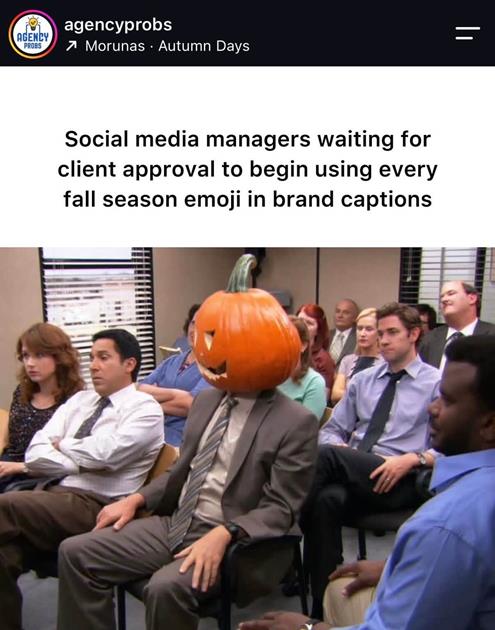
It’s that time… Pumpkins, leaves, sweaters, cinnamon. You’ve been warned.
Let’s get into it.
🧀 Goodles tested its noodle 1,000 times before Barilla bought the brand
Barilla has agreed to acquire Goodles after the five-year-old brand grew its share of U.S. shelf-stable mac-and-cheese spending from 0.8% to 7.8% in three years.
CPG strategist Courtney O’Brien points out in this LinkedIn post that the loud packaging and weird flavors came after a lot of unsexy work. Goodles says it tested its noodle more than 1,000 times and reached a 92% switch rate in blind taste tests.
Its research also found that 85% of adults aged 24 to 36 ate boxed mac and cheese themselves, giving the brand an audience the kids-first category barely spoke to. Goodles now reports that roughly 80% of its customers at several major retailers are new to the category, which is a much stronger retailer pitch than “our box looks fun.”
Copy the rigor that gave Goodles permission to get weird.
📊 A 1.5x ROAS can scale one brand and sink another
@rokhladnik argues that your real paid-media target comes from the business model, not a ROAS or CPA pulled from someone else’s account.
A 1.5x ROAS can work when repeat purchases cover the acquisition cost. The same number can burn cash when most customers buy once.
Decide whether you need first-order profit or can afford to buy customers at a loss, then give Meta the conversion signal that matches that goal. Worth pulling up before the next budget meeting turns into everyone debating a number without the P&L beside it.
🎙️ TikTok adds polls, voice notes, and photo carousels to comments
TikTok is rolling out polls, voice comments, and multi-photo comments globally.
Polls are available now and let creators ask up to five-option questions under their own videos. Voice comments, capped at one minute for users 18 and older, and photo carousels containing up to nine images will roll out over the next month.
If TikTok is part of your organic or creator strategy, use the polls to test product ideas, flavors, and launch angles while people are already talking about them.
📹 Reddit adds a 15-second video goal for product demos and testimonials
Reddit added a 15-second Engaged Video Views goal beside its existing six-second option. A complete watch counts for ads lasting 15 seconds or less, while longer videos need 15 seconds of attention before Reddit records an engaged view.
The beta supports lowest-cost and cost-cap bidding, and advertisers can test both view goals against each other. If you’re running demos, testimonials, or founder-led creative on Reddit, compare the two before paying the platform to find people who watch six seconds and disappear.
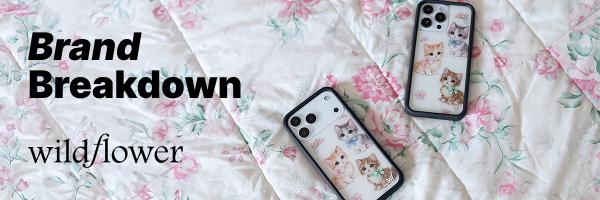
🌼 How Wildflower Cases can build out its paid search offense
Wildflower Cases got flooded with orders after Devon Lee Carlson crossed paths with Miley Cyrus and gave her one of the cases her mom had made. The pop star posted about it online and the rest is history.
Today Wildflower sells hundreds of thousands of cases globally each year and is known for its floral, playful, and Y2K-inspired designs. They've collaborated with names like Sandy Liang and Laufey, with a recent Daisy Chain Fields drop tied to Olivia Rodrigo.
The Pilothouse Google team looks at how the brand can optimize its paid strategy even further.
Overview
SEMrush estimates Wildflower spent about $3,500 on Google Ads last month, with nearly all of that spend concentrated on shoppers already searching for the brand.
According to SEMrush data for August 2026, an estimated 99% of Wildflower's paid search traffic comes from brand keywords.
SEMrush estimates roughly a third of the paid budget goes to the single word “wildflower.” In Pilothouse's search check, that term surfaced a Billie Eilish song and information about the plant alongside the brand.
A brand name that's also a common search term creates some built-in ambiguity, increasing the risk of paying for clicks with little or no purchase intent.
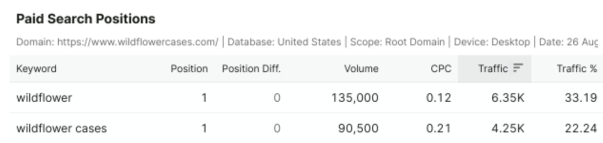
Wildflower already has a consistent paid search presence and is investing in the channel every month. Nearly all of that investment is concentrated on defense, leaving non-brand acquisition as the clearest area to test next.
Diversify the strategy with non-branded queries
In Pilothouse's search for “iphone 17 case,” the Shopping carousel was dominated by competitors like CASETiFY, Sonix, Burga, and Amazon marketplace sellers.
Wildflower does appear for some searches like “cute iphone case” and “aesthetic phone case,” though its presence is less consistent.
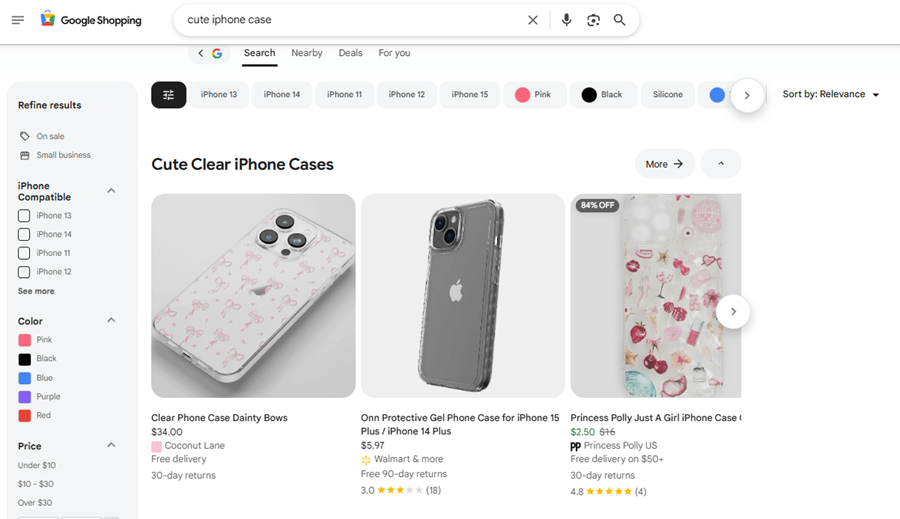
These are the queries where Wildflower's design identity is a genuine competitive weapon. Bold florals, Y2K motifs, celebrity endorsements, collab drops. They're a pretty strong bat signal for the kind of category shopper Wildflower is built to appeal to.
Non-brand appears to make up only a small share of Wildflower's current paid search strategy, which helps explain its more limited Shopping presence on broader category queries. That creates opportunities for competitors to reach category shoppers before Wildflower enters the consideration set.
Even a modest test budget around terms like “cute iphone case,” “aesthetic phone case,” or “iphone 17 case” could introduce Wildflower to shoppers actively browsing the category.
Pilothouse suggests using collab drops as feed hooks. The Vanilla Mace and Precious Moments collabs are made for Shopping differentiation. For a brand where collabs are such a major part of the product strategy, they give Shopping ads another way to stand out.
Pilothouse also recommends segmenting brand vs. non-brand into separate campaigns. Brand campaigns can focus on efficient coverage of existing demand. Non-brand can then use its own bidding strategy, creative, and landing pages. Same account, different jobs.
Direct keywords to landing pages instead of homepage
Search is where the current strategy leans most defensive. According to the SEMrush data reviewed, 46 of the 55 paid keywords route to the homepage. That includes queries like “wildflower cases iphone 17,” which lands on the same page as someone who typed "wildflower."
A high-intent product search ends up on the same page as brand-name traffic, without a landing experience built for what that shopper is actually looking for.
“Wildflower cases iphone 17” should land on the iPhone 17 collection page. “Wildflower MagSafe” should land on the MagSafe collection. Fixing landing page mapping is a relatively small change that creates a more relevant path from search to product.
Own the consideration phase
There's a real opportunity in the consideration phase. Searches around whether Wildflower Cases are “worth it” can surface third-party reviews and Reddit discussions containing a mix of praise for the cases and criticism around price or design.
In Pilothouse's search check, Wildflower's own perspective was largely absent from those results. That means much of the consideration-stage narrative is being shaped by third parties.
One way to join that conversation is testing “worth it,” “reviews,” and relevant comparison queries.
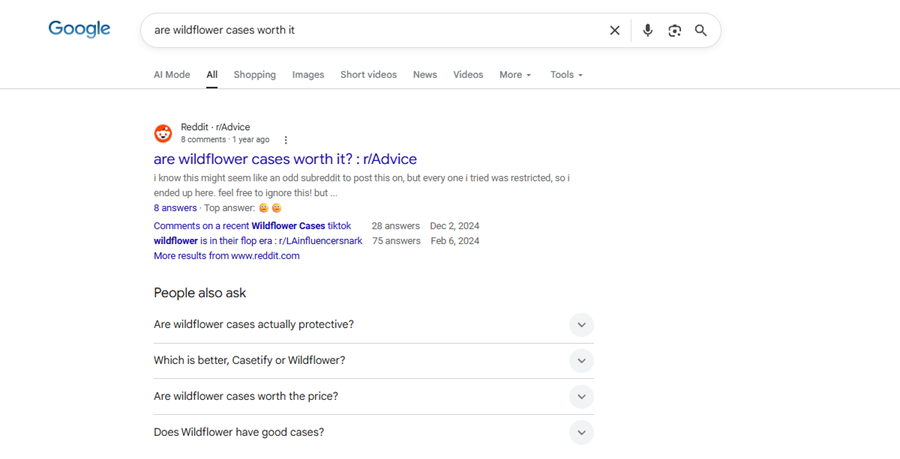
They can even expand into aesthetic-coded non-brand terms. “Y2K phone case,” “trendy iphone case,” “designer phone case” are queries with clear intent for what Wildflower sells. None appeared in the paid keyword set Pilothouse reviewed.
Use founder content as part of paid strategy
Video is a bright spot. At the time of Pilothouse's review, Wildflower's YouTube channel had around 20,000 subscribers and more than 1,200 videos. They post regularly, with a deep library of YouTube Shorts.
One standout non-product video, “Sisters Swap Outfits” with Devon and Sydney Carlson, had roughly 86,000 views at the time of the audit. The channel shows that founder-led content already resonates with part of Wildflower's audience.
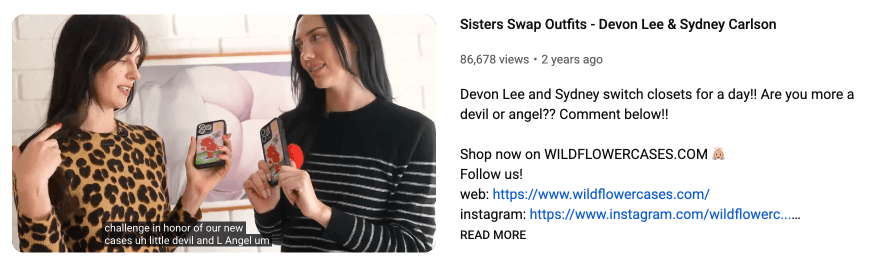
That creates another paid-media opportunity to test. Pilothouse didn't identify an active YouTube ad presence during the review, leaving an opportunity to test paid distribution around content Wildflower already has.
Pilothouse recommends turning existing videos into in-stream ads. The “Sisters Swap Outfits” video is a lifestyle brand commercial. Cut a 15-second version and test it with beauty and fashion audiences.
From there, build remarketing pools off site traffic. Site visitors give Wildflower a higher-intent audience to test before expanding into broader prospecting.
To take it one step further, Wildflower can test Demand Gen using custom segments built around aesthetic, fashion, and Y2K interests. Wildflower's existing video library slots naturally into that intent.
Conclusion
Wildflower already has strong brand demand and an efficient paid search foundation. The clearest opportunity now is expanding beyond branded traffic and using paid search to reach more shoppers who are still deciding which phone case brand to buy.
That gives Wildflower room to grow the channel without changing what is already working.
Did you find this valuable? Support us by checking out our businesses:
Please note that items in this newsletter marked with * contain sponsored content.
.svg)


.svg)


.svg)


.svg)
.svg)
.svg)