Good morning.
Funny how we all collectively make this face.

Here’s what you should know today:
🇨🇦 Canada added tariffs of up to 50% to U.S. cosmetics, packaging, and appliances
Canada’s counter-tariffs took effect at 12:01 a.m. on September 8, adding duties of 15%, 25%, or 50% to C$27.6 billion of U.S.-origin imports. The list reaches past steel and dairy into cosmetics, perfumes, plastic packaging, appliances, electronics, and paper products.
Goods already in transit on September 8 are exempt. New shipments of listed U.S.-origin goods face the duties. If you move U.S.-made products or inputs into Canada, check the HS code against the official list before your next shipment lands.
🛒 Brands without a product feed may be disappearing from ChatGPT Shopping
Ecommerce analyst Juozas Kaziukenas reports that ChatGPT’s shopping results are now almost entirely feed-driven, a shift surfaced in yesterday’s Shopifreaks newsletter and documented by Common Thread Collective. His analysis found that Google Shopping listings have disappeared from the mix, while product links now identify merchant feeds as their source. OpenAI has not confirmed that feeds are required, so treat this as a practitioner report, but brands relying on their PDPs to get discovered may be waiting for traffic that is no longer coming. Submit a product feed, then run the same category searches with and without your brand name to see whether you appear.
🇪🇺 Google’s search overhaul could reroute European product clicks through comparison sites
Google changed its EU search results on September 8 after receiving a €460 million fine under the Digital Markets Act. Shopping comparison services now get more prominent placements, while some businesses appear with fewer details and fewer direct paths to their sites. Google says earlier compliance changes cut free, direct booking traffic to European businesses by 30%, although it has not published an equivalent figure for ecommerce. If Europe matters to your revenue, watch Shopping impressions, organic clicks, referral domains, and conversion rates for a traffic shift that your blended dashboard could hide.
🔎 Exact- and phrase-match Search ads are showing up inside Google AI Mode
Google has confirmed a small experiment that lets exact- and phrase-match Search campaigns serve text ads in AI Mode. Previously, advertisers needed AI Max, Performance Max for Search, or broad match with Smart Bidding to reach the placement. Google says ads only qualify when it detects “explicit and direct user intent,” so volume may be tiny for now. Do not broaden your match types solely to chase AI Mode. Your existing campaigns may already qualify.
💰 Google AI Mode shows the same products at prices 21.6% higher than regular search
A Productrise study of more than 2 million listings found that the same product appeared with a 21.6% higher lead price in Google AI Mode than in traditional search. Just 1.28% of products shown in regular results also appeared in AI Mode for the same query and day, while the featured seller changed for nearly half of matched products. Google told Shopifreaks that both surfaces use the same Shopping Graph, but said it had not verified the study. Search your hero products in both experiences and check which retailer, price, and offer Google chooses to lead with.
🤖 AI-referred shoppers are converting 3x more and cutting basket size in half
Future Commerce found that shoppers arriving from AI recommendations were three times more likely to convert, with baskets nearly half the usual size. These buyers land on a PDP looking for the exact product an AI recommended, then leave without browsing the rest of the catalog. In the latest DTC Podcast, Future Commerce co-founder Phillip Jackson explains why brands may need to build different product-page experiences for AI traffic to recover that lost basket size. He also gets into Nike’s DTC retreat, why customers can sense lifeless AI copy, and how 13,000 affiliates help Frost Buddy scale on TikTok.
▶️ Watch here | 🎧 Listen on Spotify
💡 Text-only ads to test before Q4 hits
Q4 is approaching, and text-only ads are one of the fastest formats to have ready in advance.
A text-only ad doesn't have to be boring. Playing with fonts, color, and layout can create a bold visual that stops someone mid-scroll.
It's also a solid option if you don't have product visuals ready or want a cleaner, more minimal look for a sale promo.
Here are four approaches worth testing before Q4 sales ramp up.
Date-Specific Text Only
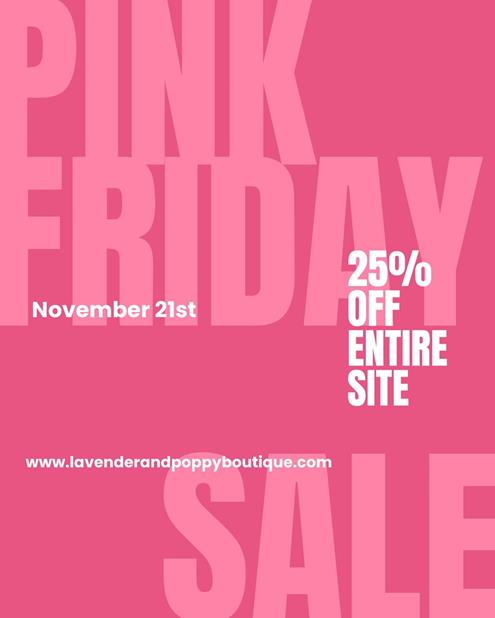
Changing up the hierarchy of text is a fun way to reimagine text-only styles for sales.
Every important detail needs to be on the screen, the date, the discount, the CTA. Leave one out and the format falls apart.
How to make it work:
Add a date to create urgency. Including a time frame gives viewers a reason to act now. It's also useful when posting organically, since most platforms no longer deliver content in chronological order.
Make the sale details obvious. If you're running a sitewide sale, include that in the headline or wherever you're displaying the discount percentage.
Use color to stand out from competitors. Choosing a bright, unexpected background color around high-competition moments like Black Friday is an effective way to differentiate on the feed.
Flash Sale Aura Background
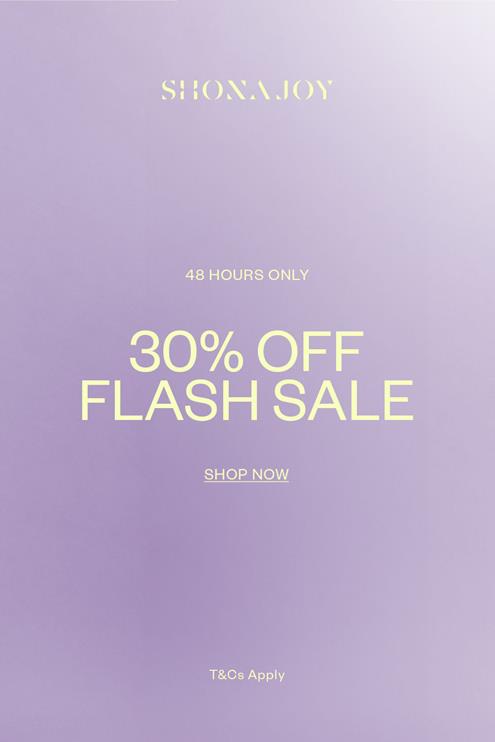
The text hierarchy here is standard. The color palette is doing the heavy lifting, and speaks directly to Shona Joy's audience.
Looking at Pinterest Trends is a great way to stay in the know about current trending color combos.
How to make it work:
Lean into trending color palettes. The combination of lavender and butter yellow works really well here. The ad feels elevated, and both colors resonate with Shona Joy's fashion-forward audience, who recognize and respond to considered aesthetic choices.
Experimenting with trendier design elements can feel risky for established brands, and that's fair.
Using limited-edition drops or short-shelf-life sale ads as a testing ground is a lower-stakes way to stay culturally relevant without committing to a full brand refresh.
Drive urgency with dates. For short sales running over a weekend or a few days, including the timeframe somewhere in the creative reinforces urgency without relying solely on the discount.
Brand-Focused General Sale
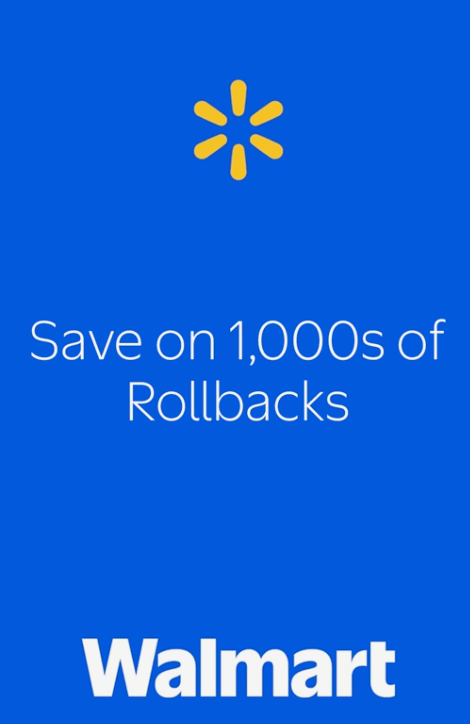
If you have a dedicated sale section or run as a discount brand, a generic always-on sale ad is worth keeping live in the account. It helps clear out the bottom of the funnel and stays relevant for returning customers.
How to make it work:
Give shoppers a reason to act now. When you have a lot of offers, the challenge is making them feel worth acting on right now.
Calling out fresh styles being added to the sale section is one approach. Leading with a floor discount like "starting at 20% off" is another.
During seasonal moments, leaning into your highest discount level makes sense. For evergreen sale ads, make sure whatever you're claiming is accurate and sustainable enough to keep running.
Keep it simple. Sometimes writing "SALE" is enough, as the Walmart example shows.
For a legacy brand known for low prices, the ad is really just buying space to remind consumers of something they already associate with the brand.
Rep Text Sale Text Only

When your offer is strong enough, plaster it everywhere.
Repetitive text is a great format to experiment with for sales ads, especially text-only executions. It makes the messaging feel energetic and impossible to miss.
How to make it work:
Experiment with repetition. Repeating the discount value or just the word "sale" across the entire frame has driven strong results across Pilothouse brands. The simplicity of the format is part of what makes it work.
A/B test background color and text. Try different color combinations and copy variations to find what drives the best revenue lift. Because the format is so straightforward, it's one of the lower-risk styles to iterate on quickly.
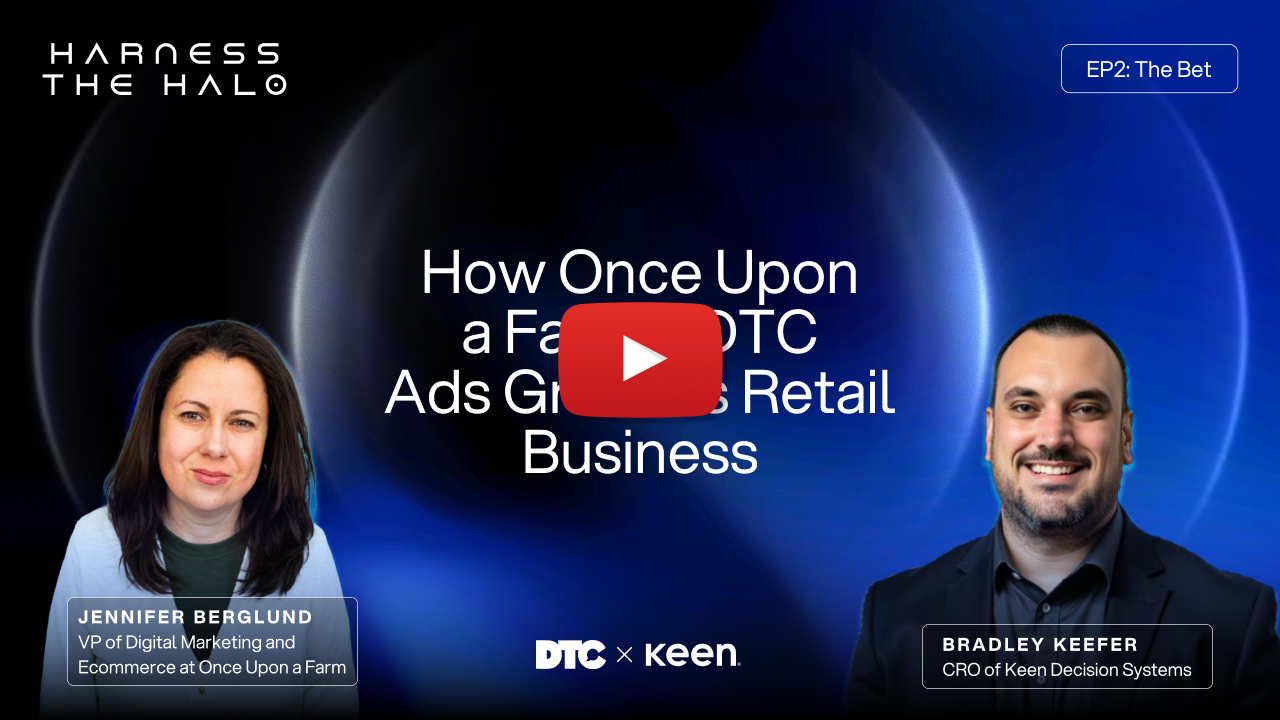
🎧 How Once Upon a Farm's DTC Ads Grew Its Retail Business
This is episode two of Harness the Halo, our new six-part series on marketing measurement.
Growth can come from unexpected places.
Bradley Keefer, Chief Revenue Officer at Keen, shared that there’s no linear path for customers anymore.
Jennifer Berglund, VP of Digital Marketing and Ecommerce at Once Upon a Farm explained how the organic kids food brand made $85.4 million in Q2, up 42% YoY, with growth channels that might surprise you.
Running lower-funnel media to the site with a “shop now” CTA caused retail and Instacart to take off. Lower-funnel tactics such as paid search on Kroger or Target had a cross-account halo effect, impacting performance at completely different retail accounts.
They share why scaling brands should stop relying strictly on ROAS and evaluate several leading and lagging metrics to measure marketing effectiveness.
▶️ Watch here | 🎧 Listen on Spotify
💸 Every dollar counts in Q4, especially with your acquisition costs. Clustie's free CPA Playbook has everything you need to go into the season with better results. Get your free copy today. *
🔔 Your reel pops off. Now what? Your Instagram comments and DMs are packed. Wati replies and hands off the real ones to you. Start your free trial → *
* sponsored
Did you find this valuable? Support us by checking out our businesses:
Please note that items in this newsletter marked with * contain sponsored content.
.svg)


.svg)


.svg)


.svg)
.svg)
.svg)