SPONSORED BY:



Good morning, Happy Friday!
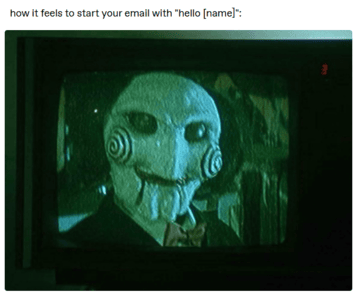
Nothing says “we know you” quite like [First Name].
Here’s your Friday DTC read:
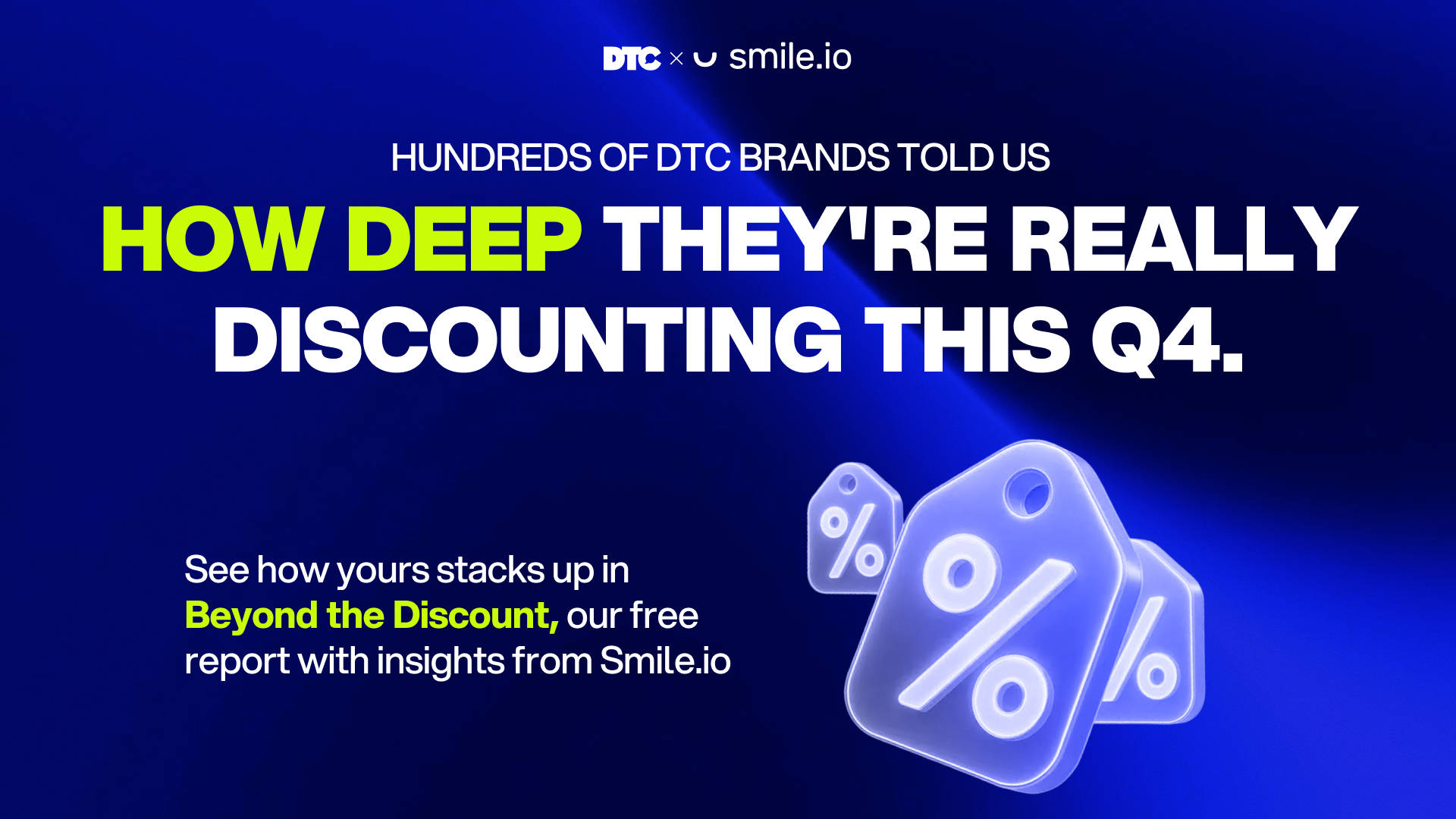
🤔 New Q4 research: How deep to discount and what brings shoppers back
Nearly 75% of brands launch their holiday promotions by mid-November. Almost half keep them running through November and December.
That’s a long time to carry an offer that’s too shallow to convert, too deep for your margin, or without a plan to earn the next purchase.
Beyond the Discount brings together responses from 575+ DTC operators and 700+ shoppers to show how brands are approaching Q4 and what shoppers say earns their business. It also includes additional insights from Smile.io on loyalty and repeat revenue.
With 57% of brands uneasy about their reliance on discounting, this is the time to check your assumptions against what shoppers said.
* sponsored
🤖 Mastercard is giving AI shopping agents their own cards
Mastercard has partnered with Alchemy on a payment system that lets AI agents make purchases using virtual cards.
Shoppers will be able to control what the agent can buy, how much it can spend, and which categories it can shop.
Mastercard joins Visa and American Express in preparing for a future where AI assistants handle more of the shopping process.
AI shopping still has plenty of trust and security questions to answer, but the payment systems are starting to arrive.
Brands should make their specifications, prices, inventory, shipping policies, and return terms easy for an AI agent to read and compare.
🎁 Best Buy is bringing holiday checkout into ChatGPT
Best Buy says shoppers will be able to find gift ideas, browse its products, and complete purchases inside ChatGPT this holiday season.
The retailer is adding ChatGPT to a much larger holiday push that includes nearly one million marketplace products, an expanded gifting center, and next-day delivery in almost every major U.S. metro area.
A shopper could ask ChatGPT to “find a gift for my dad under $200” and complete the purchase without starting on Best Buy’s website.
Watch how Best Buy organizes its product data, recommendations, and gift-related prompts. This rollout gives other brands an early look at how products need to be organized and presented inside an AI shopping experience.
⏰ An operator says one-hour sales beat five-day promos
@leondwolf says his “Happy Hour” email campaigns often generate more revenue in one hour than a five-day promotion.
The day before, send a teaser announcing that the discount will only be available for one hour. Once the window opens, the brand sends a launch email followed by a final-chance message before the hour ends.
The short window creates urgency without stretching the promotion across several days. Test it with an engaged segment first, then compare revenue per recipient, conversion rate, discount cost, and unsubscribes against your usual sale format.
📱 94% of TikTok Shop luxury resale revenue comes from livestreams
TikTok says livestreams have generated 94% of U.S. luxury resale revenue on TikTok Shop so far this year.
That figure applies specifically to luxury resale, a category where buyers want to inspect condition, verify authenticity, ask questions, and hear the story behind an item before purchasing. Livestreams give sellers enough time and interaction to establish that trust.
The same approach could work beyond handbags and watches. Products that require demos, comparisons, or reassurance may be especially well suited to live selling.
Pick one product with frequent pre-purchase questions and test a focused livestream around it. Track questions, viewer retention, product clicks, and sales to see whether live explanation removes friction that static content leaves behind.
🔎 Pinterest puts sponsored products inside visual search
Pinterest has introduced Visual Search Ads, placing products in search results and Pin closeups while shoppers compare ideas.
The platform says users conduct more than 80 billion searches monthly, with over half carrying commercial intent. Eligible advertisers will gain beta access across Pinterest ad markets in the coming weeks.
Fashion, beauty, home décor, furniture, food, and travel brands should review whether their imagery clearly communicates the product, style, color, material, and use case without relying on copy.
📊 Google Ads will tell you whether competitors are outspending you
A new Spend Benchmarks report is appearing in Google Ads. It compares weekly spending and clicks against businesses Google groups together by industry and advertising location.
The report may also recommend increasing budget to generate more results. Same industry and market can still mean wildly different margins, AOVs, conversion rates, and customer value. Use the comparison as extra context, then make the budget decision from your own marginal return and contribution margin.
👶 Four ways Little Spoon can sharpen its creatives
Little Spoon is a New York-based baby and kids’ nutrition brand founded in 2017 by Ben Lewis, Angela Vranich, Lisa Barnett, and Michelle Muller.
The founders launched Little Spoon with fresh baby food delivered directly to parents, offering another option in a category dominated by shelf-stable jars and pouches.
The brand delivers fresh food directly to parents’ doors, with products spanning baby purées, toddler meals, big kid meals, smoothies, snacks, and supplements. According to Little Spoon, the company shipped more than one million meals in its first year and has since delivered tens of millions of meals across the United States.
That combination of fresh food, home delivery, and products for several childhood stages gives Little Spoon a distinct position in kids’ nutrition.
The Pilothouse Meta team reviewed Little Spoon’s ad library and found four ways the brand could make its creative work harder.
Add a next step to the five-stage purée ad
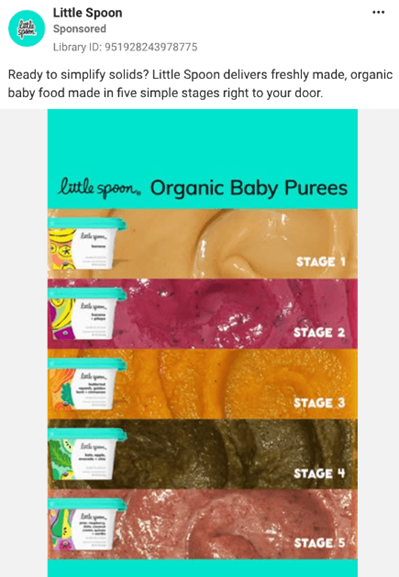
This visual organizes Little Spoon’s organic baby purées into five stages, giving parents a quick look at how the products progress as a baby begins solids.
The numbered progression makes a potentially complicated product range easier to scan and suggests that Little Spoon can support more than one point in the solids journey.
The ad explains the product progression and delivery benefit, although it lacks a clear conversion lever that gives interested parents a reason to take the next step.
Pilothouse recommends testing one concrete conversion lever beneath the five-stage visual, such as verified starting pricing or an evergreen introductory offer. That test could help parents decide whether the subscription fits their budget before they click through.
The opening copy already introduces convenience with “Ready to simplify solids?” and “right to your door.” A useful next test would pair that convenience message with the subscription cadence, starting price, or introductory offer so parents can understand both the service and the commitment.
Connect the brand growth story to family needs
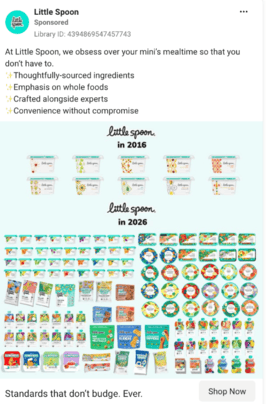
The “2016 versus 2026” layout gives Little Spoon’s growth an immediate visual payoff, with the expanded product range doing most of the storytelling.
Product expansion is an important achievement for the company. For parents, the more compelling story is that Little Spoon can now support their children across several stages of development.
Pilothouse recommends testing a headline that connects the expanded assortment to what families can buy from Little Spoon today. For example, the copy could explain that the range now extends from first bites to meals and snacks for older kids.
The ad already introduces a second useful angle with the line “Standards that don’t budge. Ever.” A supporting line could connect the larger range to the standards named in the ad copy, including thoughtfully sourced ingredients, whole foods, and products crafted alongside experts.
One version could read: “Ten years of new meals, with the same high standards.”
Give the label-reading video one clear takeaway
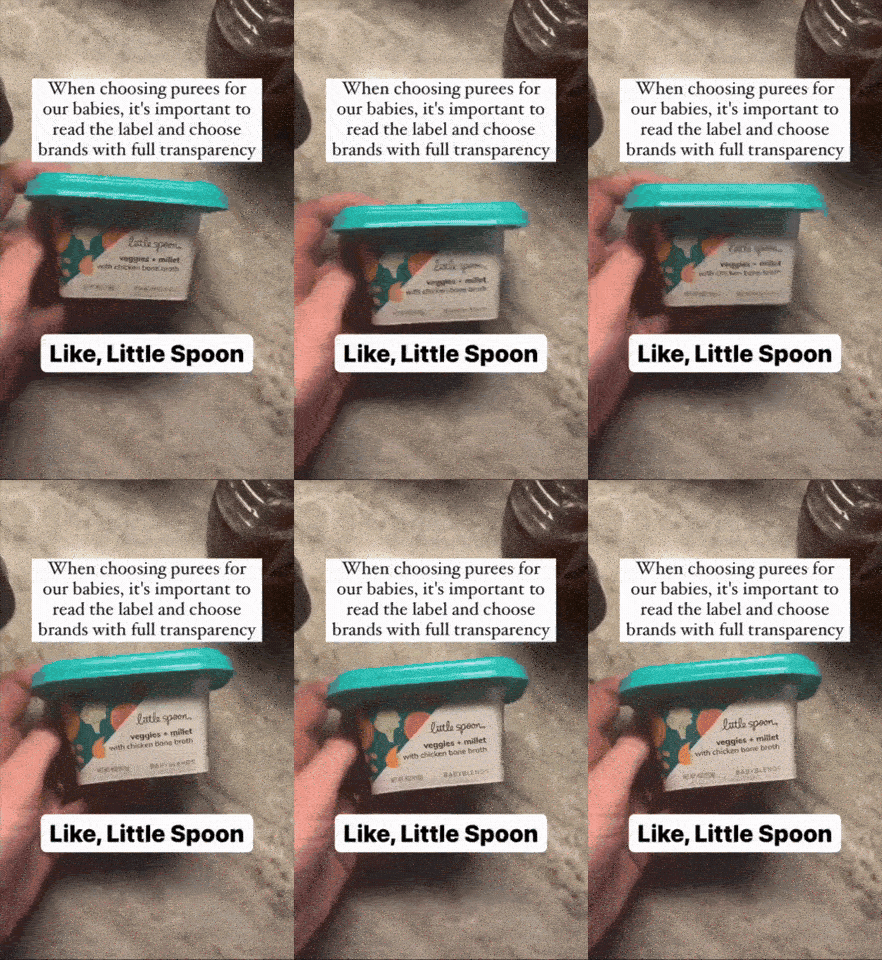
This creator-led format is a natural fit for showing parents what to look for on a baby food label. The partnership with Infant Insights adds credibility, while the content feels natural within the feed.
The creator introduces the Little Spoon container early, giving viewers immediate context for the label discussion. However, the amount of on-screen information makes the video harder to follow. The opening asks viewers to read a full sentence while examining a small nutrition label, so the central takeaway may take longer to register.
Pilothouse recommends choosing one label-reading question for the video, then using the opening text, demonstration, and voiceover to answer it.
For example, the video could open with “What should parents look for on a purée label?” before the creator points to one relevant ingredient or nutrition detail on the container.
Adding a voiceover would also improve clarity and retention while giving the creator another opportunity to explain the product naturally.
Keeping the opening text, close-up, and voiceover on the same label detail could make the lesson easier to process and associate with Little Spoon.
Add one verified proof point
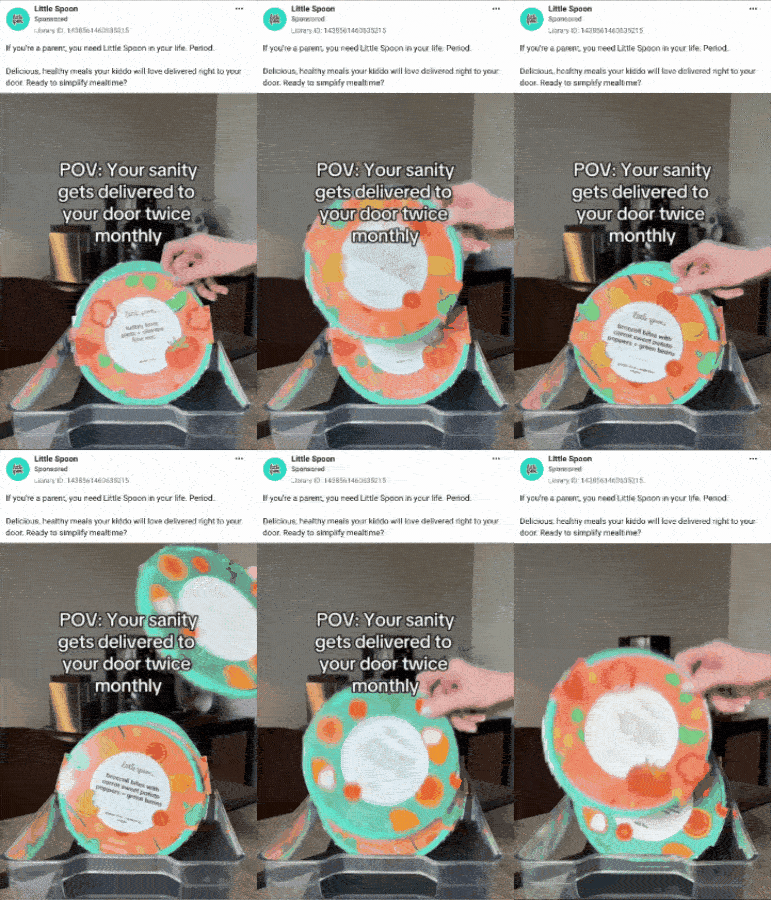
This video uses energetic product shots to introduce Little Spoon’s meals and its twice-monthly delivery model.
The quick cuts and energetic pacing suit the “your sanity gets delivered” hook and give the product reveal momentum.
Pilothouse suggests testing one verified proof point after the delivery hook and before the final call to action. That proof point could be a short customer review, a current meals-delivered stat, or an applicable product certification.
A specific proof point could answer the ingredient-quality or service-reliability questions a parent may have before starting a recurring delivery.
Little Spoon already communicates convenience through the twice-monthly delivery hook and variety through the changing meal shots.
Testing one substantiated proof point could show whether added reassurance helps parents move from enjoying the video to exploring the subscription.
Conclusion
Little Spoon’s creative already presents the product range, convenience, and parenting use cases in accessible ways.
The next round of tests can make those strengths easier to act on by clarifying the offer, giving each video one clear takeaway, and supporting key claims with verified proof.
Did you find this valuable? Support us by checking out our businesses:
Please note that items in this newsletter marked with * contain sponsored content.
.svg)


.svg)


.svg)


.svg)
.svg)
.svg)