Good morning. Oh em dash, how we miss you so.
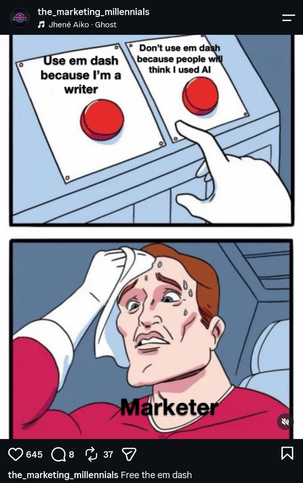
DTC fun fact: the em dash was a part of our official writing style guide until AI made everyone think it was evil. No em dashes around here anymore :(
Here’s what’s brewing today:
📣 A few things Meta told agencies this week at the Agency Summit
Marin Istvanic shared a few takeaways from Meta’s Agency Summit:
There’s a decent preview here of where Meta wants advertisers spending their time - creator-led ads, incrementality, and figuring out how people and AI split the work inside an account. View Marin’s full post here.
Editorial note: Meta hasn’t announced these publicly yet, so consider this an early look from someone in the room.
💬 Shopify merchants can now launch ChatGPT ads from their admin
Harley Finkelstein announced that ChatGPT Ads for Shopify is live, making Shopify OpenAI’s first ecommerce partner. U.S. merchants can create campaigns and track performance through the app now, with international access coming September 23 wherever ChatGPT Ads are available.
OpenAI is also testing Sponsored Agents with brands including Wayfair. Clicking the ad opens a conversation where shoppers can ask questions, get product recommendations, and visit the brand’s website when they’re ready.
Catalog data will shape those answers. Titles, descriptions, attributes, images, prices, and inventory all need to make sense without the rest of your storefront filling in the gaps.
🛒 Online retail sales jumped 2.6% in August
U.S. retail sales rose 1.2% in August, beating the 0.7% economists expected. Nonstore sales, the category that includes ecommerce, climbed 2.6%.
Consumers are still spending heading into Q4. At the same time, import prices increased 0.7% in August and 7% from last year, with consumer goods excluding vehicles up 0.5%.
Revenue may look healthy while units and contribution margin tell a less comfortable story. Keep all three in view when you read August performance.
💳 Meta’s putting links and better analytics behind a monthly subscription
Meta One is rolling out globally, with business and creator plans ranging from $14.99 to $499 per month. The $49.99 Advanced tier includes links in organic posts and Reels, exportable analytics, deeper audience insights, shared account access, and more responses from Meta Business Agent.
The entry plan covers verification, impersonation protection, and limited AI support. The features most social teams will care about start one tier higher. Add another recurring charge to the stack.
🤝 Meta’s new creator tools arrive just in time for BFCM planning
With Q4 almost here, Meta has officially launched its refreshed Creator Marketing Hub, bringing creator discovery, evaluation, outreach, permissions, and ad creation into one interface.
Brands can use new filters to find relevant creators and content, review organic performance insights, and receive recommendations based on campaign objectives. Meta also added one-click ad creation from approved posts.
These tools make it easier to vet potential partners for BFCM campaigns, identify creator content with proven organic traction, and secure paid usage rights before the busiest weeks arrive.
⚡ Test your next paid concept on organic first
Creative testing gets expensive when every new concept enters the ad account with budget behind it. Organic content gives brands a lower-cost way to gather an early read and decide which ideas deserve a paid test.
Post the concept, study how people respond, and use those results to build a more informed paid testing pipeline.
Likes offer a limited signal. Saves, shares, detailed comments, profile visits, and product questions require more intent and can reveal which hooks, products, visuals, or angles are earning genuine interest.
Merit Beauty used a version of this approach before its public launch. The team created an unbranded Instagram moodboard account to learn which products, visuals, and ideas appealed to its future customer.
Those findings helped shape the brand before launch. Merit went on to generate more than $100,000 in revenue on its first day.
Paid performance can still differ once targeting, placement, spend, and conversion goals enter the equation. Organic results give your media team a stronger shortlist of concepts to test.
Pull your five most recent organic posts and identify which earned meaningful saves, shares, comments, profile visits, or product questions. Then open your ad account and check whether any of those concepts have received paid budget.
🎧 Does your email account look healthier than it is?
Revenue, growing. ✅ Clicks, solid. ✅ Your list, getting bigger. ✅
On paper, your email program seems to be doing exactly what it should. Or so you may think…
Jordan from Pilothouse has inspected hundreds of email accounts, and he’s learned that those numbers can tell a very different story once you know where to look.
In this episode of TWBERP, Jordan shares the 12-point inspection he uses to assess an email program in roughly 10 to 15 minutes.
The inspection moves through six areas: revenue, clicks, audience, campaign activity, sending volume, and flows. Every metric comes with a second check because taking the headline number at face value can hide some significant problems.
Revenue is a perfect example. Your email platform might appear to be driving a huge share of Shopify sales, but attribution settings can inflate that number. Apple Privacy opens, bot clicks, and attribution windows can all affect how much revenue gets credited to email.
Clicks require another layer of inspection. Jordan compares activity inside the email platform against what’s happening in Shopify, then looks deeper at Gmail performance to determine whether apparently healthy engagement could be masking an inboxing problem.
And that’s only the beginning.
The inspection eventually gets into questions that are surprisingly easy to overlook:
Jordan even explains why the first welcome email can act as an early warning for the health of your entire email program.
▶️ Watch here | 🎧 Listen on Spotify
🛒 Selling on Walmart Marketplace is one of this year's smartest investments. New Seller Savings 2026 is happening now. Sign up to unlock up to $75K in New Seller Savings to build your business on Walmart Marketplace.* Conditions apply.
* sponsored
Did you find this valuable? Support us by checking out our businesses:
Please note that items in this newsletter marked with * contain sponsored content.
.svg)


.svg)


.svg)


.svg)
.svg)
.svg)