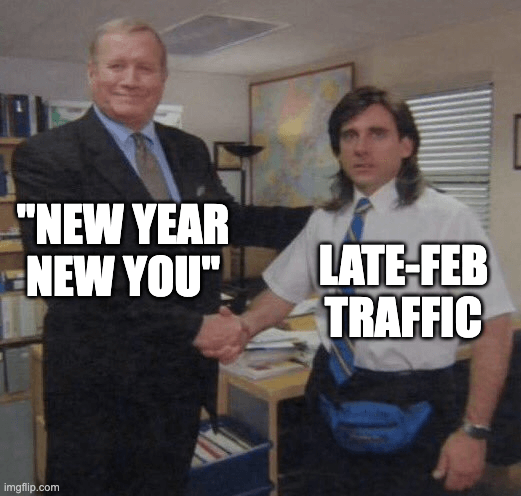
Good morning to everyone except the brand manager who still has "New Year, New You — Start Your Journey TODAY" live on their Amazon Storefront in late February,
Your New Year Amazon creative is affecting your sales. Here’s how to pivot into a Spring Refresh.
The "New Year, New You" energy fizzles by mid-February every year. But most brands selling on Amazon don't update their storefronts until later, leaving conversion on the table for 6–8 weeks. Here's the exact playbook to extend your asset lifecycle and stay seasonally relevant without a full photoshoot.

Most Amazon growth comes from stacked improvements, not one big switch.
For Buddha Board: structured campaigns, smarter keyword coverage, and constant optimization drove 2× YoY revenue.
Want that level of attention on your account? Get connected →
🌸 The Spring Refresh Playbook: How to Extend the Lifecycle of Your Amazon Creative Without a Full Reshoot
Every January, DTC brands pour money, time and resources into developing "New Year, New You" creative.
Resolution-forward copy, dark disciplined imagery, "2026 Goals" overlays. But it only works for about six weeks.
By February the resolution mindset evaporates, and all that creative starts quietly working against you, speaking to a mindset your shoppers have already moved on from.
Here’s the thing: The brands that win Q1 and beyond aren't the ones who shoot new creative every season.
They're the ones who've built a refresh system. A set of deliberate, low-lift pivots that make existing assets feel timely without starting from scratch.
Done right, you're looking at a few hours of work, not a new photoshoot, and measurable lift on your conversion rate heading into spring.
Here's the exact playbook the team used to help clients like Dr. Fuhrman and For Wellness transition their Amazon Storefronts from winter to spring.
THE SEASONAL INSIGHT MOST BRANDS MISS
Your images don't stop converting because they're bad. They stop converting because they're speaking to the wrong emotional state.
You're still selling change to customers who now want balance. The fix isn't a reshoot. It's a reframe.
The January-to-March shopper shift is real and measurable. Understanding it is the foundation of everything else in this playbook:

January sells outcomes. Spring sells experience.
That shift lives in your copy as much as your visual:
That single distinction should drive every creative decision you make between now and May.
THE REFRESH IN PRACTICE
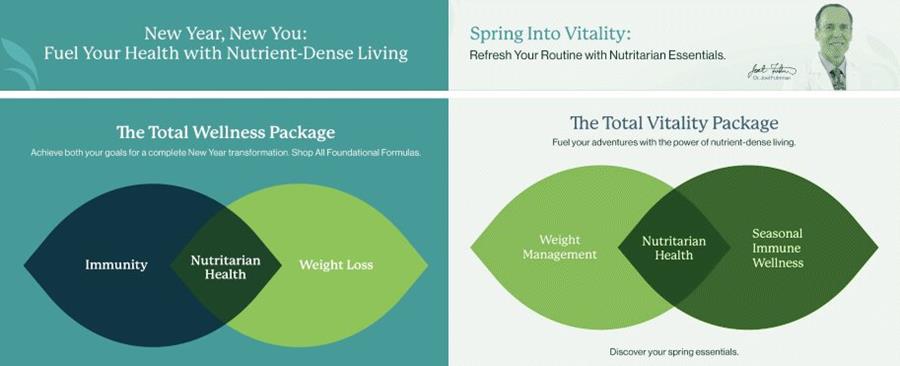
[Dr. Fuhrman’s Before & After Images]
Dr. Fuhrman’s Amazon refresh is a masterclass in restraint.
The "before" used a teal background color centered on a three-circle Immunity / Nutritarian Health / Weight Loss Venn diagram which is resolution-forward, transformation-focused.
The "after" image introduces a lighter color palette, reintroduces the founder's face into the hero (a high-trust signal that was buried in the New Year version), and renames the package from "Total Wellness Package" to "Total Vitality Package."
That single copy swap changes the emotional state from achieve to thrive.
Further down the Venn diagram expands to include Seasonal Immune Wellness, directly meeting shoppers where their head is in early spring.
Weight loss requires commitment, which creates high mental effort. Immune and vitality support feels more low stakes.
Lower perceived effort means purchase risk decreases, decision time shortens, and conversion increases.
Same product. The spring version just removes the hesitation and reduces cognitive load.
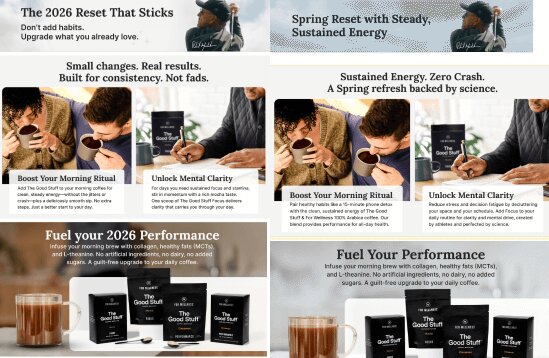
[For Wellness’s Before & After Images]
For Wellness’s "before" Amazon storefront was anchored by "The 2026 Reset That Kicks,” a darker aesthetic with habit-breaking framing ("Don't add habits. Upgrade what you already love.").
This works well for January but the “after” image resonates better with March shoppers.
Swapping the dark background for a bright, open sky immediately shifts the emotional state from "intense focus mode" to "energized and ready."
And the copy now focuses on sustenance rather than disruption: "Spring Reset with Steady, Sustained Energy."
Here's why that copy change works on a psychological level. The first message asks the shopper: "Will I stick to this?"
The second answers: "Will this feel good daily?"
One creates hesitation. The other removes it. The benefit pillars stay identical (mental clarity, morning ritual, performance fuel), but the language becomes lighter.
No new photography. No new product. Just emotional reframing.
✂️ The Amazon Spring Refresh: Do These 4 Steps This Week
1️⃣ Strip the timestamps: Remove every instance of "2026," "New Year," or resolution-specific copy across your Storefront, A+ Content, and Brand Story.
2️⃣ Swap the hero image: The hero image is the very first thing shoppers see when the page loads. If the copy is still speaking January, your store looks outdated.
3️⃣ Update the Brand Story carousel: Lighten the background palette. Swap one card to spotlight a "Spring Top Seller" or "Clean Ingredients" story.
4️⃣ Replace one A+ module: Swap your transformation visual or progress timeline for a lifestyle moment. Add small visual touches that are evocative of Spring.
Google partners with Klaviyo to build ‘AI-driven customer experiences’. Intent signals on Google can now inform personalized actions within Klaviyo in real-time. Read more →
Meta’s $100B AI bet. Meta agrees to buy AMD’s chips to power its data centers. Read more →
Stripe’s potential acquisition? Paypal’s stock surges after payments processor Stripe expresses interest in purchasing the company. Read more →

Amazon Marketing Cloud: 5 Audience Plays to Lower ACOS on Competitive Keywords
Tyler Masur (Head of Amazon at Pilothouse) breaks down what Amazon Marketing Cloud actually does, how to use the no-code templates without being a SQL wizard, and the audience overlays that make broad keywords finally make sense.
📥 Got a B2B Biz?
Join dozens of B2B companies finding demand-gen success through our niche community of 150k brand leaders and founders this year. Talk to our team to learn more.
You’re reading this newsletter along with new subscribers from: Wild Nutrition, Hanpass, and Fibernow. 👋
DTC Newsletter is written by Rebecca Knight and Frances Du. Edited by Eric Dyck.
Please note that items in this newsletter marked with * contain sponsored content.
.svg)


.svg)


.svg)


.svg)
.svg)
.svg)