Good morning to everyone except the ad account where 6 products share one learning phase.
This one Meta account change cut CAC by 11%. Without any promos.
Learn how account structure (not creative or steep BFCM offers) unlocked efficiency. Same spend, lower acquisition cost.
Why Splitting Campaigns by SKU Lowers Your Meta Cost Per Purchase
At first glance an ad account can look healthy. ROAS holding. Creative testing in flight. Some SKUs convert better than others, but that's normal, right?
Then the CAC starts fluctuating. Up 25% one day. Back down the next. No visible reason.
You pull all the levers: new audiences, bid adjustments, creative refreshes. Nothing sticks.
Why is this happening?
Because every SKU is competing inside the same optimization system, and Meta has no idea which outcome actually matters to the business.
When you mix SKUs in a campaign, you mix signals.
One SKU has a high LTV but converts slowly. Another converts fast but brings in low-margin customers.
Inside one campaign, Meta treats those as identical outcomes and optimizes for whichever one is easiest to close.
The account looks "efficient." The business isn't growing.
The team spotted this on a women's health brand doing $50M a year on DTC. The fix wasn't a new strategy. It was a structural change.
Here’s what they did: They split each SKU into its own campaign.
No new creative. No new targeting. No increased budget. Just structure.
Within weeks, these were the results

✅ CAC dropped ~11% across all SKUs (The biggest single win was a bundle, down 23.49%)
✅ CVR went up 10%
Not only was there cleaner data at the SKU level but now they could make clear decisions on where to scale and where to invest creative resources.
And this all happened with zero promotional leverage. No BFCM offers running. The gain came from signal clarity, not demand spikes.
THE STRUCTURE SHIFT
Meta's algorithm learns from conversion patterns. When you mix products, you mix the signals it learns from.
The algorithm can't distinguish:
So it optimizes for frequency of purchase, not for the business outcome you actually care about.
Separate the SKUs, and each campaign gets its own learning environment.
Now Meta can understand which audiences buy this product, how long their conversion window is, what CPA is sustainable, and what creative actually resonates instead of returning one blended average across all of it.
That changes what you can actually do with the data.
The Old Method: Pause a campaign → lose data on every product inside it. Scale a campaign → fund weak SKUs alongside strong ones. Test creative → no clean read on what's working for what.
The New Method: Pause one SKU without touching the others. Scale the profitable SKU confidently. Get creative insights tied directly to a product, not a blended pool.
The team kept all SKUs running after the split. Nothing got cut. But now they had a real answer to two questions that blended campaigns can never cleanly answer: which SKUs deserve more creative investment, and which ones are ready to scale?
That's the shift most brands miss in the post-automation era.
Structure is targeting.
The SKU Campaign Framework
Five steps. It takes an afternoon to implement, a week or two to see data.
1️⃣ Create one conversion campaign per primary SKU. Each product gets its own learning environment. No sharing.
2️⃣ Keep budgets equal for the first 7–14 days. You need clean comparative data before you start shifting spend.
3️⃣ Spend 8–10x your target CAC per day, per campaign. This is the threshold to exit learning mode and generate real signals.
4️⃣ Compare CAC vs. product margin at the SKU level. This is the data you couldn't get before. Use it.
5️⃣ Shift spend toward highest contribution margin. Kill the blended campaigns once data stabilizes.
💡 If you're a newer brand or working with a tighter budget: start with your top 3–4 SKUs. Expand once you've got scale and clean data behind you.
💡 If you're running thousands of SKUs, true 1:1 splitting is more difficult. In that case, split by collection instead. You get most of the signal benefit without the account complexity.
Test this restructure before changing creative or audiences.
Often the algorithm isn't underperforming. It's under-informed.
Media buyers love tweaking ads because it feels like progress.
But half the time performance problems are math problems disguised as creative problems.
If multiple products live in one campaign, you’re basically averaging businesses together and hoping Meta figures out which one you meant.
It won’t.
Are you optimizing ads or optimizing inputs?
Hit reply! I’m genuinely curious.
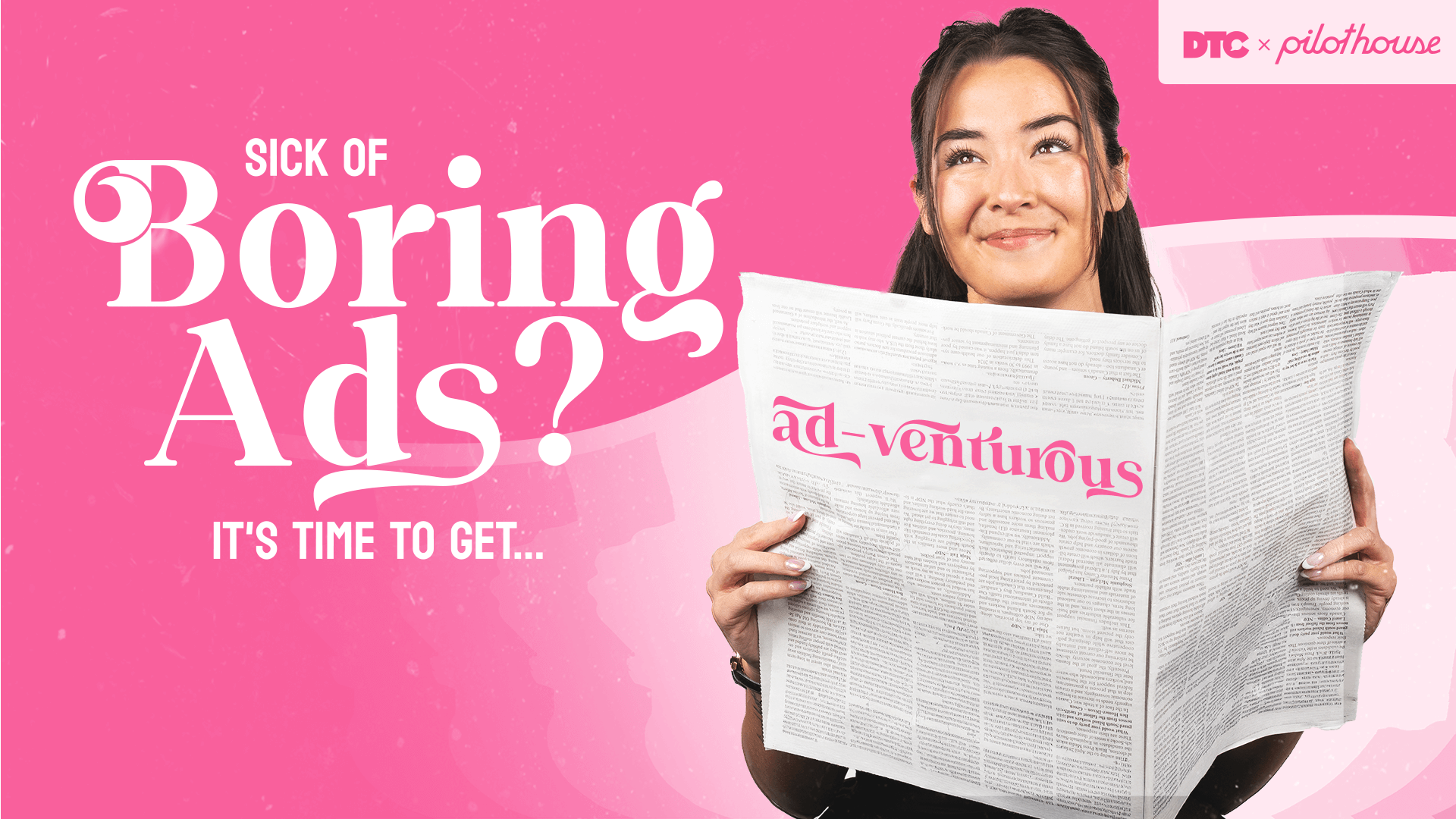
Why Blindly Following Trends Can Cheapen Your Brand Identity
In this episode of Ad-venturous, Aves shares why brands that confuse these two types of trends end up hurting their brand.

You’re reading this newsletter along with new subscribers from: GIGI PIP, Young Nails, and RYP. 👋
DTC Newsletter is written by Rebecca Knight and Frances Du. Edited by Eric Dyck.
Please note that items in this newsletter marked with * contain sponsored content.
.svg)


.svg)


.svg)


.svg)
.svg)
.svg)