SPONSORED BY:


Good morning to everyone except the media buyer who just launched 14 ad variants with the same headline on all of them,
Pilothouse changed one thing about their ad copy. AOV jumped 68%.
Everyone’s chasing the next creative format. Meanwhile, the Pilothouse Meta team ran a copy test that moved ROAS from 0.95 to 1.23 without touching a single image.
There’s a running joke on media buying Twitter: nobody reads ad copy anymore. Just throw up a UGC video, slap a headline on it, let Meta’s algorithm do the rest. And for the last two years, that advice mostly held up. Creative was king. Copy was an afterthought.
The Pilothouse Meta team wasn’t so sure. So they decided to isolate it. One ad. Same creative. Same audience. Same budget. The only variable: copy.
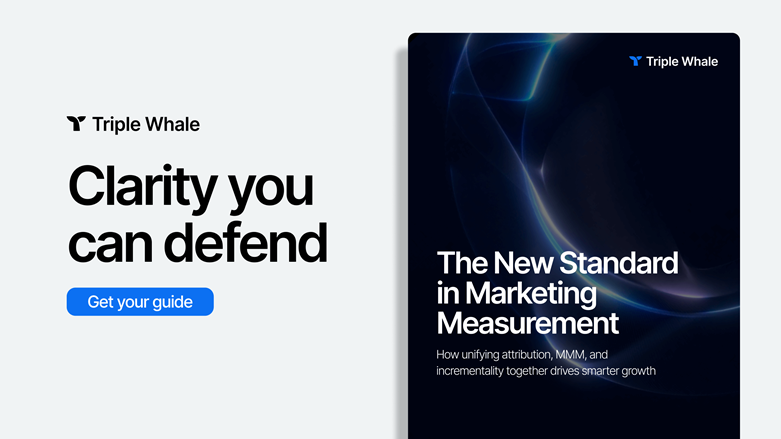
🧮 If Your Numbers Aren’t Making Sense, Read This.
The way customers buy has changed… but most measurement frameworks haven’t caught up. Journeys now span 20+ touchpoints. Privacy has reduced signals. Platform dashboards conflict. Adding more tools has only created fragmentation.
👉 Triple Whale’s new guide explores unified measurement—a new era of marketing measurement that goes beyond clicks to reveal hidden growth opportunities and restore confidence in your decisions.
By bringing MMM, multi-touch attribution, and incrementality testing into one calibrated system, unified measurement replaces conflicting dashboards with triangulated, causal insight.
That unlocks:
If you’ve outgrown last-click but still lack a single source of truth, this is your next move.
Measure with confidence.
* sponsored
Here’s what the copy test showed:

Look at that AOV column. $74.55 to $125.82. Same product, same creative, same audience.
CTR doubled. ROAS went from underwater to profitable. And CAC actually went up, from $78.77 to $102.44. If you’d killed the test based on CAC alone, you’d have walked away from a 68% AOV increase.
Copy doesn’t just get people to click. It frames what they expect to buy and how much they’re willing to spend.
THE COPY BREAKDOWN
Here are the two hooks side by side:
❌ ORIGINAL:
“Tired of missing out on family moments because of leg discomfort? These compression socks are here to help you stay active and engaged with your loved ones.”
✅ WINNER:
“Does discomfort slow down your family adventures? Add these compression socks to your routine and start keeping up with the kids again.”
Same product. Same audience. Here’s what’s different:
❌ “Tired of X?” → the formula everyone scrolls past
✅ “Does discomfort slow down…?” → a yes/no question that forces self-identification
❌ “Family moments” → vague, could mean anything
✅ “Family adventures” → specific, you can picture it
❌ “Here to help you stay active and engaged with your loved ones” → health insurance brochure
✅ “Add these to your routine and start keeping up with the kids” → an action + an image
Every phrase in the winner creates a picture. Every phrase in the original describes a feeling generically.
Test angles, not wording. The winning hook didn’t just reword the original. It shifted from passive (“here to help you”) to active (“add these to your routine”). If your two versions could be confused for each other, you haven’t tested anything.
Anchor copy to a winning creative. Lock your best-performing visual and only change the words. Otherwise you have no idea which variable moved the number.
Measure what happens after the click. The winning hook attracted buyers who spent $51 more per order. That’s not a traffic difference. That’s a different customer showing up. Watch AOV and ROAS. Ignore CPC in isolation.
Want someone to run tests like this in your ad account every week?
The Pilothouse Meta team manages millions in ad spend across DTC brands, and the copy test you just read is the kind of thing they do every week. If you want a team that treats your ad account like a lab instead of a slot machine, talk to Pilothouse →
Here’s what I keep coming back to with this test: the original copy wasn’t bad. “Tired of missing out on family moments” is a perfectly fine hook. It’s what 90% of ads say. And that’s exactly the problem.
The winning copy worked because every phrase was specific. “Family adventures” instead of “family moments.” “Keeping up with the kids” instead of “stay active and engaged with your loved ones.” Same idea, completely different picture in your head. And that picture is what made someone stop scrolling, click, and then spend $51 more.
I think most DTC brands are leaving real money on the table by treating copy as the thing you fill in last. Not because copy is more important than creative. It’s not. But it’s the cheapest, fastest variable you can test, and almost nobody is doing it systematically.
When’s the last time you actually ran an isolated copy test? Not a new ad with new everything. Just the words. Hit reply — I’m curious how many of you have done this in the last 90 days.
You’re reading this along with new subscribers from Ocean Spray, Under Armour, and Kawanti. 👋
Written by Rebecca Knight and Frances Du. Edited by Eric Dyck.
Please note that items in this newsletter marked with * contain sponsored content.
.svg)


.svg)


.svg)


.svg)
.svg)
.svg)