SPONSORED BY:


Good morning,
Here’s what you’ll find in today’s DTC:
You’re reading this newsletter along with new subscribers from: Damson Madder, Haggerty’s Music, and BC SoftWear. 👋
✨ This Is How These 11 Top Brands Are Quietly Leveling Up Their Marketing… And You Can Too
What do brands like Dollar Shave Club and Tatcha do differently to keep customers coming back, year after year?
🔎 Klaviyo’s 2026 Behind the Brands takes a close look at 11 standout brands and the real strategies they’re using to modernize marketing and customer experience.
No fluff. Just proven patterns that work. 📊
Inside, you’ll see how leading teams are:
If you’re thinking about upgrading your marketing approach, this is where to start.
👉 Ready to see how top teams do it?
* sponsored
💰 Turning Feel-Good Branding Into First-Purchase Momentum
Bala has built an instantly recognizable brand: soft colors, beautiful product design, and a mission rooted in mindful movement and community.
Their emails reflect that calm, elevated aesthetic. Like many DTC brands with strong creative, there’s an opportunity to further strengthen the conversion layer in their Welcome and Abandon Cart flows without compromising the premium feel.
The Pilothouse email team took a look at how their automations are structured today, and where a few strategic refinements could unlock more first-time revenue and higher-intent recovery.
👋 Welcome Flow
Bala’s Welcome Series has a great foundation: fast triggering, bestsellers featured early, strong social proof, and a compelling co-founder story.
The biggest opportunity: clarity and sequencing.
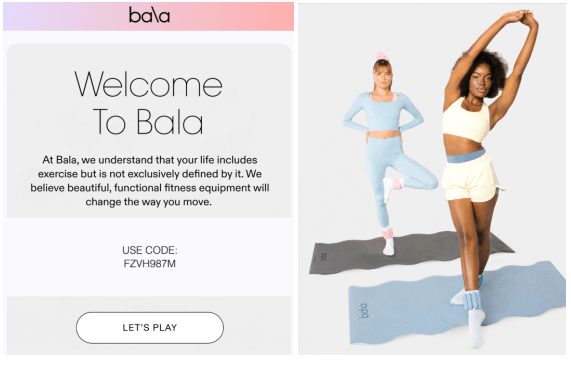
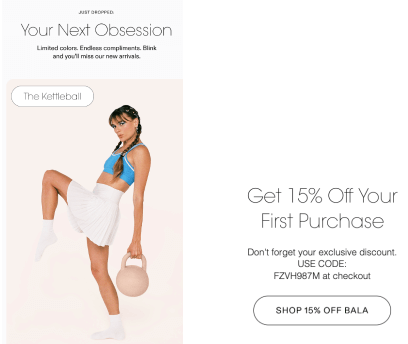
There’s a code in the first Welcome email, but the 15% off incentive isn’t clearly communicated until the second and third emails. Bringing that value forward earlier could make the first touchpoint work harder.
Email 2 presents another opportunity to reinforce value up front. The subject line is on the longer side, doesn’t reference the 15% off, and the promo isn’t yet the most visually dominant element in the design.
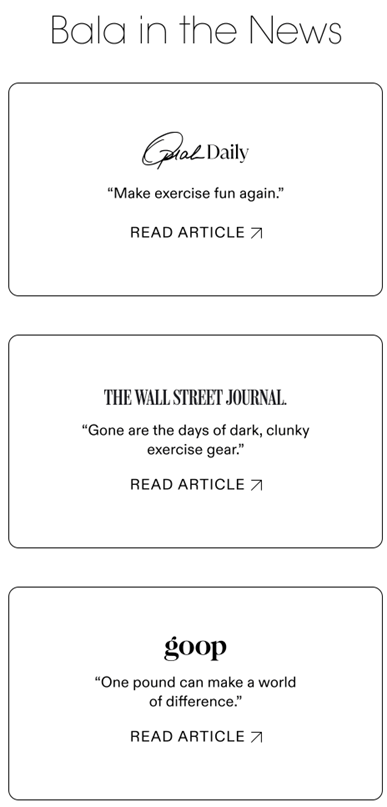
On the positive side, the “Bala in the News” section is strong social proof and does a great job of reinforcing brand credibility early in the journey.
Email 3 gets the structure right: hero first, then copy. 👇
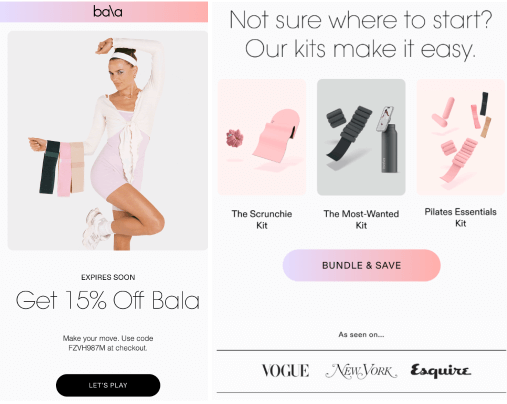
That hierarchy could be standardized across the entire Welcome Flow so the product and visual story always lead, with text supporting rather than competing.
The third email’s combination of reviews and bundles is strong, but placing the purchase path before the proof could help reduce friction.
Let customers shop first, then reinforce their decision.
And if bundles can stack with the 15% off, that extra value should be clearly called out.
💡 Pilothouse Tips:
✅ Introduce discount right away: This should be clearly stated in the first Welcome email and repeated throughout the series.
For a brand this design-forward, the promo could be made more visually prominent.
It doesn’t need to feel “salesy,” but it shoud be unmistakable.
Tease it in the subject line and preview text to increase open rates.
A static, on-brand code (rather than a dynamic one) could also help reinforce memorability and visual consistency.
✅ Don’t cut off impactful visuals: From a layout perspective, placing body copy above the hero image in the first two emails may risk cutting off the most important visual on mobile.
✅ Design improvements: Unifying the CTA color (rather than mixing gradient pink and white) could also create a more cohesive, premium feel.
✅ Expand welcome flow: Content-wise, Bala has enough product and brand depth to naturally expand this into a 4–5 email series:
The Welcome Flow is doing a lot right in terms of brand and timing. The next step is building a more assertive value story and a clearer product-discovery journey to consistently convert that first purchase.
🛒 Abandon Cart Flow
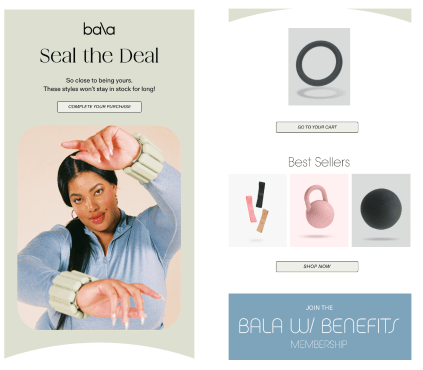
Bala’s Abandon Cart emails are visually strong, arguably stronger than the Welcome Series in consistency and polish.
The short, punchy design and differentiated headline font feel modern and confident.
That said, there are a few structural opportunities to help the flow work even harder.
💡 Pilothouse Tips:
✅ Tighten up timing: Sending the first reminder an hour after abandonment is fine, but many brands see strong results closer to the 20-minute mark.
Intent decays quickly, especially on mobile, and earlier touchpoints capture more impulse recoveries.
✅ Product hierarchy: In an abandoned cart email, the product itself should be the hero.
The item they almost bought should be the first thing they see, with CTA and copy supporting that visual.
In high-intent moments, clarity should take priority over aesthetics.
✅ Repetitive messaging can limit conversions: The second email currently reuses the exact same creative, copy, and subject line, which can cause it to appear as a thread reply in many inboxes.
Layout reuse is fine, but introducing new messaging at each step helps maintain momentum.
Each step in the sequence should:
✅ Add more depth: Two emails is a solid starting point, with room to expand into a fuller recovery strategy.
The ideal structure:
This layered approach increases recovery without training existing customers to wait for discounts.
✨ Conclusion
Bala’s brand is calm, premium, and community-driven and their emails reflect that beautifully.
Now it’s about pairing that aesthetic with sharper conversion mechanics.
Making the incentive clear from the first touchpoint, using welcome flows to systematically showcase the product ecosystem and standardizing design hierarchy so visuals support and don’t compete with the purchase path.
Bala has the trust, the product catalog, and the design language already in place. With a slightly more assertive flow strategy, their automations can do what they’re meant to do: quietly, beautifully, and consistently turn intent into revenue.

📥 Got a B2B Biz?
Join dozens of B2B companies finding demand-gen success through our niche community of 150k brand leaders and founders this year. Talk to our team to learn more.
Have you heard our latest podcasts?
Don’t forget to rate the DTC Podcast on Apple (⭐️⭐️⭐️⭐️⭐️)
DTC Newsletter is written by Rebecca Knight and Frances Du. Edited by Eric Dyck.
Please note that items in this newsletter marked with * contain sponsored content.
.svg)


.svg)


.svg)


.svg)
.svg)
.svg)