SPONSORED BY:


Good morning,
Welcome to the 1,000th edition of DTC Newsletter. Honestly… kind of wild. Thanks for being here and for spending a few minutes of your day with us, however long you’ve been along for the ride.
Before we jump in, a quick thank you to our sponsors who make it possible to keep DTC free and showing up in your inbox every day. Supporting them helps support this newsletter.
One quick favor before you close this email: hit reply and tell us where you’re reading from. We’d love to see how far DTC has reached as we round out issue number 1,000. 🌎
Thanks for reading and on to the next 1,000.
— The DTC Team
Here’s what you’ll find in today’s DTC:
⭐ 10 marketing truths that stand the test of time even 1000 issues later and…what our readers are saying!
You’re reading this newsletter along with new subscribers from: OMGTeas, Amigo Pawn & Jewelry, and Salted Vines. 👋
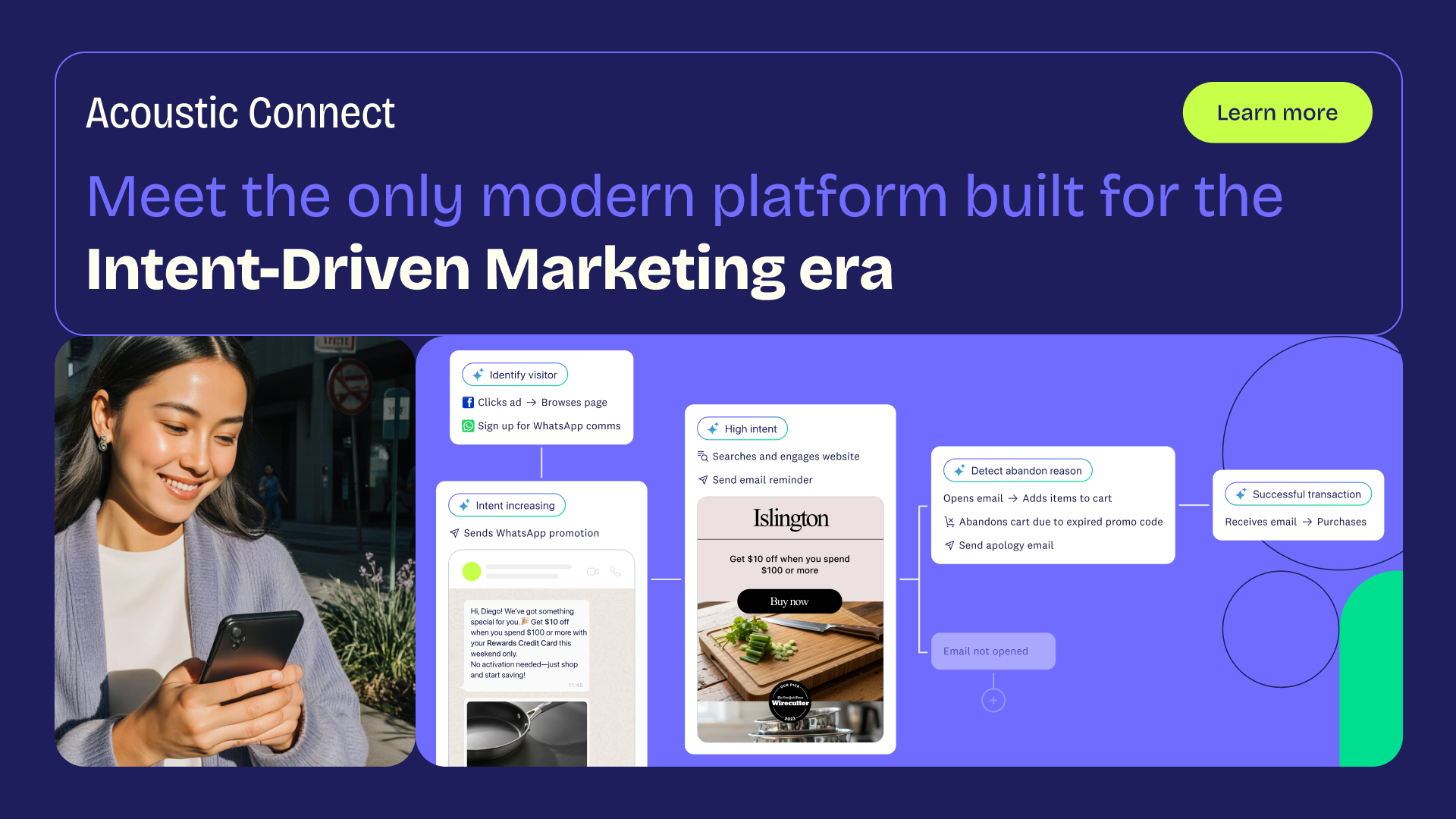
⚠️ A Small Pause That Costs Big
Someone lands on a product page, clicks around, compares a few options, then... pauses.
That pause says a lot. It’s intent forming in real time. And it’s fleeting.
So what do you do? 🤔
A: Record the intent and hit them with a generic batch message days later
OR
B: Use that real-time signal to give your shopper the push they need now
If you answered A but wish you answered B, chances are you don’t have a way to measure and act on intent as it happens.
Acoustic Connect captures real-time consumer behavior and helps teams respond in the moments that influence conversion across email, SMS, WhatsApp, and mobile push.
Want to move more people down-funnel by acting on intent as it forms?
* sponsored

⭐ Marketing Truths That Still Hold Up 1000 Issues Later
Tools change.
Platforms evolve.
But some marketing truths stand the test of time.
After sending 1,000 issues of the DTC Newsletter (we can’t believe it either!) and reviewing thousands of campaigns at Pilothouse, we’ve seen the same patterns repeat across Meta, email, CRO, Amazon, merchandising, and everything in between.
If you’re looking for hacks, this isn’t that.
If you want solid principles that keep paying rent, keep reading. 👇
1. Define Success Before You Launch
Most campaigns don’t fail because the idea was bad.
They failed because no one agreed on what “winning” meant.
Jason Prowd from Lifetimely shared a prime example of how brands can be led astray without pre-defined metrics.
One business launched Meta ads for a SKU because it “felt like a winner” and was their best growth lever.
Until cohort analysis showed a lower-volume product drove 2x LTV.
If you don’t know your:
You’re not testing. You’re guessing. And scaling the wrong product.
Do this instead:
If you can’t explain what “good” looks like before launch, you won’t recognize it after.
2. Creative Diversity Is a Growth Requirement
Every angle, hook, and format attracts a different buyer.
In a post-Andromeda world, creative diversity isn’t optional. It’s how you unlock new pockets of demand.
Small tweaks won’t find new audiences. Variety will.
On the debut episode of Ad-venturous, Aves shared how the iconic Got Milk? Ads worked so well because they didn’t focus on one message.
They used humor, frustration, and cultural figures to unlock new demand.
If 80% of your Meta ad spend relies on one message or format, your growth is capped.
Accounts stall not because the product isn’t attractive, but because the creative strategy is limited.
Do this instead:
Creative is your targeting now. Treat it like so.
3. Clarity Beats Clever. Every Time.
People don’t convert because you’re witty.
They convert because they understand what you’re saying.
If someone can’t answer these in two seconds:
They’re gone.
Clever headlines, cultural references, and brand voice matter but only after clarity is established.
Vague copy like “Shop Now” underperforms versus benefit-led messaging.
Conversion rates increase when the value is instantly understood.
Do this instead:
4. Creative Scale Is Capped by Audience Clarity
If your target audience is “everyone,” your creative ceiling is low.
No persona = generic messaging = limited scale.
You can’t out-creative an unclear strategy.
When brands struggle to scale, the root cause is often upstream: fuzzy ICPs, surface-level personas, or assumptions that haven’t been updated in years.
Davie Fogarty explains that The Oodie didn’t scale by targeting “everyone.” It scales by mapping out different personas to help them understand why customers want comfort.
Each persona unlocks different creative angles e.g., WFH comfort seekers.
Do this instead:
The sharper the audience definition, the higher the creative ceiling.
5. Retention Is Cheaper (and Faster) Than Acquisition
Acquiring new customers gets more expensive over time.
Retaining them compounds revenue. 💰
A majority of email and SMS revenue comes from existing buyers, even as paid acquisition costs rise.
Your fastest growth lever is usually customers already on your list.
Do this instead:
Fixing retention leaks often delivers faster ROI than launching a new channel.
6. There Is No Permanent “Winning Offer”
What worked last quarter might not work now.
There is no permanent “winning offer.” Consumer sensitivity to price, shipping, and incentives changes constantly.
Jordan from Pilothouse explains how switching from 10% off to $10 off $120+ quietly adds ~2% margin with no conversion drop.
Brands that keep testing protect their margin longer.
Test these instead:
Small offer tweaks can move conversion rate. Ignoring this fact can result in unnecessary losses.
7. Stop Emailing People Who Don’t Open
Having a large list feels like a good ego boost.
But if most of your subscribers are inactive, then that number is just a vanity metric.
A dead list hurts revenue.
Continuously emailing subscribers who haven’t engaged in 12+ months:
Do this instead:
💡 Smaller, healthier lists generate more revenue, and having an increased open rate also helps with your deliverability.
8. The ‘Halo Effect’ Is Real (Even If Attribution Isn’t)
Not every channel needs to convert directly to matter.
Multiple brands have shared with us over the years how TikTok virality lifted everything from branded search to retail demand.
Last-click attribution won’t show this, but blended performance will.
Do this instead:
If revenue rises while a channel scales, the halo effect is working. 😇
9. Own Your Audience
Paid media is powerful.
But it’s also volatile, expensive, and outside your control.
Brands that win long-term don’t just buy attention.
They own it.
The TikTok ban scare reinforced why brands must move audiences off rented platforms.
First-party data is the only thing that sticks.
Owning your audience means building direct relationships through email, SMS, accounts, and subscriptions, not relying solely on rented reach.
This starts at the top of the funnel. If your content doesn’t provide value before the sale, you’ll struggle to earn trust after it.
Do this instead:
10. Know When to Outsource
Founders and lean teams can’t wear multiple hats forever.
The strongest operators know when to bring in veteran specialists (media buying, CRO, Amazon, analytics) so internal teams can focus on strategy. Less burnout = Better decision making.
Rule of thumb:
Outsource where mistakes are expensive or where learning curves are long.
At some point, doing everything yourself is a growth constraint.
If you’re unsure of where to focus next, reach out here and say hi!
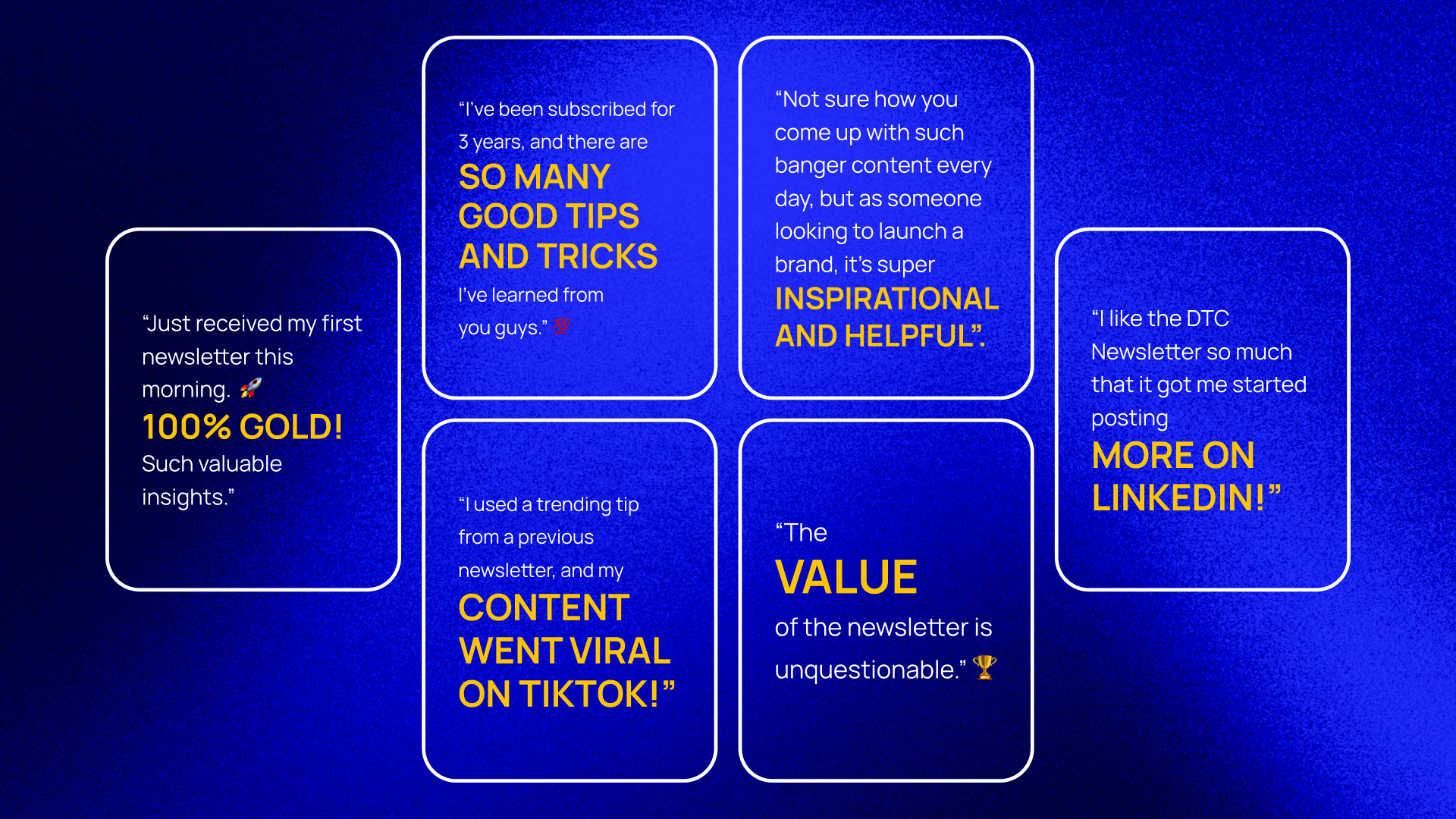
“Just received my first newsletter this morning. 100% GOLD! Such valuable insights.”
“I’ve been subscribed for 3 years and there are so many good tips and tricks I’ve learned from you guys.”
“Not sure how you come up with such banger content everyday, but as someone looking to launch a brand, it’s super inspirational and helpful.”
“I used a trending tip from a previous newsletter and my content went viral on TikTok!”
“The value of the newsletter is unquestionable.”
“I like the DTC Newsletter so much that it got me started posting more on LinkedIn!”
🔎 Customers are paying attention to your brand — so are state tax collectors. Not sure what to do after Shopify says “start collecting Sales Tax”? Get Anrok's guide to sales tax here. *
🔮 Want To Predict Your 2026 Email Revenue? Jordan from Pilothouse shares a deceptively simple and highly accurate forecasting model. Listen here.
* sponsored
📥 Got a B2B Biz?
Join dozens of B2B companies finding demand-gen success through our niche community of 150k brand leaders and founders this year. Talk to our team to learn more.
DTC Newsletter is written by Rebecca Knight and Frances Du. Edited by Eric Dyck.
Please note that items in this newsletter marked with * contain sponsored content.
.svg)


.svg)


.svg)


.svg)
.svg)
.svg)