Good morning,
Here’s what you’ll find in today’s DTC:
1️⃣ How Dieux's email program works and where to take it next

☁️ Educational Luxury Meets Smarter Lifecycle Marketing
Dieux Skin has done something genuinely hard: built a skincare brand that people trust. Not just like. Trust.
Their positioning feels equal parts clinical, cool, and deeply transparent, blending expert-backed education with elevated self-care aesthetics.
And that balance carries into their email program.
The flows are thoughtful, visually polished, and packed with ingredient education and trust-building copy.
The email program carries that trust well. What it hasn't fully done yet is convert it.
The Welcome Flow
Dieux’s Welcome Series does a lot right from the start.
The signup quiz is one of the better list-entry mechanisms we've seen in skincare. It creates engagement, signals personalization, and sets an expectation that Dieux actually knows who you are.
The problem is the emails that follow don't yet deliver on that expectation. Everyone gets the same flow regardless of what they told you.
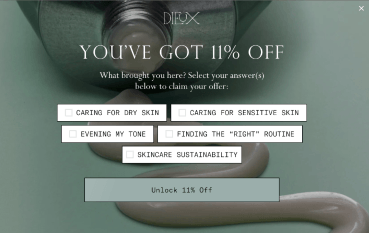
The emails themselves feel incredibly on-brand: soft visuals, confident educational copy, and messaging that reassures customers rather than overpromising.
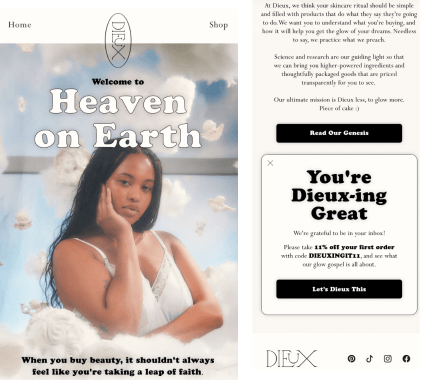
Lines like “When you buy beauty, it shouldn’t feel like taking a leap of faith” perfectly capture the emotional core of the brand. Skincare as informed decision-making, not blind trust.
Email 2 is doing something most skincare brands can't pull off: making a chemistry lesson feel like a luxury experience.
The ingredient breakdown format is genuinely distinctive. It just needs more visual support.
Dense educational copy without product imagery or UGC asks a lot of a reader who hasn't bought yet.
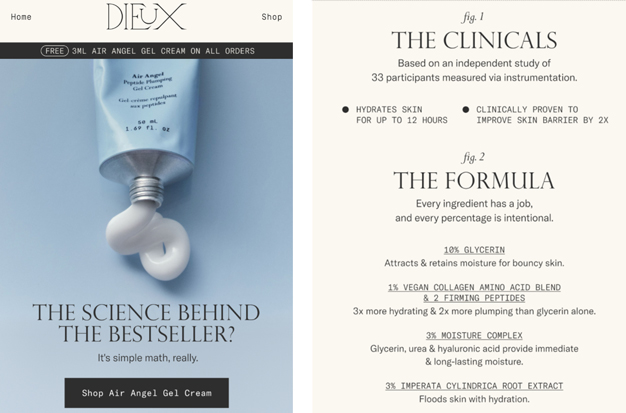
Ingredient breakdowns, reviews, and formula explanations would feel more engaging paired with product imagery or UGC rather than relying primarily on text.
By Email 3, the flow becomes much more shoppable with stronger product visuals and discount reinforcement. This has the strongest structure of the three.
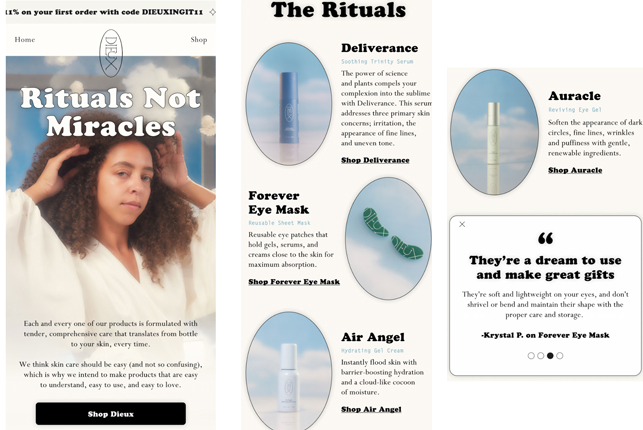
But the cadence overall feels a little compressed, with emails sent just one day apart.
Pilothouse Tips:
✅ Improve offer visibility: The 11% discount is the reason most of these subscribers signed up. In the first email it's buried. In the second it disappears entirely. That's a broken promise at the exact moment the relationship is being formed.
For a user who signed up expecting an incentive, the value prop should be immediately clear in both the subject line and hero section.
✅ Test send frequency: Dieux is diligently sending out emails in their welcome flow, but daily sends can cause fatigue for new customers. Testing a more standard two-day delay could help maintain engagement.
✅ Story expansion: There’s an opportunity here to expand the series to 4-5 emails.
Between founder storytelling, skincare education, quiz-based personalization, and product-specific routines, Dieux has more than enough content to support a deeper onboarding journey.
💡 One other interesting opportunity: the free gift mentioned in the flow could work much better as an SMS incentive or post-purchase offer rather than competing with the primary welcome discount.
The Abandon Cart Flow
The Abandon flow is harder to pull off than it looks. Educational copy in a recovery sequence can easily tip into lecturing, or worse, desperation. Dieux avoids both. The tone stays confident and warm throughout, which is exactly right for this brand.
The shorter format works well here, especially compared to the more information-heavy Welcome emails.
The strongest element throughout the series is trust-building.
Reviews are used effectively, and the copy keeps the tone approachable and confident.
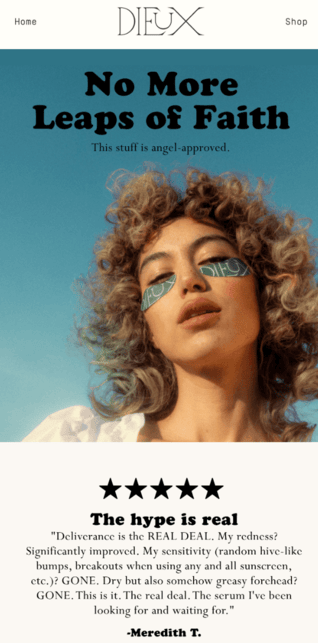
But visually, the flow misses an opportunity to lean further into UGC and personalization.
Showing real customer photos alongside testimonials would strengthen purchase confidence considerably.
Surfacing the specific abandoned product in the first email, rather than a static hero image, would sharpen relevance at the highest-intent moment.
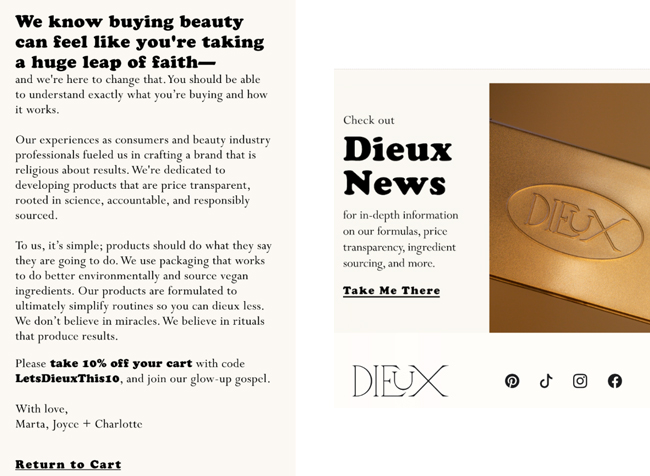
The discount strategy also needs refinement. Right now, the same 10% offer appears across multiple touchpoints, including time-sensitive language that later gets contradicted when the discount reappears.
The editorial content in Email 3 is genuinely interesting. It belongs somewhere in the lifecycle. Just not here. An abandon flow has one job and "Dieux News" pulls focus from it at the worst possible moment, when a customer is one click from converting.
Keeping all three emails focused on checkout completion would tighten the sequence considerably.
Pilothouse Tips:
✅ Using dynamic product blocks: For skincare especially, where customers are often evaluating very specific products, reminding shoppers exactly what they were considering is crucial.
The brand clearly knows how to make dynamic product blocks feel elevated because Email 2 incorporates them well. That treatment should be standardized across the full abandon flow.
✅ Tighten up send times: The first email sends after 30 minutes, which isn’t bad, but testing closer to the industry-standard 20-minute window would be worthwhile.
The second email waiting a full day feels more problematic. An 8-hour reminder would likely capture more high-intent shoppers before momentum fades.
✅ Fix the urgency sequence: The 24-hour expiry language in the first abandon email is the one place where the brand's credibility takes a hit. When that same discount reappears later in the sequence, customers notice. For a brand whose entire positioning is built on transparency, that inconsistency is worth fixing. It's a small mechanical issue with an outsized trust cost.
A cleaner setup would split the abandon flow into two paths:
Conclusion
Dieux Skin has already mastered what many skincare brands struggle with: trust. Their emails feel informed, emotionally intelligent, and beautifully aligned with the brand.
The next phase is optimizing the conversion mechanics to match that brand strength:
Dieux has already solved the problem most DTC brands are still struggling with: they've made people believe them. The email program reflects that. What's left is mechanical, and mechanics are fixable. The brand doing the work here is worth getting right.
📥 Got a B2B Biz?
Join dozens of B2B companies finding demand-gen success through our niche community of 150k brand leaders and founders this year. Talk to our team to learn more.
Don’t forget to rate the DTC Podcast on Apple (⭐️⭐️⭐️⭐️⭐️)
DTC Newsletter is written by Rebecca Knight and Frances Du. Edited by Eric Dyck.
Please note that items in this newsletter marked with * contain sponsored content.
.svg)


.svg)


.svg)


.svg)
.svg)
.svg)