SPONSORED BY:


Good day DTC people. Today, before getting into marketing actions you can take this week to relieve margin pressure, we’ve got to start with some news about rising margin pressure…Not gonna lie, the global picture is looking tee-multuous…so before that, here’s a meme to sweeten the zeitgeist:

Credit: @marketingmilennials
📈 Import costs are climbing, don't plan on relief
Rough week to be Canadian. Trump wants 50% tariffs on Canadian goods by August 19, and it hits even CUSMA-compliant goods, landing right as CUSMA goes back to the table. Carney says he won't negotiate under threat, so both sides are digging in. Elsewhere, the temporary 10% US import tariff ends Friday and a permanent 10% to 12.5% version replaces it, with no expiry this time. And Hormuz is escalating again, US warships blockading Iran and oil past $90, where freight and war-risk insurance can spike fast. Leave margin room in Q3 and Q4, and don't bank on any of it easing.
⏸️ Still don't pause that ad
Yesterday we featured Bobbie's Alina Fitsai’s tweet on why a bad-CPA week doesn't make a bad ad. Today Peter Quadrel sharpens the point. Meta scores the journey, so a high-spend, low-ROAS ad is often the first touch that makes retargeting work. Kill it and you break the path.
Before judging an ad on ROAS, check where it sits: frequency, CPMR, segments reached. Then find the gap it covers, a sizing question, a warranty worry, a rival comparison, and build creative to answer it. Add the missing touch, don't delete the one working to assist the journey.
We've seen it in our lead-gen for our own companies and have a new rule: never pause an ad.
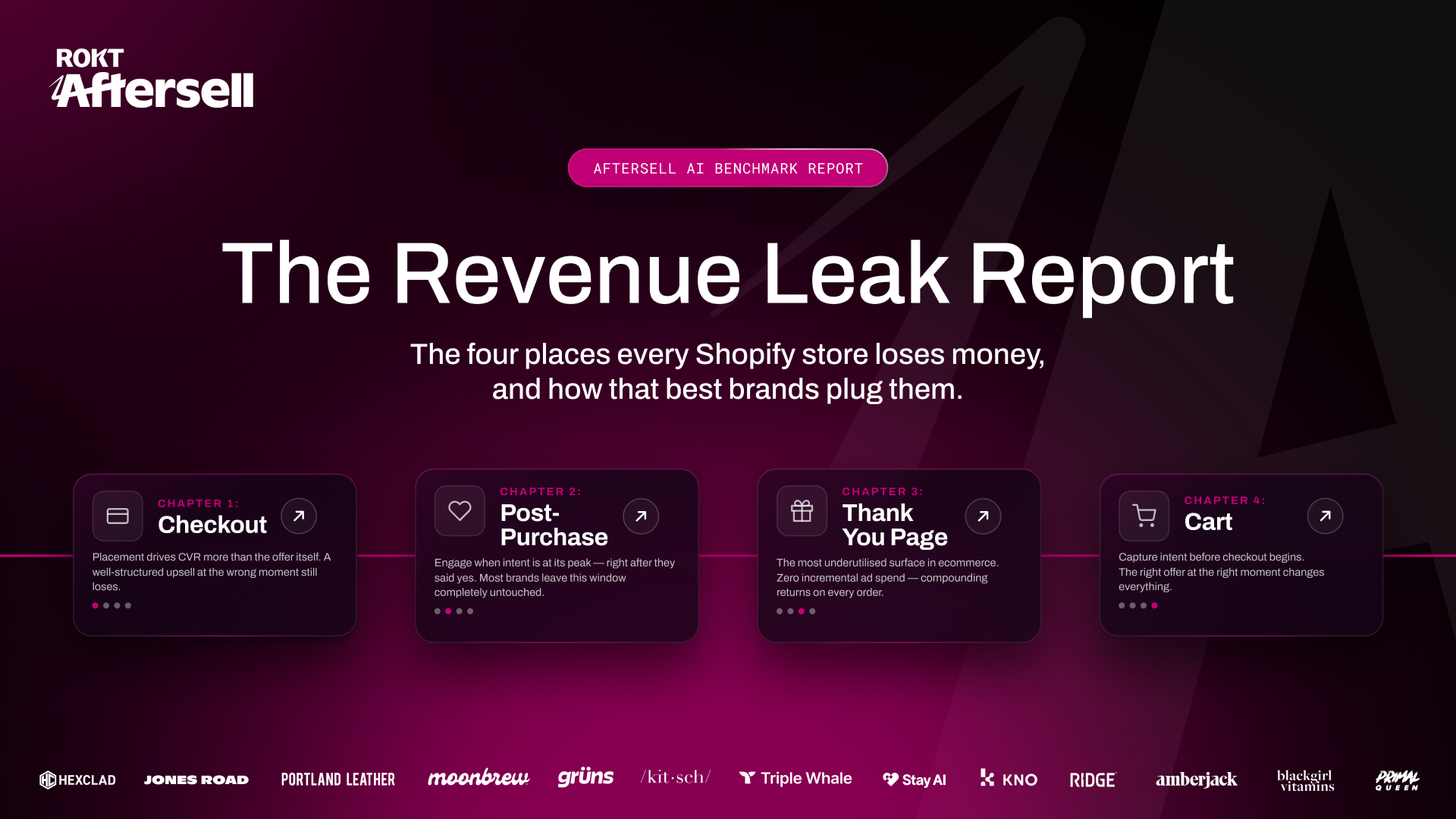
🤔 Millions of shopper sessions. Hundreds of ecommerce brands. One question:
What separates top-performing post-purchase experiences from everyone else's?
Aftersell's latest Revenue Leak Report uncovers the benchmarks behind offer placement, pricing, sequencing, and customer behavior. It reveals why some brands are generating dramatically more revenue from the exact same opportunity.
Check out the Revenue Leak Report to see where brands are leaving money on the table, how the best merchants are capturing it, and how you can too.
* sponsored
📉 Google's AI is eating clicks so fast even Reddit's had enough
Reddit's $60 million-a-year deal letting Google train its AI on Reddit content is up for renewal, and Reddit's actually considering just saying no. Stock dropped 6% on the news yesterday morning, which tells you how much of Reddit's business model leans on that one check.
The reason isn't complicated. Google's AI Overviews answer the question right there on the search page, so nobody clicks through anymore. Just 8% of people click a regular result when an AI Overview shows up, versus 15% without one. USA Today, Politico, and Reuters are all having the same fight with Google right now, everyone who makes the content Google's AI eats for free is starting to ask why they're still giving it away.
Reddit is one of the main places AI models learn what real people actually think about products, which is exactly what's now answering "what should I buy" instead of a search results page. Less Reddit in the training data means the AI making recommendations in your category is working off less real human opinion and more guesswork.
🧩 Your creator's one perfect ad is missing its sequel
Performance creative consultant Dara Denney has a simple move for anyone running partnership ads on Meta. Get the creator to shoot one or two quick Stories-style images alongside the main ad, not as separate tests, but as a mini funnel for that one creator inside your ad account. Someone sees the polished partnership ad, then gets retargeted with the same creator's more casual "story" version, and it reads like they're following that person instead of getting hit with another ad.
Her bigger point is that a lot of people chase creative diversity, just making more variations, when what actually moves the sale is what she calls a "creative ecosystem," ads that build on each other instead of existing as isolated one-offs. Working with the same creator across multiple formats is her go-to way to do that.
I asked Aves, Head of Brand Content at Pilothouse, for her take and she took it a step further. Place each piece at a different point in the customer's decision instead of just varying the creative. The first ad, the one running through the creator's handle, should stay top of funnel, just building attention. The follow-up Stories pieces are where you go after the actual reasons someone hesitates, the 100-day guarantee, the product after it's been washed or worn a ton so people can see it holds up. Building the ecosystem is smart. The real magic happens once you layer in that kind of strategy on top of it.
If you're already running partnership ads, ask your next creator for two extra Stories shots along with the main asset and you've got a sequence instead of a single swing.
💸 If you’ve been missing this, it’s been costing you
Everything you've been told about post-purchase optimization is only half the story.
Why do some brands generate multiples more in post-purchase revenue than others?
Higher conversion rates don't always mean higher revenue. Bigger offers can outperform cheaper ones. And the moments after checkout are more valuable than most brands realize.
Aftersell analyzed millions of shopper sessions and uncovered the benchmarks behind top-performing post-purchase experiences. Learn which offers, placements, and optimization strategies move revenue, not just conversion rates.
* sponsored
🎧 Jordan says you're building your browse abandon flow backwards
It's almost August (wild, I know), which means everyone's planning Q4. Same move every year: stock the pond now, ramp acquisition so you've got people to target when the holiday rush hits. More traffic means more abandoned sessions, so here's Jordan, who runs email and retention at Pilothouse, on the only browse abandon flow you'll ever need.
Trigger and timing. Fire off viewed product, one flow keyed to the exact item someone looked at. If you segment, split by your top two categories plus a default and stop there, most of the lift is dynamic content, not segmentation. First email 20 minutes after the view, second 8 hours later, same day. Check your Klaviyo smart sending setting so it doesn't eat the second send.
Subject line. Skip "caught you looking." Name the payoff, the product they left plus "recommended for you." And test them, when brands test subject lines, revenue per session moves more than open rate does, and the value compounds down the funnel.
The email. Don't lead with a hero shot of some random person using your product. Lead with the item they clicked. Over half your opens never scroll past the fold, so the top does almost all the work. Below it, show that one product, not a grid of recently viewed items, more options trigger the paradox of choice and conversion drops.
Merchandising. Five flavors: recommendations, trending, recently added, best sellers, and perfect together (two complementary items pitched as a pair). Browse abandon gets recommendations and trending, since you know what they were into. Best sellers and new-to-site are for site abandon. After that it's more art than science: handle objections, talk materials, a little brand marketing, close on a testimonial.
The flusher. Three emails in and nobody's bought, you're into the funnel flusher. First at 7 days, intent's dead, bring back the welcome coupon at 10% to 15%. Second at 30 days, that's reactivation now, so the discount gets real, 20% to 30% off.
Full episode's here for Jordan on the dynamic content logic in detail.
🔎 Same traffic, same customers, 20x different outcomes. Aftersell's Revenue Leak Report reveals why some brands generate dramatically more post-purchase revenue than others, and exactly where the difference comes from. Read it here. *
* sponsored
Did you find this valuable? Support us by checking out our businesses:
Please note that items in this newsletter marked with * contain sponsored content.
.svg)


.svg)


.svg)


.svg)
.svg)
.svg)