SPONSORED BY:



Good morning. It's Eric, and today's a meta Monday. The lowercase kind: by which I mean, how to market to consumers who know your ad is an ad. Ready to get meta on Meta?
But first, the news you need to know.
📊 Meta's ad algorithm is starting to read your creative before it targets anyone
Meta published a research post on its ad ranking system describing a new layer called Hierarchical Interest Representation, which builds embeddings connecting users, advertisers, and products by combining engagement data with the actual content of an ad. That includes text, images, video, and product catalogs.
@rokhladnik breaks the post down for advertisers in his latest tweet. Creative concept now functions as a targeting input in its own right. Five ads with different creators but the same underlying pitch can still register as one thing to the algorithm.
We’ve discussed this a few times on the AKNF pod already. Real creative diversification means testing different buyer motivations and different problem framings. Swapping the actor while keeping the same script isn't a new test, it's the same test with a new face.
Worth checking your current creative testing plan against this. If your variants differ by hook or talent but not by underlying angle, Meta's own research suggests you're not actually running the number of tests you think you are.
❗ Is TikTok Shop dipping its toe in the agency game?
Like we mentioned last week, TikTok Shop is making major changes and this is the biggest one I’ve seen yet - TikTok is piloting a managed services program in the US that hands the company near-total control over a seller's Shop business, covering marketing, GMV Max ad testing, and creator hiring.
In that scenario, sellers will only need to list products and send samples to influencers. Everything else is handled by TikTok.
Enrollment runs $10,000 flat plus 10% to 20% commission per sale depending on which category you’re running in. This puts TikTok in direct competition with the agency partners it leaned on to build Shop in the first place.
If you're running Shop through an agency or in-house team, price this out against your actual ad spend and commission rate. It’s in pilot testing right now, but I’ll be keeping an eye on this.
💸 The easiest revenue you'll ever earn already checked out
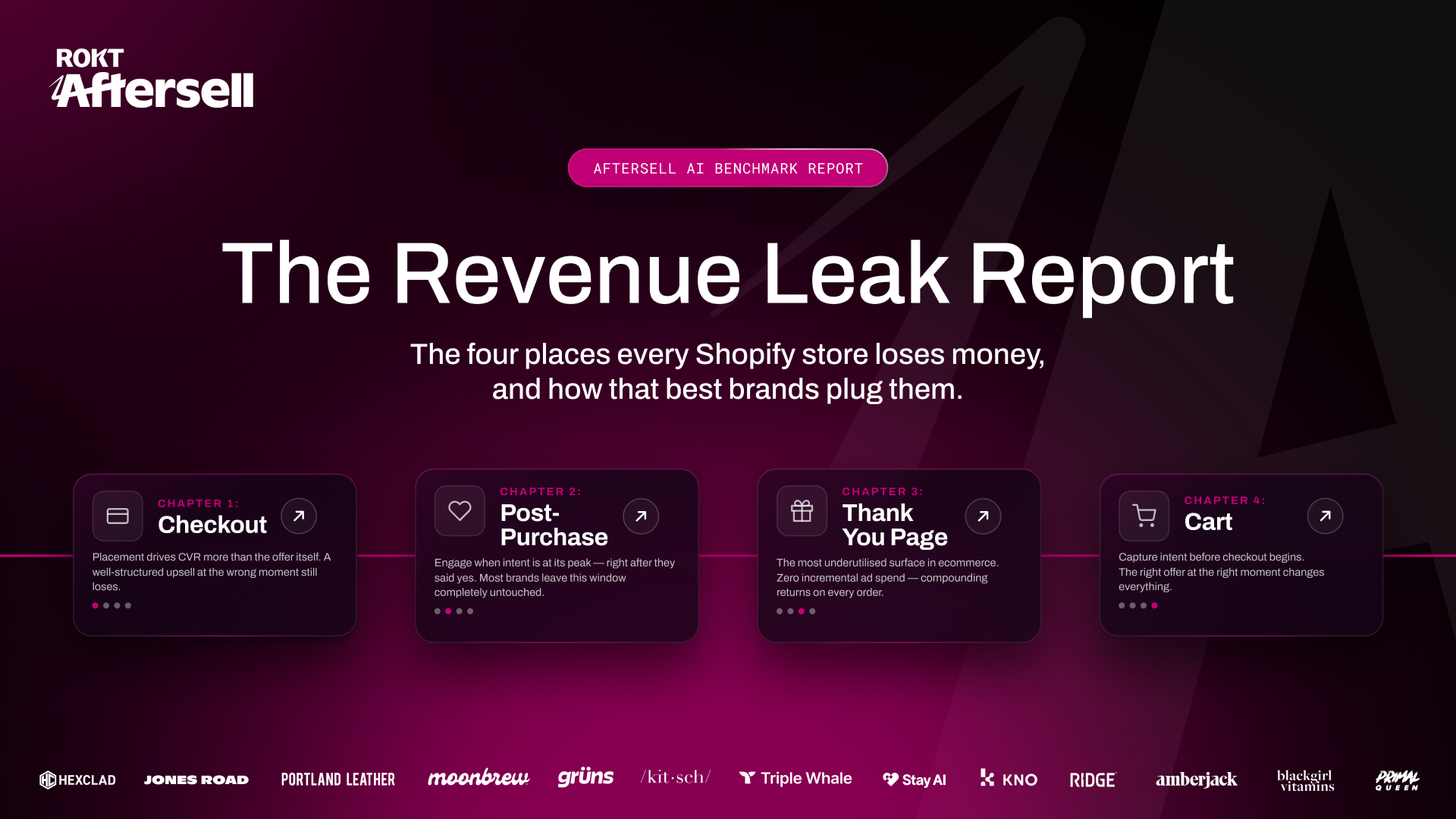
Aftersell analyzed 17 million sessions across 50,000 Shopify brands and shared what they found in this Revenue Leak Report. It gets into which post-purchase strategies are consistently driving higher AOV, more incremental revenue, and better customer experiences.
Customers are often willing to buy more - what they need is the right offer at the right moment.
Learn which placements outperform, why your highest-converting offer may generate less revenue, and how top-performing brands are using post-purchase monetization to grow more from every customer.
Check out the report, then go audit your post-purchase experience with fresh eyes.
* sponsored
📱 Shopify's Shop app is generating fake invoices, and it's your customers getting the call
Scammers found a way to plant bogus order notifications inside the Shop app, complete with a fake invoice and a phone number to "dispute" a charge that never happened.
One customer shared a $345 invoice for a Geek Squad subscription with a scam number.
Shopify says it has rolled out new detection controls and is telling users not to call the number and to report the store in-app instead.
No money has been taken in reported cases so far. The real cost here is trust. Any of your customers using the Shop app could get this notification and assume it's tied to your store.
Get ahead of it. Loop in whoever runs your customer support and give them a response ready to go → aka, it's a known Shop app scam, don't call the number, and report it in-app.
🎨 Your creative strategy and your brand book are not the same thing
Aves Valerio, Creative Strategist at Pilothouse, put out a new episode of Ad-venturous this week that you should tune in to if creative strategy is something you're thinking about or hiring for right now.
I love new-to-me marketing terms, and this podcast introduced the term “why buys” which is the reason someone would buy a specific product (not what they’d buy from your brand generally, but the specific SKU).
Aves shared that you should stop building why buys by persona and start building them by product. The benefits that make a travel mug appealing to a woman in her 20s and a man in his 40s are often identical - it's the translation that changes, not the underlying why buy. Starting product-first removes the cognitive bias that persona-first thinking creates.
🛍️ A shopping extension may have been generating affiliate commissions out of thin air?
Phia, the AI shopping tool from Phoebe Gates and Sophia Kianni, got caught claiming affiliate commissions on sales it didn't actually generate.
Bloomberg tested the browser extension on 50+ retail sites, including Walmart, Nike, and Zara. On mobile web, the extension opened a hidden background tab to load its own affiliate link and overwrite whatever cookie was already set, cutting out the publisher or influencer who actually earned the sale.
Phia says it fixed the issue within 24 hours of being notified, and Bloomberg confirmed the behavior stopped on retest.
If you run an affiliate or influencer program on any of those networks, pull your last-touch attribution logs and check for Phia showing up as the referral source on conversions you know came from somewhere else.

🔎 The LLM shelf - AI discovery report 2026
Shoppers are asking AI what to buy. Is your brand on the list?
Our new report from DTC Reports is benchmarking how shoppers are using AI to find products and what brands are doing to show up when they do.
We're surveying consumers and brands both. Add your data to the 3-minute merchant survey (anonymous) and get the full report before it goes public.
🧠 The consumer knows it's an ad. Now what?
Something shifted in how people relate to the brands chasing them. Audiences got sharper about marketing itself, and that changes how every message has to land.
Five things that are true right now
1️⃣ People read marketing fluently. They clock hooks, fake urgency, and sponsored content on sight. What used to persuade now just repeats.
2️⃣ Recognition raised the bar. Once someone spots the pattern, they stop responding on autopilot and start judging the execution. Average content gets skipped.
3️⃣ Templated content blends into the wall. Same formats, no new angle, and the work feels interchangeable. People can tell when the formula is doing the lifting. (Big memeable moments are the exception, but don't build on that alone.)
4️⃣ Self-awareness earns trust. Brands that own the mechanics of marketing make the audience feel let in, not sold to.
5️⃣ Execution is the edge. The baseline understanding is higher than it's ever been, so intention and specificity are what separate skimmed from saved.
How to market to the marketing-aware
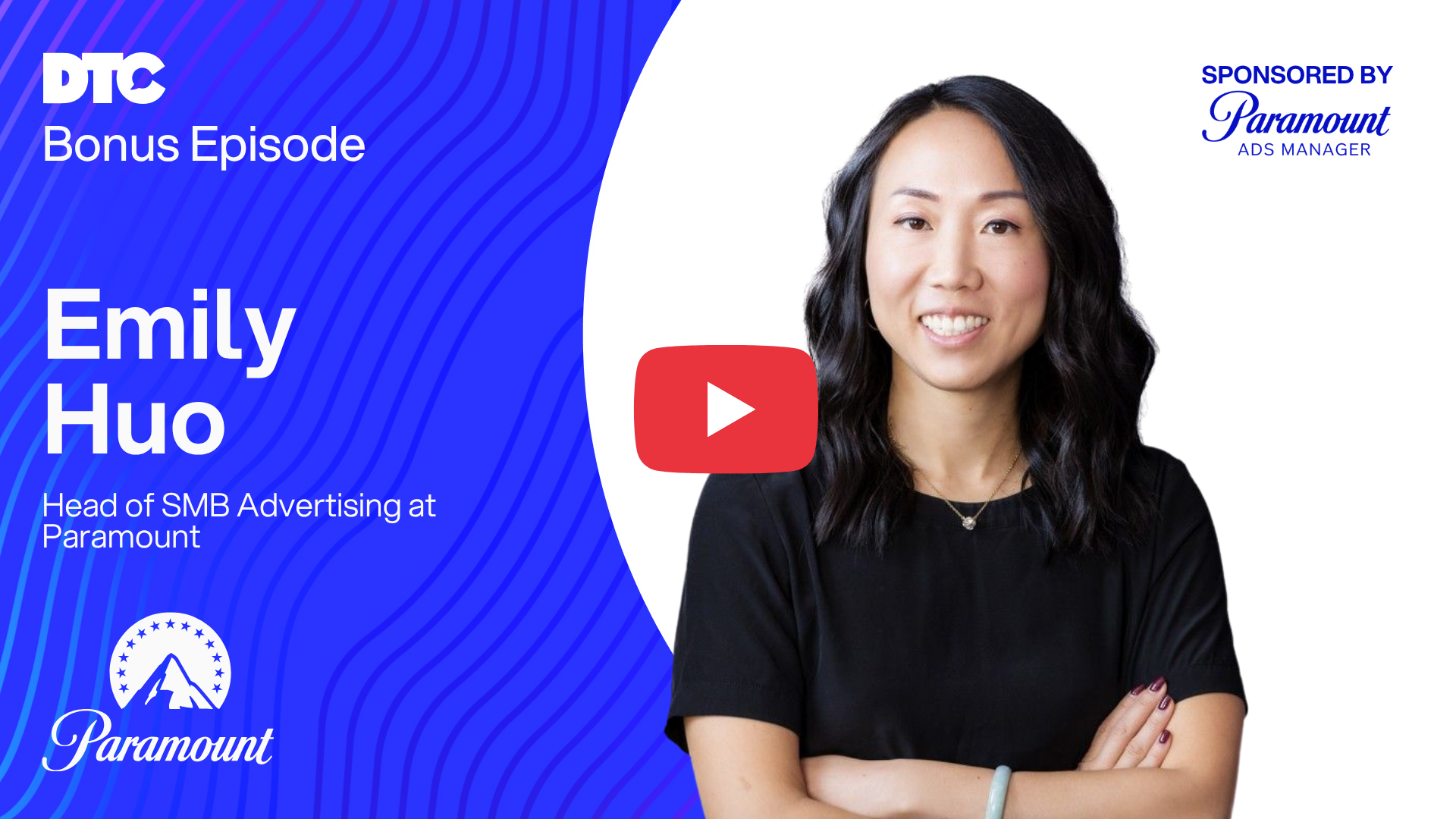
🎧 The CTV Blueprint for DTC Brands: Build in Summer, Convert in Q4 (Paramount Ads Manager)
After building ad businesses at X (Twitter), Reddit, and Spotify, Emily Huo now heads SMB advertising at Paramount.
On this episode of the DTC Podcast, Emily shared that most DTC brands put the bulk of their paid budget in social, but viewers spend around 99 minutes per session on Connected TV.
We chat about the evolution of CTV advertising, how Paramount Ads Manager platform reports real-time attribution, and how brands use shows like Survivor, Landman and RuPaul’s DragRace for their halo impact.
▶️ Watch here | 🎧 Listen on Spotify
🤔 Wondering if CTV retargeting actually moves the needle? One brand ran a controlled test on Paramount Ads Manager and got a definitive answer. View the results here → *
🛒 Think your post-purchase strategy is optimized? It's worth a double check. See what millions of shopper sessions revealed in Aftersell's Revenue Leak Report. Read it here. *
* sponsored
Did you find this valuable? Support us by checking out our businesses:
Please note that items in this newsletter marked with * contain sponsored content.
.svg)


.svg)


.svg)


.svg)
.svg)
.svg)