Good Monday morning to you. I hope you had a great weekend.
Yes, we're doing a whole section on 2025 today. No, we haven't lost the plot and it’s not a Monday typo, stay with us.
It’s the last full week of August, which means it’s time to review those past BFCM learnings.
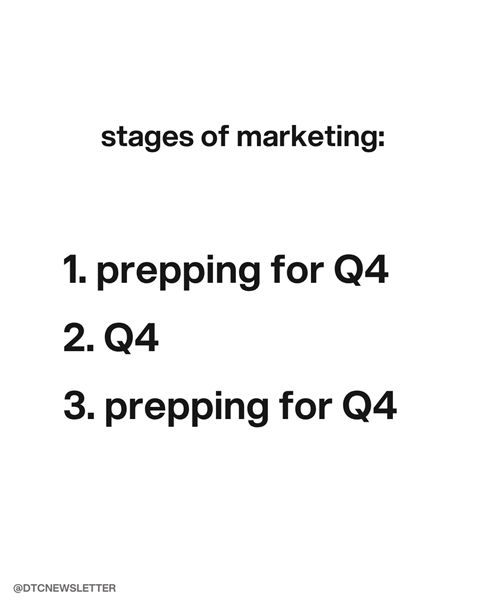
Let's go.
🏷️ Personalized pricing without a disclosure could become an FTC problem
The FTC’s proposed enforcement policy says using browsing history, location, purchase behavior, or other personal data to set an individual price without telling the customer may violate federal law. The agency cannot ban every form of personalized pricing, but it can pursue businesses that make a price look universal when it changes according to the shopper.
Audit pricing, promotion, loyalty, and optimization vendors now, including whatever clever data science lives three dashboards away from legal. If two shoppers can see different prices, you should know why and what each one was told.
🛒 Try showing your cart like a receipt
@DaveDiederen posted what could be a quick but effective test to run pre-Q4. Most brands show one number at checkout. The discounted total. Done.
The problem is that forces the customer to do mental math: remember the original price, calculate the saving, verify the discount actually applied. That's unnecessary friction right before they're about to hand over their card.
The fix is just showing their final bill like a receipt. Original price, amount saved, final price. Three lines instead of one.
Here’s the image example that Dave shared:
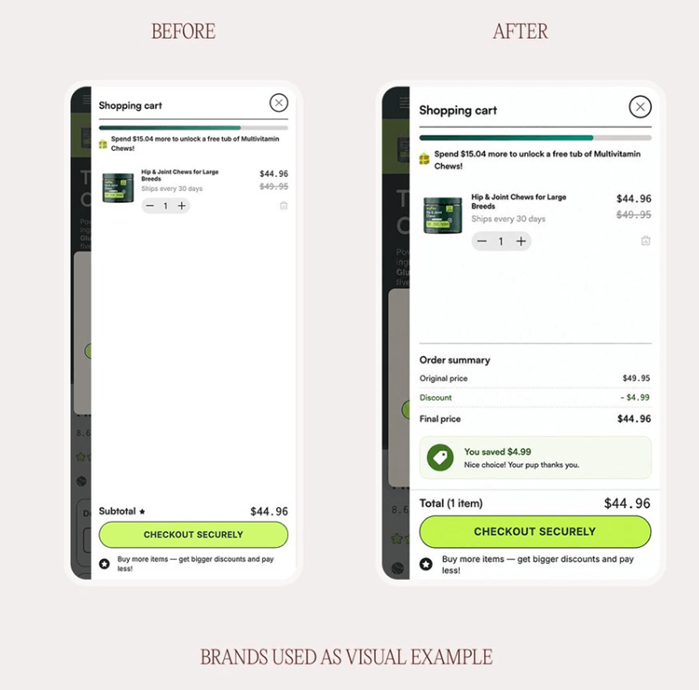
The saving becomes tangible instead of something they have to figure out, the original price anchors them against what they're paying now, and they're not left wondering whether the code actually worked.
💰 Sean Frank on why you're ignoring your easiest revenue
Chances are you're about to start cranking up the acquisition engine to stock the pond ahead of big sale periods. But what's your plan once you've got them on your list?
Sean posted this week on something everyone knows but tends to push down in terms of importance. Everyone wants to steal Grüns' landing page or copy their affiliate strategy. His point is that Grüns is worth $2 billion because of retention, not acquisition. Their paid game is strong, but the reason they can scale spend is that the cohort value justifies it. High LTV unlocks high CAC. You can't buy your way to that.
His prescription is blunt, spend 10% of the time you put into ads on email. It's a simpler game with fewer levers, but it's what takes you from $5M to $50M. Better email, better SMS, better post-purchase experience, better new products. That's the path.
The acquisition obsession makes sense when you're early. At some point it becomes the thing keeping you stuck.
This bit’s not from Sean but a quick note from DTC, if you know your email and retention needs work, start listening to foundational episodes of our email and retention podcast or reach out to our sister agency.
💡 Black Friday 2025 Learnings
Black Friday planning is underway.
Pilothouse reviewed BFCM 2025 performance across client Meta accounts and shared these learnings:
1️⃣ Early access wins
Brands that launched early access in the first week or two of November got a head start.
They gathered performance data while CPMs were still low, stacked social proof, and had time to iterate on creative before the most expensive week of the year.
Waiting until Black Friday week means launching cold, at the highest prices of the year, with no room to fix a weak hook.
2️⃣ Scale vertically
The accounts with the best efficiency scaled by increasing budget on their existing top campaigns.
Pilothouse recommends manually scaling and using rules to bump budgets multiple times a day, done early in the day. Budget changes take one to two hours to fully register on the platform, so a scaling move made at noon is competing at afternoon prices.
3️⃣ Evergreen creative with a BFCM hook
The strongest performers last year were proven, evergreen ads with a Black Friday overlay added on top.
Here are three examples from last year’s BFCM:
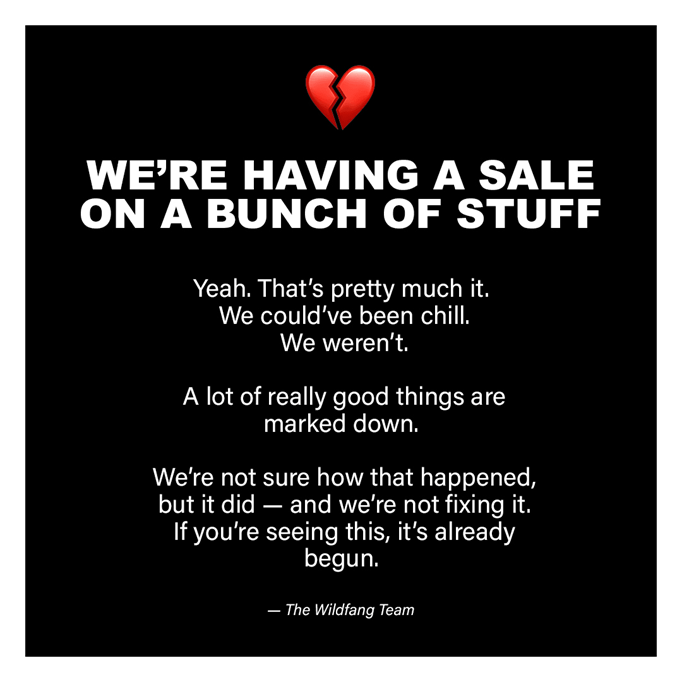
Wildfang took the trending apology note format and gave it a Black Friday angle. Bold headline, wall of text underneath to hold attention.
The copy skips the apology and goes straight to the sale: "We're having a sale on a bunch of stuff. Yeah. That's pretty much it."
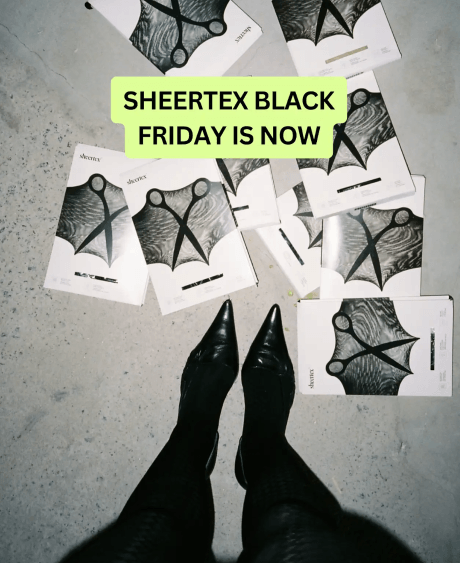
Sheertex announced their sale with an unstyled phone photo: packaged tights scattered on a concrete floor, boots in frame, sale copy stamped over the top. It performed as one of the strongest formats in the account.
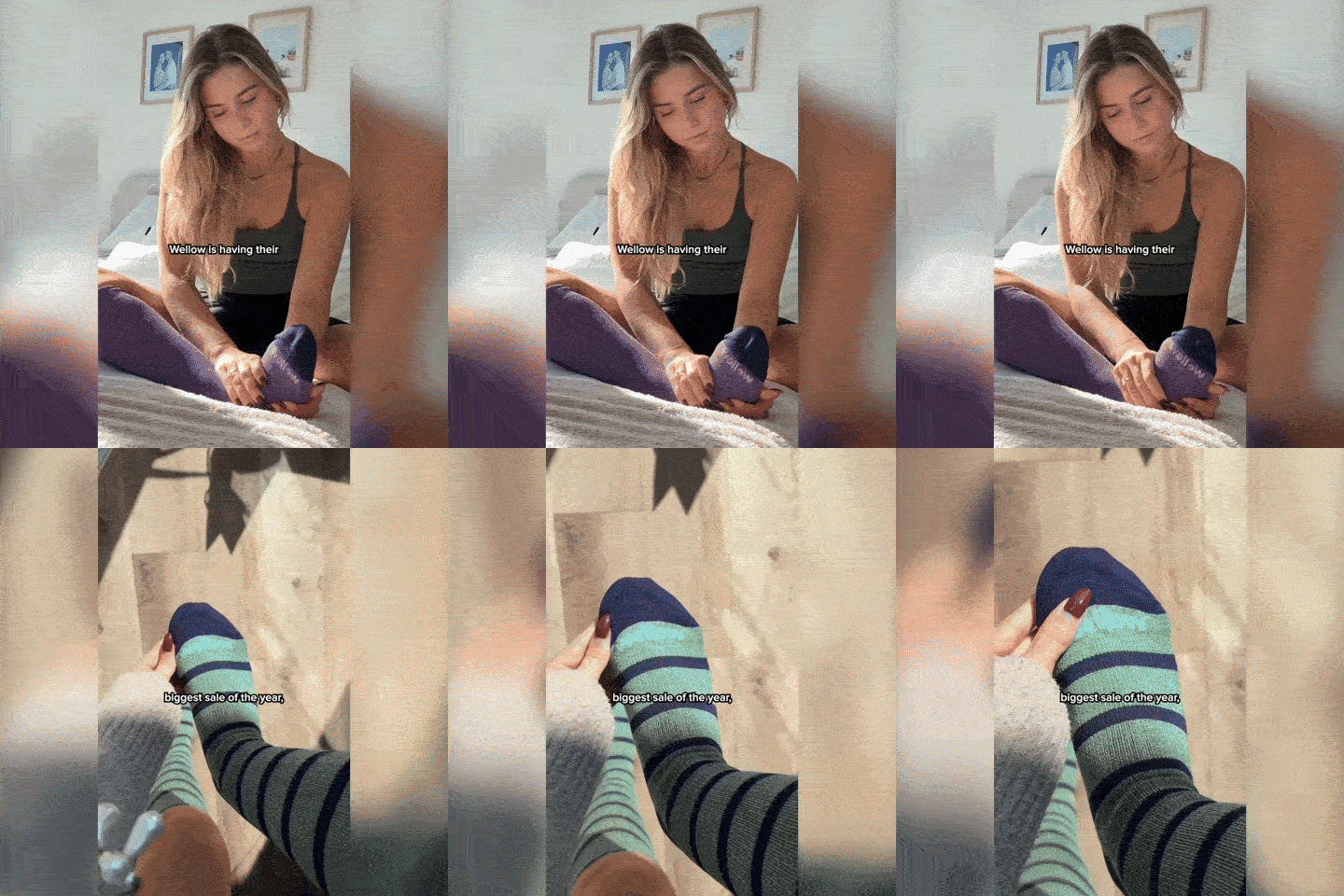
Wellow ran their compression sock sale through a creator. The deal is named in the first three seconds, the product gets demoed, and the video moves through colorways and patterns quickly.
Start planning your BFCM offer and creative now, before the CPMs climb in November.
🎧 Q4 Sale Ad Best Practices
Q4 is the most chaotic, high-stakes, and exciting time of the year for ecommerce brands.
In this episode, Aves broke down the best practices for crafting sale ads that work during peak season.
From keeping your offer simple to balancing scrappy and polished creative, staying prepared for last-minute pivots, and nailing your post-click experience, this episode is your quick-hit checklist for ads that convert.
▶️ Watch here | 🎧 Listen on Spotify
Did you find this valuable? Support us by checking out our businesses:
Please note that items in this newsletter marked with * contain sponsored content.
.svg)


.svg)


.svg)


.svg)
.svg)
.svg)