.svg)


Back

Content


Content

.svg)
Welcome to the DTC family!
Oops! Something went wrong while submitting the form.
Back

SPONSORED BY:



Good morning!

Yeah, you could say I’m a full-stack marketer now. A true generalist, if you will.*
*Powered by AI.
Here’s what’s in today’s newsie:
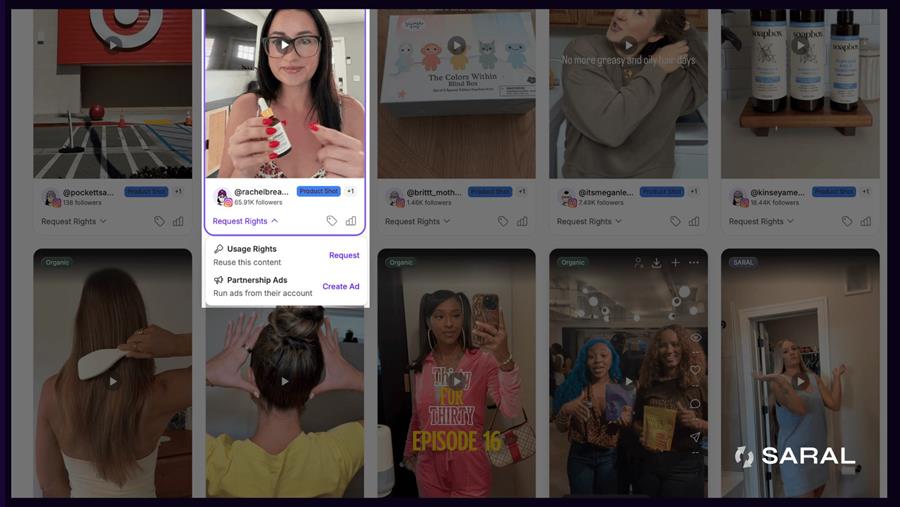
There’s a popular creator strategy playbook making the rounds right now:
Useful? Absolutely. Incremental? Maybe...
There’s a pretty obvious piece missing. 👉 You’re paying to find out which creators can sell.
A stronger setup lets creators prove demand before you put paid spend behind them.
Organic creates the signal → affiliate proves the value → paid amplifies the winners.
That’s the Predictable Influence model brands like Grüns, Solawave, Obvi, Proactiv, and 200+ more are building with SARAL.
SARAL matches you with brand-fit creators, handles affiliate tracking, and shows you which creators and content are already driving sales.
By the time that content reaches your paid team, you know who worked, what they made, and where the budget should go.
See the Predictable Influence model in action.
*Sponsored
Remember yesterday’s intro? The one about Prime Day hitting Meta harder than usual this year? Yeah.
According to Adobe, US shoppers spent $9.86 billion online during October 6–7, the two days of Amazon’s Prime Big Deal Days. That’s up 8.5% YoY, and Adobe’s number covers all online retail, not just Amazon.
Four signals to act on before BFCM:
Shoppers are already seeing holiday offers. Your October results are the best preview of November you’re going to get.
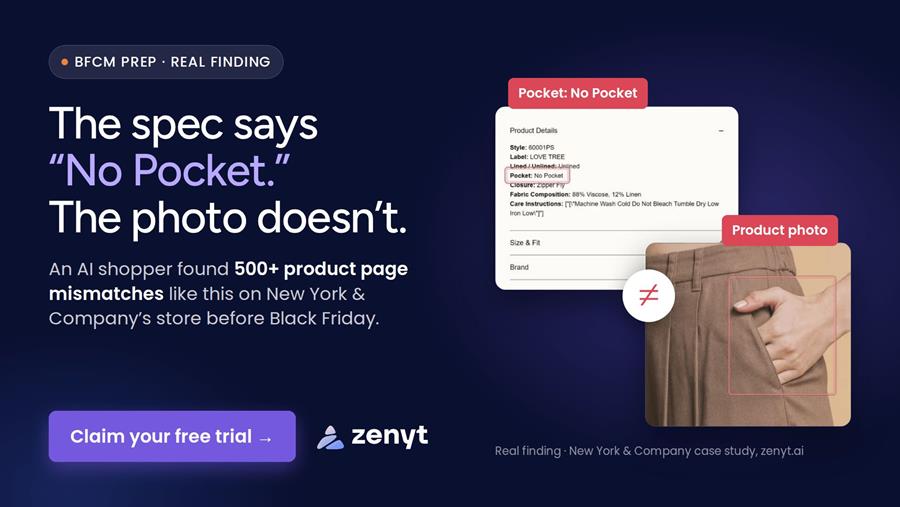
The spec said “No pocket.”
The photo showed a hand in one.
Uh-oh.
Weeks before Black Friday, New York & Company migrated its storefront. With too many pages to check manually, VP Marketing & Ecommerce Laura Cantor had Zenyt’s AI shopper review the store like a customer.
It found 500+ inconsistencies and ranked the 50 most likely to cost revenue.
Zenyt estimates the fixes recovered $100K to $300K.
At Caudalie, SPF 50 in one place and SPF 30 in another cut conversion by up to 15%.
Zenyt checks your titles, specs, images, and prices, then flags the findings most likely to cost revenue.
No card required. Claim your free trial.
*Sponsored
Meta looks for people likely to purchase, and that can include customers who already know your brand. If your prospecting setup isn’t clear about who counts as an existing customer, some of that budget can end up reaching people who have already bought.
BFCM raises the stakes. Past buyers already know the brand, and during a sale every prospecting dollar that reaches them is a dollar that didn’t meet someone new.
Here’s the Pilothouse Meta team’s four-step check.
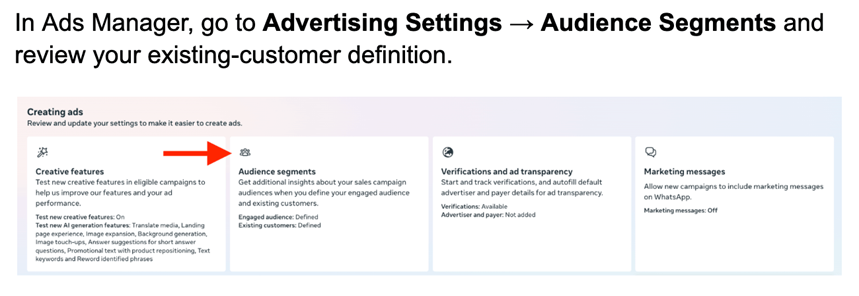
Include an updated purchaser list and a Purchase-event website audience. Add purchaser-based audiences synced through Shopify or Klaviyo.
Define your engaged audience here too, using eligible audiences such as recent website visitors.
One thing to know: these definitions power your reporting. Delivery is controlled by the next two steps.
2. Set the campaign to acquire new customers
Finish step 1 first, since this setting relies on those definitions.

This tells Meta to spend more on new audiences and minimize spend on existing customers. Review the exclusions listed underneath and confirm they match the audiences you defined. Keeping those lists current helps Meta recognize previous purchasers.
3. Test tighter exclusions
If your pixel leans toward engaged customers, set up a manual prospecting campaign with additional exclusions.
At the ad set level, exclude social engagers, website visitors, and purchasers to direct more spend to net new users.
Don’t be surprised if the new-customer numbers look softer. You’re deliberately removing people who already know the brand from the pool.
4. Check where the money went
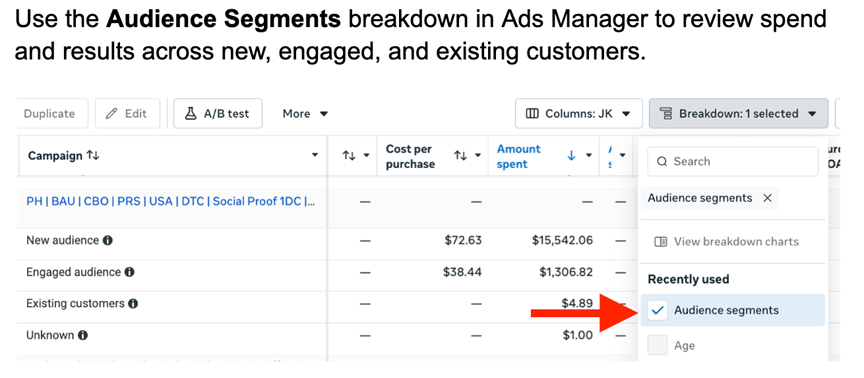
In the example above, new audiences received $15,542 of roughly $16,855 in spend, or about 92%. Existing customers received just $4.89.
The cost per purchase was also higher for new audiences: $72.63 versus $38.44 for engaged audiences. Prospecting needs its own benchmark for that reason. Judge it on the cost of acquiring a new customer, and keep warmer audiences out of the comparison.
If existing customers are taking more spend than you intended, check your purchaser lists, audience definitions, and exclusions.
Pilothouse recommends running this check weekly during sale periods, when the audience mix can shift quickly. Compare Meta’s breakdown against your store’s new-customer data as well, since Meta can only report on the customers it can identify.
Then judge the changes on one question: are you getting more new customers at a cost you can accept?
What would you do with an extra five hours?
On the latest AKNF, Pilothouse creative strategist Braydon shares how his AI workflow saved him roughly 5.5 hours in one week by reducing time spent researching creative and writing tickets.
AI agents find relevant UGC, static creative, and inspiration across Pinterest, Meta’s Ad Library, and Motion, then return a swipe file for him to review.
Braydon chooses the ideas worth pursuing, then passes the references into Claude workflows configured with context about his accounts. Claude uses those references to draft detailed tickets for designers.
Humans still lead the creative decisions, but AI reduces the time spent gathering references and drafting briefs.
What would you hand off first? Hear Braydon break down how he set up the workflow and where he still steps in.
▶️ Watch here | 🎧 Listen on Spotify
🎉 Got the first purchase? Nice! Now time to get the next one. GetResponse automates your email, SMS, and push journeys that turn one-time customers into repeat revenue. Start for free here. *
.svg)

.svg)


.svg)
.svg)