Good morning, Eric here. Today's newsie praises Levi's, tallies Meta's fines, and breaks down the attribution triangle 🔺, the three-way check Pilothouse runs on Meta, a third-party tool, and Shopify before scaling any brand.
RIP Sam Neill. We'd never know dinosaurs were birds without you.

🛢️ The Iran ceasefire broke again, and so did cheap freight
The interim ceasefire between the US and Iran collapsed this week. Iran struck commercial ships transiting the Strait of Hormuz, and the US answered with new strikes on Iranian targets.
Oil prices rose after the news: Brent crude jumped more than 3% in a single session and briefly spiked past $76 after the US revoked Iran's license to sell its own oil.
About a fifth of the world's oil moves through that strait. Analysts were already warning that traffic through Hormuz wouldn't return to pre-war levels even with the ceasefire holding. It's not holding.
If your Q3 freight budget assumed things had settled, check that assumption before you lock in rates.
⚖️ The EU might slap a $12B fine on Meta for its ‘addictive’ feed design
The EU Commission's preliminary finding says Meta's feed design threatens the well-being of users and violates the Digital Services Act.
They cite infinite scroll, autoplay, push notifications, and personalized recommendations as features that keep users glued to the app.
If the finding is confirmed, Meta faces a fine of up to 6% of global revenue, roughly $12 billion based on 2025 numbers, and has to change how Facebook and Instagram behave. Autoplay off. Infinite scroll broken into chunks. Forced screen time breaks.
Follow this case if you run EU campaigns. Video view costs, feed ranking, and time in app all lean on the exact mechanics Brussels wants gone. A less addictive feed usually means less inventory and different delivery patterns, which moves your CPMs whether your account did anything wrong or not.
We’ll keep you posted on Meta’s response before a final ruling lands
📈 Levi's raised prices, cut discounts, and grew online sales anyway
Last week we talked about Nike’s reported declining DTC growth. Levi's just posted the opposite - 17 straight quarters of DTC comp growth.
Ecommerce revenue grew 19%, direct-to-consumer now makes up 51% of total revenue, and CEO Michelle Gass credited more traffic, better conversion, higher units per transaction, and higher prices. The company pulled back on promotions at the same time.
A heritage denim brand raised prices, ran fewer discounts, and grew online sales. If you've been discounting out of habit because that's what your category expects, this is a data point worth showing your CFO.
🎯 Your best Meta ad set deserves its own landing page
@aryehMaxx shares that sending every ad click to the same product page is a cost you're choosing to pay.
His fix is building a dedicated landing page per audience, matching the ad's exact promise and creative angle, then watching the conversion data and iterating on the page every week.
He shared the actual prompt he runs through Triple Whale’s Moby: pull your highest spend Meta ad set, build a landing page that mirrors that ad's promise and creative angle, pull real reviews for social proof, keep it consistent with your brand, then track its conversion rate against the product page it replaces and propose one improvement a week.
If every audience you run is still landing on the same generic PDP, this is a cheap test. Pick your top spending ad set and test it out.
💬 Meta will now tell you if your chatbot is actually selling anything
Meta added new metrics to Meta Business Suite for brands running AI Business Agents on Messenger and WhatsApp.
Three new metrics you’ll want to familiarize yourself with: total AI conversations, contact with intent to buy, and containment rate, the percentage of chats the bot closes out without a human stepping in.
If you're running one of these bots for customer service or sales, you finally get to see whether it's earning its keep. Containment rate especially matters if you're paying per conversation or trying to justify headcount decisions.
Meta is always looking for new ways to monetize its AI tools. So gather insights on these metrics before a paywall shows up.
💰 New Seller Savings 2026
Sell better. Sell more. Sell with Walmart.
Sign up now to unlock up to $75K in New-Seller Savings to build your business on Walmart Marketplace*. 🛒
🛍️ Reach more customers. Shoppers on Walmart are looking for products like yours.
⚡ Tap into a network of millions. Each week more than 270 million customers shop with Walmart.*
🌐 Expand globally. Easily extend your business to any of their global marketplaces.
Maximize your reach with discounts on referral fees:
*Walmart first-party data.
*Conditions apply. Offer subject to eligibility criteria, promotional savings will vary by seller. See full terms and conditions for offer details.
* sponsored
🔼 The Attribution Triangle: How to Know Which Numbers to Trust
Pilothouse uses a method called the attribution triangle. It means checking Meta's reporting, a third-party tool, and Shopify against each other before making any scale decision.
The reason it matters now: Meta leans more on modeled conversions every quarter. Privacy constraints mean it can't observe every conversion directly, so it estimates. A single number from a single source isn't reliable enough to scale a budget decision on.
Check Meta's own reporting against a third-party tool like Triple Whale, Northbeam, or GA4, and against Shopify. Variance between the three is normal. Each tool uses different attribution logic and a different lookback window.
When Ads Manager and Events Manager totals don't match, Pilothouse recommends checking these first.
In Events Manager:
In Ads Manager:
In Shopify:
Attribution window choice changes your numbers on its own. Moving from 7-day click / 1-day view to a shorter window can shift reported purchase counts materially. 1-day click is too narrow for long-term decisions. It earns its keep during short spike periods like promos or BFCM.
7-day click / 1-day view gives the bigger picture. It risks double-counting a purchase that another platform already claims. Pilothouse defaults to 7-day click for anything that changes budget at scale.
Remember, Shopify remains the source of truth for revenue and order count.
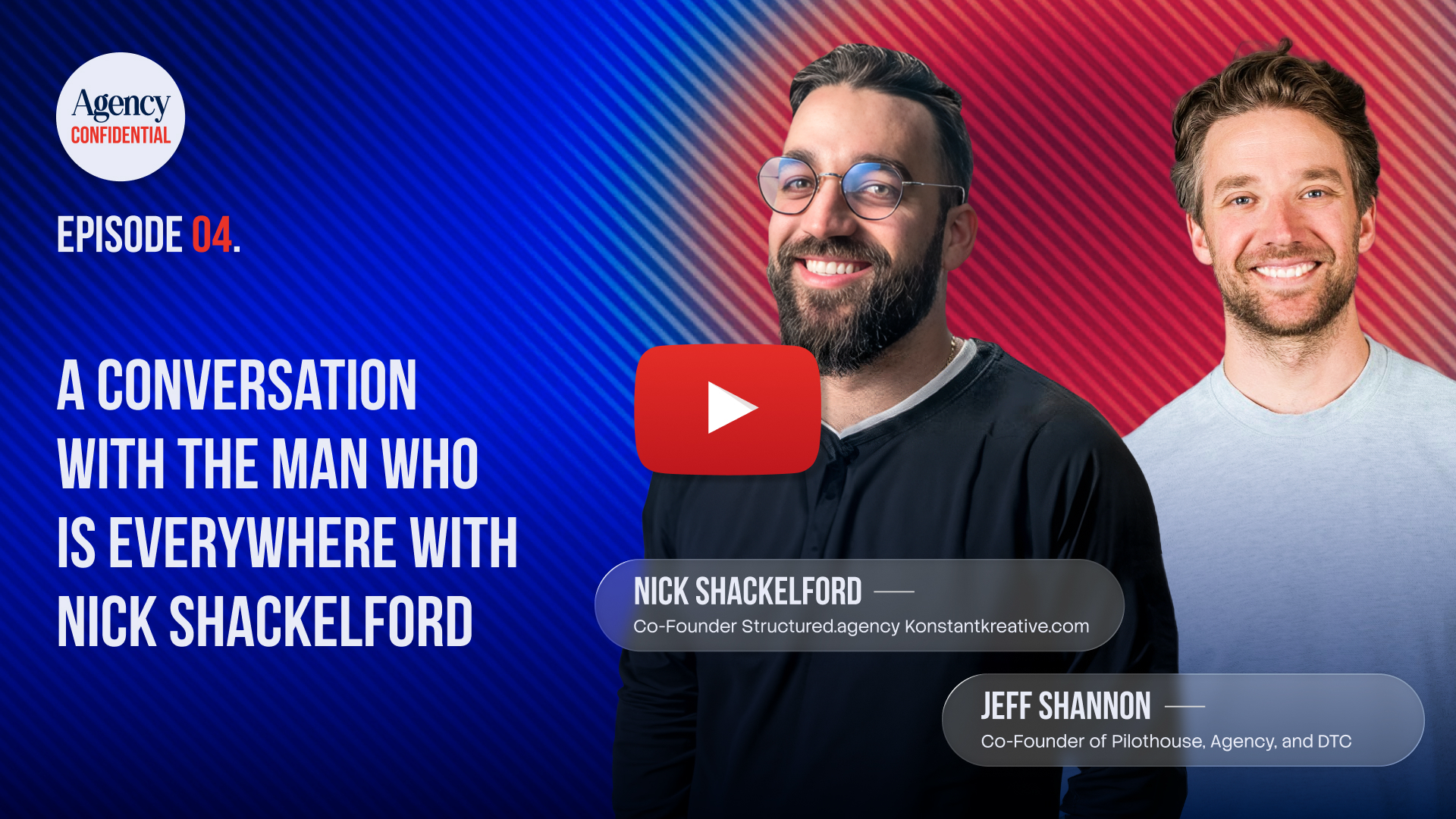
🎧 Why Nick Shackelford’s Personal Brand Saved His Cash Flow
Nick Shackelford has spent the past ten years building a personal brand online and running agencies like Structured, Konstant, and Lucid. Now it’s paying off.
After spending a decade creating expert online content, Nick is now one of the most cited DTC figures in ChatGPT and Claude search results, and it’s becoming a major cash-flow lever.
They discuss the real cost of being the face of an agency, and where Nick sees the DTC agency market heading in 2026.
▶️ Watch here | 🎧 Listen on Spotify
🗣️ Get feedback from real people before spending your budget. PickFu lets you test your ad creative, packaging, and branding – in minutes. Run your first test for free. *
* sponsored
Did you find this valuable? Support us by checking out our businesses:
Please note that items in this newsletter marked with * contain sponsored content.
.svg)


.svg)


.svg)


.svg)
.svg)
.svg)