.png)
Good morning, Eric here. Yesterday’s big news is grim and above my pay grade: the US military is launching major strikes on Iran over the commercial vessel attacks, and Middle East peace is once again a pipe dream. I'll leave that to people with more medals than me. Below: the DTC news you actually need to start your day, plus a deep dive on product renders that actually sell.

Nike's fiscal Q4 earnings show Nike Digital sales declined 12% YoY while wholesale grew 4%.
The shoe giant can’t blame economic headwinds, as both Adidas and New Balance have seen 14% and 19% growth spurts in Q1 of 2026.
They also received a $986 million tariff refund after the Supreme Court struck down a chunk of the White House's global duties.
That tariff refund is real money back on the table if you've been importing under the same duties. Check whether your own import costs qualify before you write off Q4 margin as a lost cause.
🎒 Back-to-school shopping just became a summer-long event
The National Retail Federation said that 67% of back-to-school shoppers have already started buying in early July, an all-time high.
Reuters reports families expect to spend around $922 this year, up 47% from 2025 as per PwC, with part of that jump tied to tariff-driven price increases and the fallout from tensions with Iran.
If your Q3 media plan still has back-to-school campaigns launching in late July or August, it might be worth getting them out sooner - deal-hunting has already begun.
🤖 ChatGPT levels up ad targeting with a new Audiences feature
Remember yesterday that we shared that ChatGPT can auto-generate ad creatives for you? Another update’s been spotted already.
Craig Graham on LinkedIn spotted a new "Audiences" feature inside ChatGPT Ads where (much like Meta, Google, etc) you can upload emails and phone numbers then use them as targeting filters for campaigns.
Looks like ChatGPT Ads is assembling the full stack: audience targeting plus creative generation, in the platform.
Not seeing much on the feeds yet of people testing it out, but if we do I’ll write an update.
🔍 Google Search Console now shows how your Instagram, TikTok, and YouTube content performs in Search
Google turned an experiment into an official feature: Search Console now has a "platform properties" option covering Instagram, TikTok, X, and YouTube. @brodieseo flagged it after getting early access to the YouTube version, calling the data especially useful in his own testing.
First you need to add and verify the platform through Search Console's property selector. Then the dashboard shows which search terms drive traffic to that social content, alongside how it surfaces in Discover.
Google shared that the rollout will happen gradually over the next few weeks.
Social content ranking in Google Search has been invisible until now. If your content team posts video or Reels content, get platform properties verified as soon as it's available in your account and start pulling which specific posts and search terms are driving clicks.
🧠 Why some brands get real output from AI and some don't
@jimmykim runs every AI-generated email through three checks before it goes out. Does it sound like us? Is it factually accurate? Would I be annoyed to receive this?
The brands getting real output treat AI like a junior employee. Give it clear instructions, check the work, correct the mistakes, teach it your preferences, and assume it will mess up in predictable ways. If you make changes after your AI output, be sure to feed your final humanized version back into your LLM of choice to help it keep learning what you like.
A great product render can carry an entire ad on its own, but pairing it with the right copy is what gets the click.
Below are four ways to layer benefits, USPs, and pricing on top of your renders, plus notes on where each one fits in the funnel.
1️⃣ Product Render with Image Benefit/USP List
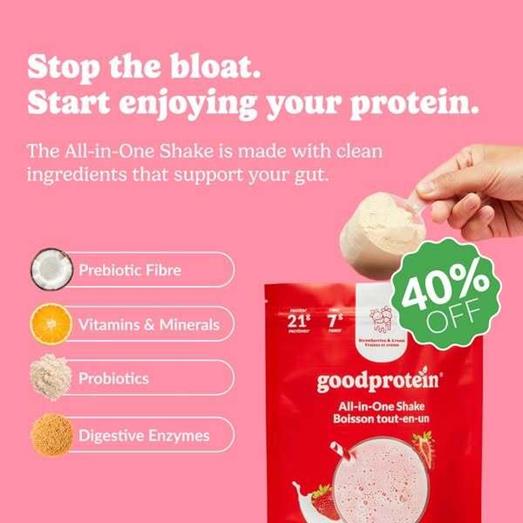
This design is simple and effective. The layout focuses on backing up the headline and subheadline with additional bullet points.
Adding a color-contrasting badge is a great way to include pricing or an offer.
How to make this work:
Keep headline text related to the USPs promoted in the body copy (the bullet points).
This Good Protein example positions the product as an all-in-one solution, so the benefits and USPs listed are varied to support that positioning. For brands focused on taste, list ingredients, flavor profile, and similar details.
2️⃣ Product Render with Conversion Friction Removal
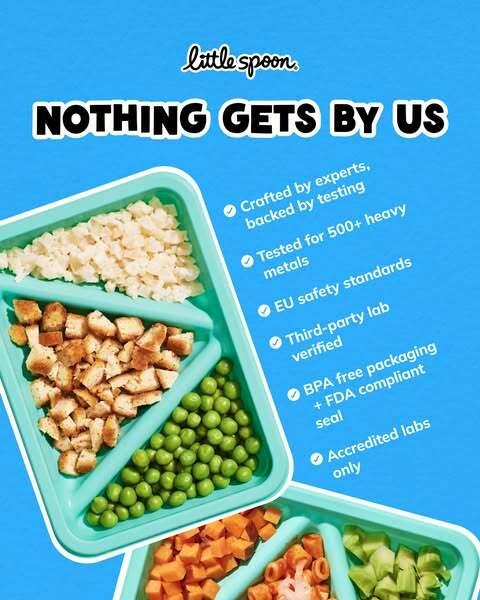
This is a more text-heavy approach to listing benefits, specific to a single conversion barrier. For a baby food brand like Little Spoon, this is a great option for addressing points like safety and warranties.
How to make this work:
Focus on a single conversion barrier or version of this static. Look for points that vary but support the same core message.
Be careful with background and copy color combinations. Text-heavy concepts require attention to accessibility and readability. The white text here contrasts clearly against the bright blue background, and the bolded headline supports trust.
3️⃣ Product Render with Icon Benefit/USP List
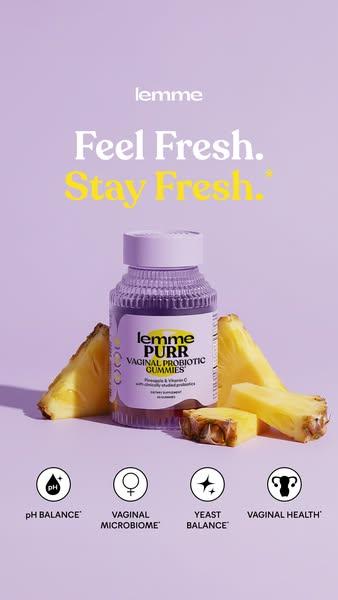
Another simple and effective creative format, usable at any stage of the funnel depending on what the lower half highlights.
It sparks curiosity with the headline, then delivers product education through the list of benefits and USPs.
How to make this work:
Use impactful color combinations. When pairing a product render with a plain background and headlines, use color to make the concept feel polished and intentional.
The strategic use of yellow pairs well with the product's key ingredient, pineapple.
4️⃣ Product Render with Price-Focused Headline
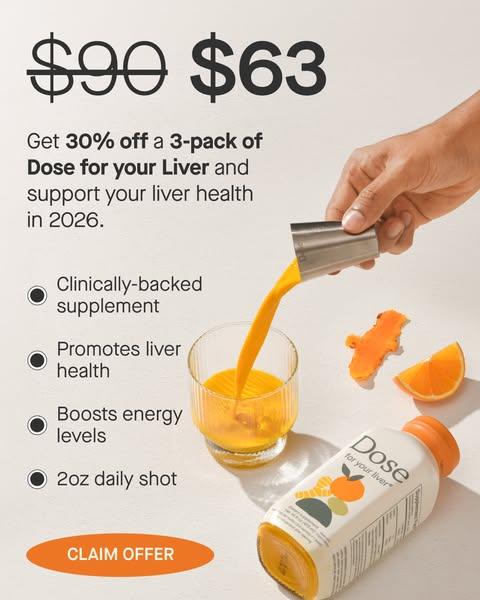
In competitive verticals, price is often the biggest point of friction. Many vendors sell similar products, so lowering the entry point is a common way to differentiate.
Dose uses strikethrough pricing as its headline. That's the sell.
How to make this work:
Keep pricing angles at MOF and BOF (middle and bottom of funnel). This graphic highlights the price while also reminding the user of the main USPs.
At the TOF (top of funnel), Pilothouse recommends being more specific and building bullet points around a single benefit or USP.
When going price-focused at the BOF, treat those ads as a summary of everything touched on earlier in the journey.
.png)
Matt Heckathorn from Wolfe, the company behind Gift Card Granny and PerfectGift.com, breaks down how a gifting-first brand builds top-of-funnel, why they're heavy into CTV and programmatic, and what they're doing with AI across every department before costs go up.
▶️ Watch here | 🎧 Listen on Spotify
Did you find this valuable? Support us by checking out our businesses:
Please note that items in this newsletter marked with * contain sponsored content.
.svg)


.svg)


.svg)


.svg)
.svg)
.svg)