SPONSORED BY:


Good morning. I read an article (see: I watched a TikTok) that said enjoy the last few weeks of summer nights, and it scared me a little if I’m being honest.
So, because it scared me, it feels only fair to scare you back and ask how those 2026 resolutions are turning out.

Anyways, got a good one today with a gamified BFCM play, Liquid I.V.’s “Turkey 12” strategy, two very different camera ads, and a few AI updates worth knowing.
🔌 Meta improves security controls for AI Connectors
A few months ago Meta rolled out AI Connectors, a way to connect your ad account with LLMs like Claude, ChatGPT, and Perplexity. Early on, unofficial connections to ad accounts were getting people banned, which pushed Meta to ship these added security controls.
Jon Loomer shared that you can now connect Claude and control which accounts it can access. Decide if you want Claude to have access to all current pages (and then select which ones) or to all current and future pages. The second option is riskier, especially when dealing with sensitive data.
If you manage client accounts, get permission before you connect anything.
📊 Track UGC performance down to the creator
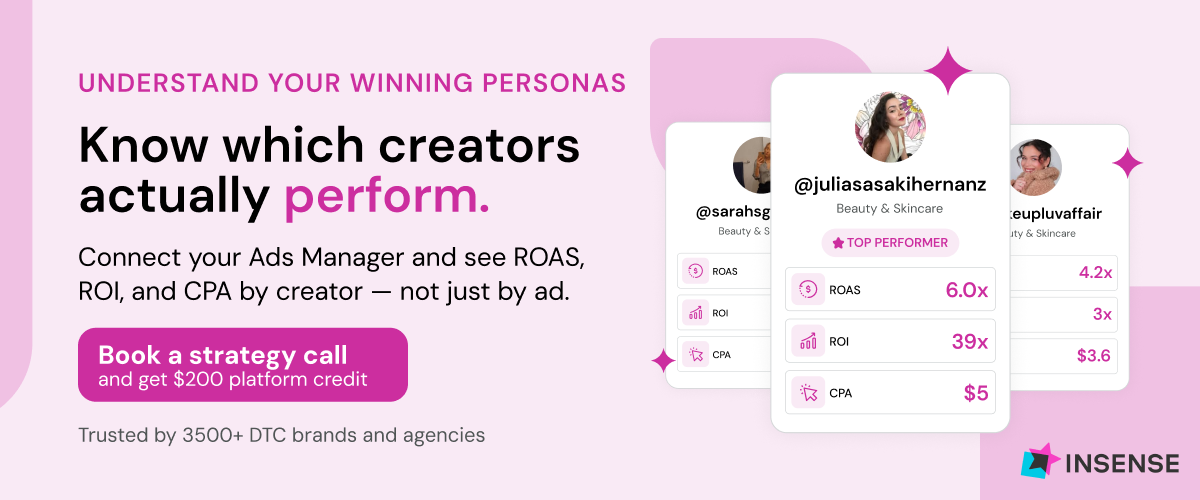
Most brands can see how a UGC campaign performed. It gets harder to answer which individual creators actually drove those results.
And it’s pretty hard to double down on a winner when you don’t actually know who the winner is.
Insense’s Creator Performance View ties performance back to the creator behind each piece of content, so you can see who’s worth rehiring before sourcing the next round.
Bones Coffee generated $25K+ in directly attributed revenue from 54 UGC ads over 3 months through Insense. Creator Performance View shows which creators behind results like that are worth going back to.
Insense also gives you access to 100,000+ vetted creators across 57+ countries and lifetime content usage rights.
Book a free strategy call by August 28 and get $200 for your first UGC campaign.
* sponsored
🤖 Google Ads and Google Analytics get new AI reporting features
Google Analytics now has an AI overview summarizing what changed since your last login, seasonal peaks, traffic swings, whatever moved, and the Google Ads homepage gets its own personalized AI insight cards.
There's also a new AI reporting dashboard in Ads (Analytics gets it soon) that turns a text prompt into a chart and auto-generates a real-time summary of the "why" behind the numbers.
The one worth testing first is buried in Analytics' Ask Advisor: a benchmarking feature that compares your account against anonymized averages from similar businesses.
🎁 A Grüns landing page went from 2% of ad traffic to 30% in three weeks
@stepanecom spotted this change: at the start of July, less than 2% of Grüns ads he was watching pointed to a specific pre-lander. Now it's over 30%.
The flow they’re leaning into involves getting customers to play a mini-game, win something, get the dopamine hit, then land on the actual offer already warmed up.
The bet is that more time spent playing creates more investment before the visitor ever sees a price. Worth checking this one out and seeing if it could be a good BFCM list-building play. Gate the prize behind an email or SMS opt-in and collect leads before the sale even starts.
💡 Liquid I.V. is already using Prime Day as its Black Friday test run
Danielle Grover, senior director of ecommerce at Liquid I.V., shares that the brand is taking what worked during Prime Day's four-day window and rebuilding it for the twelve days from the Thursday before Thanksgiving through Cyber Monday, what she calls the "Turkey 12".
They use the same playbook, just stretched out for a longer duration.
The brand also treats DTC and Amazon as different customers: on its own site it pushes AOV with build-your-own bundles, a break from the preset bundles sold through its other channels, plus a "buy three get one free" offer that's been a consistent performer.
Subscription cadence is sized around real usage too. A pouch runs a customer about a month, so that's when the site pushes them to reorder.
She shares that Q4 is the brand’s slowest season but adding newness gives them a boost.
During last year’s Cyber 5, Liquid I.V. launched a limited-edition hot chocolate flavor that sold out on TikTok in three weeks and got restocked fast enough to catch the second wave of demand.
📸 What Your Brand Name Buys You in Ad Copy
This week we're looking at two camera ads with completely different creative jobs to do.
Polaroid's name already tells you what the product does, so its ad can skip the explanation and go straight to the news: how small this camera is.
Lola doesn't have that shortcut. As a newer brand, its ad has to introduce the product and build excitement before it can sell anything else. Same category, two very different playbooks.
Product Photography with Legacy Logo + Headline
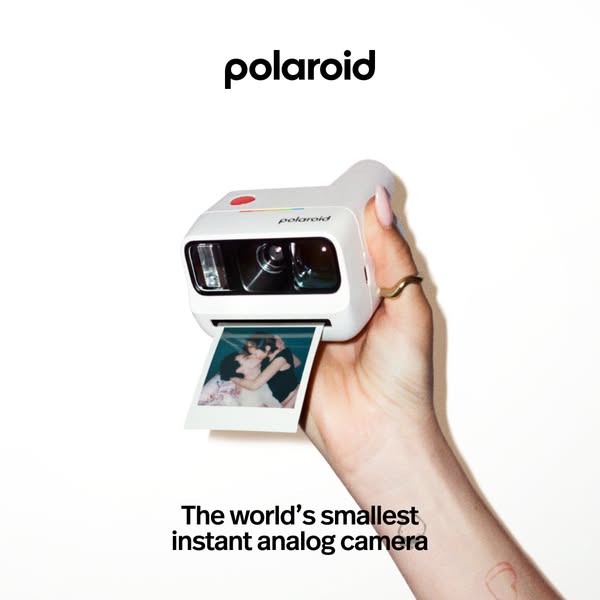
We're all familiar with Polaroid, and when your brand name is already synonymous with your hero functionality (instant images), it's a lot easier to put together a simple, effective static ad like this one.
Since we already know what a Polaroid camera does, the brand can skip the concept explanation entirely and go straight to showing off the newness: how compact this camera is.
How to make this work:
Size does matter, visually. What makes this creative effective is its use of negative space.
Keeping padding around the product and photographing it next to an easily recognizable size reference (a human hand) makes it immediately clear how small this variant is.
Test your colorways. Polaroid is currently running several versions of this creative, each in a different colorway.
Every brand launching a new product or variant should be testing color the same way. And remember, the colorway that grabs the most attention at the top of funnel isn't always the one that converts best, so it's worth testing to see what pulls people in.
Print-Inspired Product Render with Heavy Copy
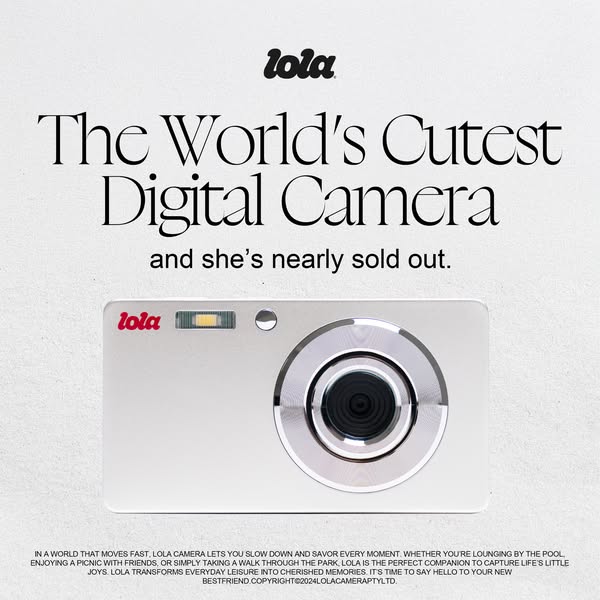
This creative follows a similar layout to Polaroid's, but a few small additions make it much better suited to a newer or lesser-known brand.
Lola leads with its brand name and a headline that spells out exactly what the product is (a digital camera), followed by a line that adds urgency.
The copy at the bottom is worth a closer look. It's small enough that you have to zoom in to read it, and it functions as a design element that gives the whole ad a print, old-school feel. The words themselves stay simple and focus on the brand's story.
How to make this work:
Use every inch of the ad. Lola makes efficient use of its space. It introduces the product, uses language and styling that speaks directly to its target audience, and puts even the smallest design details, like that bottom copy, to work.
Add urgency early. For newer brands, urgency can help build hype and give shoppers another reason to act.
Shoppers can be hesitant to buy from a retailer they’ve only encountered online, so giving them a reason to act now can help convert that early interest.
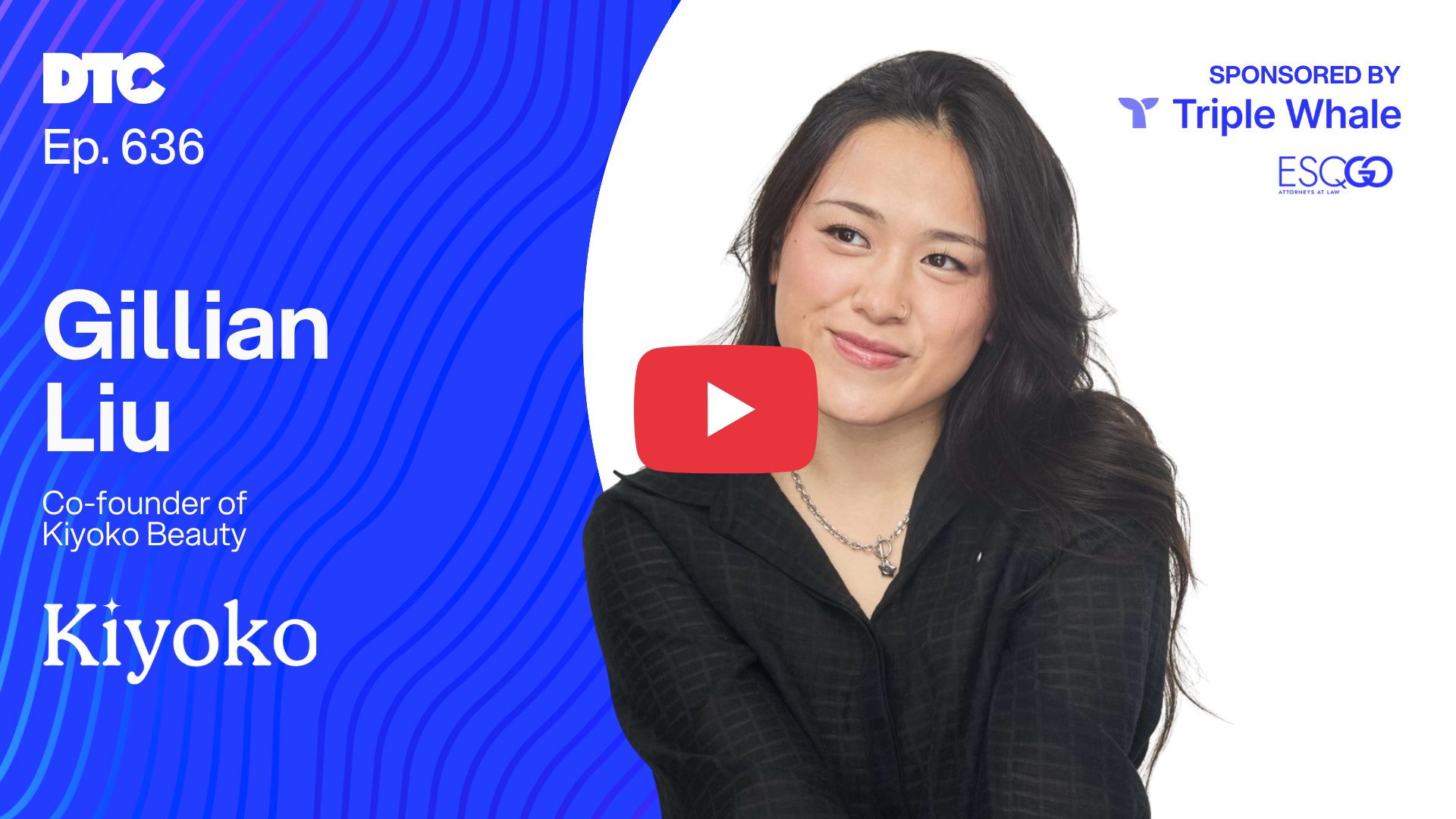
🎧 Inside Kiyoko’s Beauty Content Machine
Gillian Liu, co-founder of Kiyoko Beauty, shares how the curated Asian beauty retailer hit 8 figures in 5 years without any outside investment.
She walks us through their organic content machine, the pros and cons of selling curated products by other brands, and how she uses platforms like TikTok, YouTube Shorts, and RedNote to gain new customers.
▶️ Watch here | 🎧 Listen on Spotify
📱 Your ad gets one second to make an impression. PickFu lets you test concepts with real consumers before you put ad dollars behind them, so you can launch the one that actually lands. Run a free test with code DTC2026. *
* sponsored
Did you find this valuable? Support us by checking out our businesses:
Please note that items in this newsletter marked with * contain sponsored content.
.svg)


.svg)


.svg)


.svg)
.svg)
.svg)