SPONSORED BY:


Good morning.
Sometimes the job is forecasting, attribution, CAC, LTV, and explaining why the numbers moved.
Sometimes the job is just making people remember you exist.
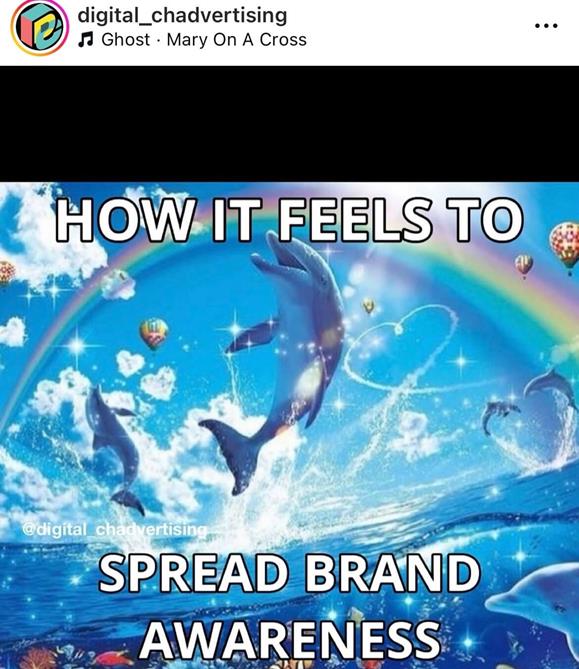
Cheers to that today! Let’s get this morning read started.
😴 The Operators launched Winks on Monday. Amazon knockoffs showed up Tuesday.
The Operators launched sleep supplement brand Winks on Monday. A day later, knockoffs using the brand’s name and packaging were already live on Amazon.
David Holmes says brands should copyright their packaging, trademark the name early and use Amazon’s approved lawyers to speed up Brand Registry access. He also recommends launching on Amazon quickly so copycats cannot take over your branded search results and damage your reputation before you arrive.
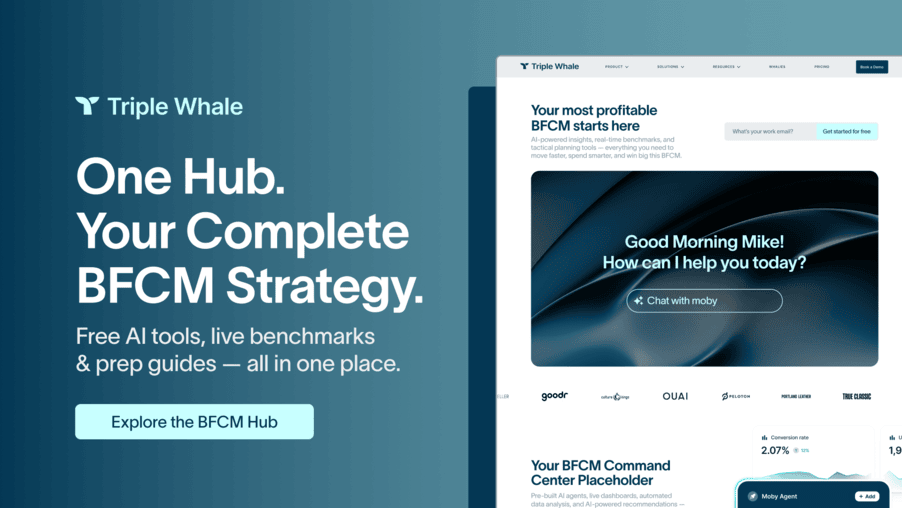
🤔 How ready are you for BFCM this year, really?
I’m guessing you know what you did last year. The real question is whether last year's results still mean anything going into this Q4.
Can you decisively answer the questions that decide this Q4: what's a healthy ROAS, where should budgets go, and what actually worked last season? Whatever you do, don’t leave your profits up to guesswork.
Triple Whale pulled real-time benchmarks from 65,000+ brands into one place, along with AI-powered insights built for ecommerce, tactical guides, and channel playbooks for Meta, Google, and TikTok.
It’s all free, no login. The brands still setting Q4 targets in October are already behind. Grab your head start now.
* sponsored
🎯 Google is turning on Local Inventory Ads next week
Google will turn on Local Inventory Ads by default for Shopping campaigns on August 31.
If you have a local inventory feed, products sitting in nearby stores may start showing in campaigns that were built for online sales. The old off switch will stop working. Check your Inventory filters before Google starts mixing your store stock into the budget.
🛍️ TikTok Shop content may influence sales across other retail channels
Modern Retail reports that some brands are seeing TikTok Shop content influence purchases on Amazon.
In one vendor-run test, WorkMagic attributed 62.5% of TikTok-driven sales to Amazon and other retailers, while 37.5% happened inside TikTok Shop. Purchases completed elsewhere will not appear as TikTok Shop conversions, so in-app ROAS may show only part of the channel’s impact.
Compare branded searches and SKU sales across retailers after your next TikTok campaign to get a fuller view.
💰 Carve Designs doubled customer value with loyalty perks, email and SMS
Carve Designs sells swimwear, which gives the brand a short peak season and a long stretch where retention has to do more work.
Performance marketing lead Hannah Fleming rebuilt its email and SMS program around customer segments, then used perks like early access to grow loyalty without adding more discounts. She also explains how Connected TV is driving an Amazon sales lift that does not show up cleanly in the campaign dashboard.
💰 New Seller Savings 2026
Sell better. Sell more. Sell with Walmart.
Sign up now to unlock up to $75K in New-Seller Savings to build your business on Walmart Marketplace*. 🛒
🛍️ Reach more customers. Shoppers on Walmart are looking for products like yours.
⚡ Tap into a network of millions. Each week more than 270 million customers shop with Walmart.*
🌐 Expand globally. Easily extend your business to any of their global marketplaces.
Maximize your reach with discounts on referral fees:
*Walmart first-party data.
*Conditions apply. Offer subject to eligibility criteria, promotional savings will vary by seller. See full terms and conditions for offer details.
* sponsored
💡 Turning technical specs into scroll-stopping creative
Most technical specs live in a size guide or FAQ, not an ad.
This edition looks at two bedding brands that put them front and center: a top-of-funnel meme built around one product detail, and a middle and bottom-of-funnel comparison static packed with information.
Below are both examples, why each one works, and steps for building the same approach into your own creative.
Technical-Feature-Focused Meme
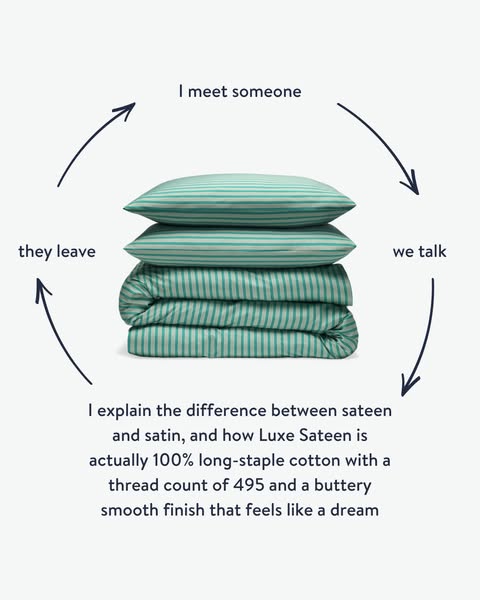
Explaining the core technical benefit of a product in a digestible way is difficult, but it pays off.
This meme format is an effective way to bring relatable humor, real product specs, and a trending visual style into a TOF program.
How to make this format work
✅ Make the technical feature the punchline. Don't bury the important details inside the joke, or people will miss it. Using the feature as the punchline keeps it integral to the ad and impossible to miss.
✅ Shift your expectations before you deploy this style. Consider how likely the ad is to drive a conversion at the TOF, and be deliberate about where you send that traffic.
Brooklinen likely has a longer consideration cycle because of its high AOV (average order value). Sending traffic to a landing page that gives shoppers more product information, and that captures emails, helps this content strengthen the rest of the funnel.
This creative currently points to Brooklinen's Luxe Sateen Sheets collection page, which offers more product detail and triggers a 15% off email sign-up pop-up.
Technical-Feature-Focused Static
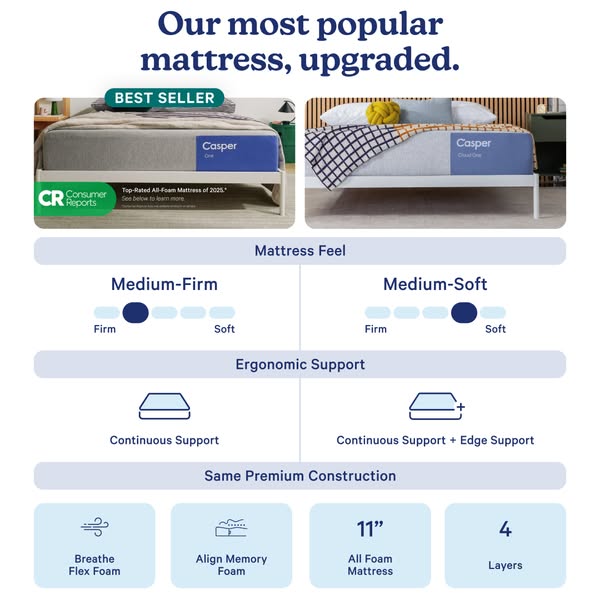
There's a lot of information in this creative that wouldn't land at the TOF, but it's exactly what a shopper needs to make a purchase decision at the MOF and BOF stage.
How to make this format work
✅ Use an internal comparison for a warmed-up audience. Differentiating between two products in the same lineup, especially in a considered-purchase category like mattresses, helps address choice paralysis.
Neither option needs to be positioned as better; the comparison just needs to show buyers which one fits their preference, such as mattress feel.
✅ Lean on visuals. This creative works because, despite the volume of information, it's organized cleanly and paired with visuals that make it easy to absorb on mobile.
Audit your own product pages for a technical detail your team already explains often, then test it as the center of a TOF or MOF/BOF creative.
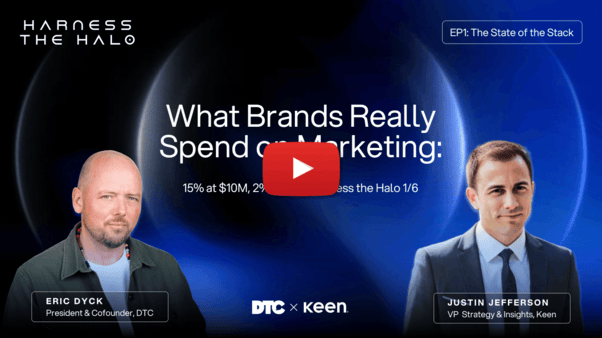
🎧 What Brands Really Spend on Marketing: 15% at $10M, 2% at $1B
This is episode one of Harness the Halo, our new six-part series on marketing measurement.
Your best channel probably peaked.
Justin Jefferson, VP of Strategy and Insights at Keen, says almost nobody tracks marginal ROI, aka what your next dollar of spend actually returns.
Most brands still run on historical ROI, so they keep pouring budget into whatever channels performed well last year. You're already past the point of diminishing returns there, and your historical number won't tell you that.
Justin walks through what a healthy spend-to-revenue ratio looks like for 7 and 8-figure brands, why growing brands run ‘test and learn’ frameworks instead of repeating last year's mix, and why more variation in your channel spend YoY is a sign of health, not chaos.
▶️ Watch here | 🎧 Listen on Spotify
Did you find this valuable? Support us by checking out our businesses:
Please note that items in this newsletter marked with * contain sponsored content.
.svg)


.svg)


.svg)


.svg)
.svg)
.svg)