SPONSORED BY:


Good morning,
Here’s what you’ll find in today’s DTC:
1️⃣ How this new customer behavior shift impacts your brand.
2️⃣ Is bad segmentation impacting your email platform?
You’re reading this newsletter along with new subscribers from: Dropps, Clearly Interiors, and Silver Jeans. 👋
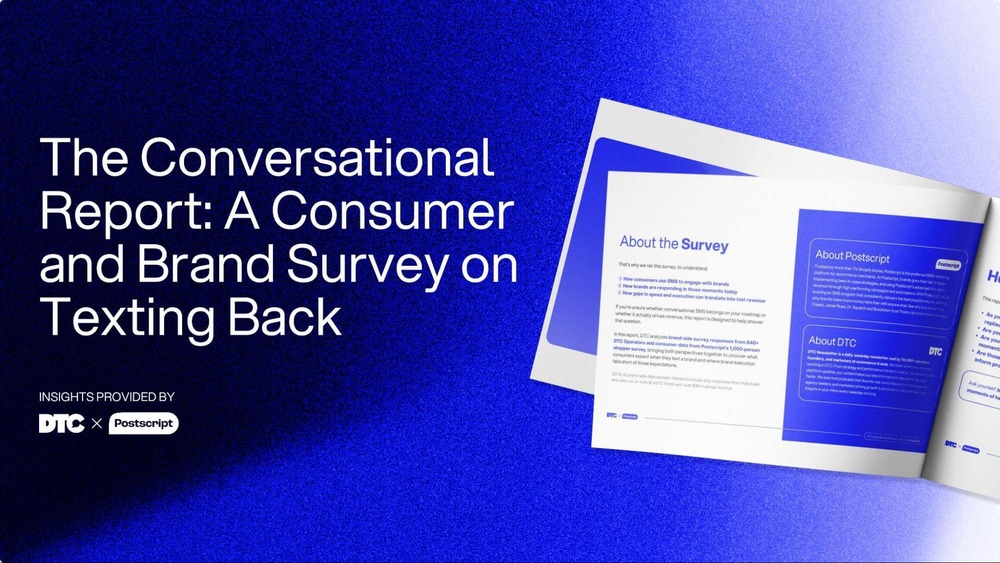
💬 Replies Aren’t Engagement. They’re Buying Signals.
When customers respond to an SMS, they’re often at the closest point to conversion, asking about sizing, shipping, ingredients, or returns.
The problem: most brands still treat replies like support noise instead of revenue moments.
In this new report, DTC, with additional insights from Postscript, analyzed how 840+ operators handle SMS replies and what 1,000 consumers actually expect in that moment.
Inside, you’ll see:
And more.
The full report is free.
* sponsored

💆 Customers Want Products That Make Them Feel Better
Something fundamental has shifted in how people shop.
According to Mintel's 2026 consumer trends research, buying decisions are now shaped by functional efficacy and… emotional wellbeing.
By 2030 wellbeing will extend far beyond physical health. It will encompass emotional balance, authenticity, joy and human connection – consumer behaviours will expect brands to reflect these values.
Consumers aren't just purchasing products. They're buying permission to feel better.
Across categories, this shift is already reshaping what sells and what doesn't.
Here are some key trend shifts happening in 3 popular product categories:
Beauty: Wellness Is the New Luxury
Consumers are pulling back from aspirational beauty and moving toward products that make them feel capable and grounded.
The prestige appeal of a brand name is losing ground to proof of function and emotional payoff — ingredients that work, rituals that restore, and products that fit into a life that's already stretched thin.
What brands can do:
Food & Beverage: The Ritual Economy
Eating and drinking have become deeply intentional acts.
Consumers are constructing mini-rituals around food (e.g. the morning matcha, the evening wind-down snack) and they want products that support those moments.
Create a sensory or emotional association (morning coffee, skincare routine, workout prep, etc.) in your language, packaging, and formulation.
Health claims still matter, but they need to be emotionally legible, not clinical.
What brands can do:
What ends up happening is the product feels like part of their identity and something they need to repurchase.
Home: The Sanctuary Mindset
Home has become a primary site of self-care. Consumers are investing in their spaces as emotional environments, not just functional ones.
Products that signal calm, comfort, and intentional living are outperforming purely aesthetic or trend-driven options.
What brands can do:
The takeaway?
Consumers in 2026 are spending with intention, and they expect brands to meet them there.
The operators who will win understand that every product page, email, and unboxing moment is a chance to deliver both function and feeling.
Audit your messaging now: are you selling what the product does, or how it makes someone feel?
The best answer is both.

🚀 Build, Grow, And Elevate Your Ecommerce Business With One Of The Most Trusted Names In Retail
Sell your products on Walmart.com.
Designed with sellers in mind, Walmart Marketplace is one of the fastest-growing ecommerce platforms in the U.S.
Walmart Marketplace sellers get access to:
It takes just a few steps to start selling.
* sponsored
Is Your Email Segmentation On Point?
Jordan, host of The World's Best Email and Retention podcast, breaks down the practical segmentation frameworks and models that increase clicks, protect inboxing, and generate more revenue from customers you already paid for.
What we cover:
📊 You can lower CPA by 19% and bump your CTR 53%. How? Brands like Our Place, Instant Hydration, and RevitaLash use minisocial to partner with the creators that make it happen. See how!*
▶️ Meta simplifies click measurement. Link click attribution will now only count link clicks and exclude saves, and shares.
➕ Google’s Demand Gen campaign update. A new $5 minimum
spend will be enforced starting April 1st.
* sponsored
📥 Got a B2B Biz?
Join dozens of B2B companies finding demand-gen success through our niche community of 150k brand leaders and founders this year. Talk to our team to learn more.
Don’t forget to rate the DTC Podcast on Apple (⭐️⭐️⭐️⭐️⭐️)
DTC Newsletter is written by Rebecca Knight and Frances Du. Edited by Eric Dyck.
Please note that items in this newsletter marked with * contain sponsored content.
.svg)


.svg)


.svg)


.svg)
.svg)
.svg)