Good morning. The last few years have been the proteinification of everything (has anyone tried protein soda yet?). This year it's fiberfication, and Grüns is out here proving it two ads at a time.
I’d say let’s go, but first I’ve had so much Jimothy on my timeline, it’s only fair to give you a Jimothy meme to start the day.

Okay, now let’s go.
⚠️ Your AI-written product copy could be the reason you get sued
Your product descriptions are probably AI-written by now. Almost nobody's checked whether it’s screen reader compatible.
AccessiBe's new report found 78% of brands generate at least a quarter of customer-facing content with AI. Among brands that have already faced an accessibility lawsuit, 65.4% named AI-generated content as the top-cited factor.
Teams assume AI output is accessible by default. It isn't. Pull up a sample of your AI-generated product pages this week and check alt text, form labels, and heading structure before a demand letter does it for you.
🔍 Google Ads splits your product clicks from everything else
Google added new metrics so you can check whether people are clicking on your actual product or just your store name in Shopping or PMax campaigns.
Product clicks mean someone clicked directly on a product and landed on its page. Non-product clicks mean they clicked something else on the ad, your headline, your store name, the "visit site" button, and landed somewhere generic.
If non-product clicks dominate, your PMax feed might need work.
🎥 DTC Midas laid out the structure behind his top-spending VSL right now
@dtcmidas broke down his current highest-spending ad on X.
The authority-led framework starts with a real person and a fear hook, before going into an open loop with a big promise, authority intro, three failed alternatives, hidden root cause, problem mechanism, cost of inaction, product intro, solution mechanism, two transformations (short and long term), social proof, price anchor, risk reversal, scarcity, CTA.
The three failed alternatives before the mechanism reveal is worth a test.
Most VSLs jump straight from problem to solution. Stacking three ways the viewer already tried and failed does the trust-building work before you ever show the product, and it's a big reason authority-led format is holding up against the flood of AI-generated ads right now.

🧪 Test the creative before the budget touches it
The Grüns ads below started as one insight and became two executions aimed at opposite ends of the funnel. When you run that play yourself, you’ll have versions to choose between, and “the founder liked it” is not a test.
PickFu puts your versions (ad concepts, packaging designs, landing pages) in front of real consumers in your target audience and returns written feedback in hours. Brands like L’Oréal, OLLY, and Pet Honesty use it to pressure-test creative before launch, so weak options die in the survey instead of in the ad account.
When brands launch pre-tested creative or listings, they can see conversion boosts of 39% or more. Weight it how you like, but a handful of respondents costs less than letting Meta teach you the same lesson.
Run your first test free with code DTC2026. See which creative wins before you put money behind it.
* sponsored
💡 One shitty angle, two very different executions
Grüns took its constipation-and-GLP-1 angle and built two ads that couldn't look more different from each other, yet both pull from the exact same consumer truth.
One is a scrappy TOF creative, the other a polished MOF and BOF asset.
Pilothouse shares how each version earns its spot in the funnel.
Problem Agitation Meme
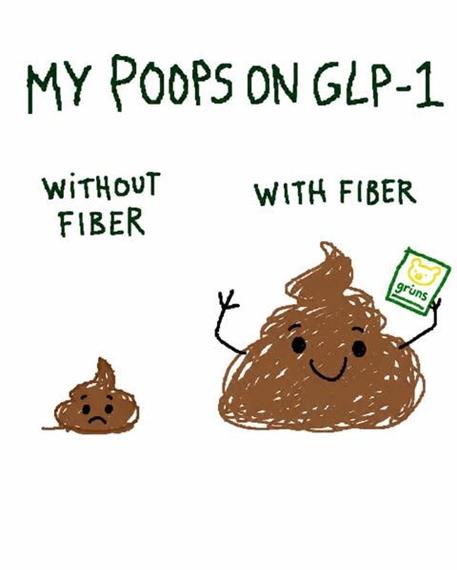
This scrappy ad is TOF perfection. It baits people to interact with its absurdity, then delivers a clear, simple problem-agitation-to-solution setup.
How to make it work:
Simplify your meme messaging. Boiling your top angle down to something this silly and specific is one of the most important skills in memes that actually land.
The ‘with’ and ‘without’ framing works because it tells a story a specific audience already wants to hear.
The best memes also don't rely on cultural knowledge to land, so the joke travels further.
Product Render with Benefits List

This is a strong static format for MOF and BOF. It packs in product information that helps the brand stand out in a saturated vertical, while highlighting a generous discount.
How to make it work:
Balance is key. When a placement carries this much product information, every line of copy needs to earn its spot. Tighten each feature and benefit down to its clearest version.
Pick features and benefits that matter to this audience specifically. Someone on GLP-1s is calorie-conscious, so that callout belongs in the ad. They also want maximum nutrition per bite, so a comparison like "more fiber than 2 cups of broccoli" does real work.
Watch your text hierarchy. The GLP-1 callout in the headline is what sets up the rest of the ad to land with the right audience.

🎧 SheFit on TikTok Shop's Hidden Costs and Why Your New Customer Numbers Are Wrong
Melissa Dusendang accepted a temporary contract at SheFit to "manage the chaos" for one marketing director. She never left.
Now she’s the Head of Ecommerce and Operations and her actual job is stopping the company from lying to itself with its own data.
Melissa shares how to identify numbers that are secretly inflated, how she found the best-selling ad hooks inside customer reviews, plus the pros and cons of using TikTok Shop.
▶️ Watch here | 🎧 Listen on Spotify
🔥 More traffic won't fix a store that doesn't convert. Gentoo uncovers high-impact growth opportunities across your Shopify store and helps turn more visitors into customers. Start your free trial. *
* sponsored
Did you find this valuable? Support us by checking out our businesses:
Please note that items in this newsletter marked with * contain sponsored content.
.svg)


.svg)


.svg)


.svg)
.svg)
.svg)