SPONSORED BY:


Good morning,
Here’s what you’ll find in today’s DTC:
1️⃣ Inside Spikeball’s welcome and abandoned cart flows
You’re reading this newsletter along with new subscribers from: Behy, Honey Stinger, and Whitebox Cocktails. 👋
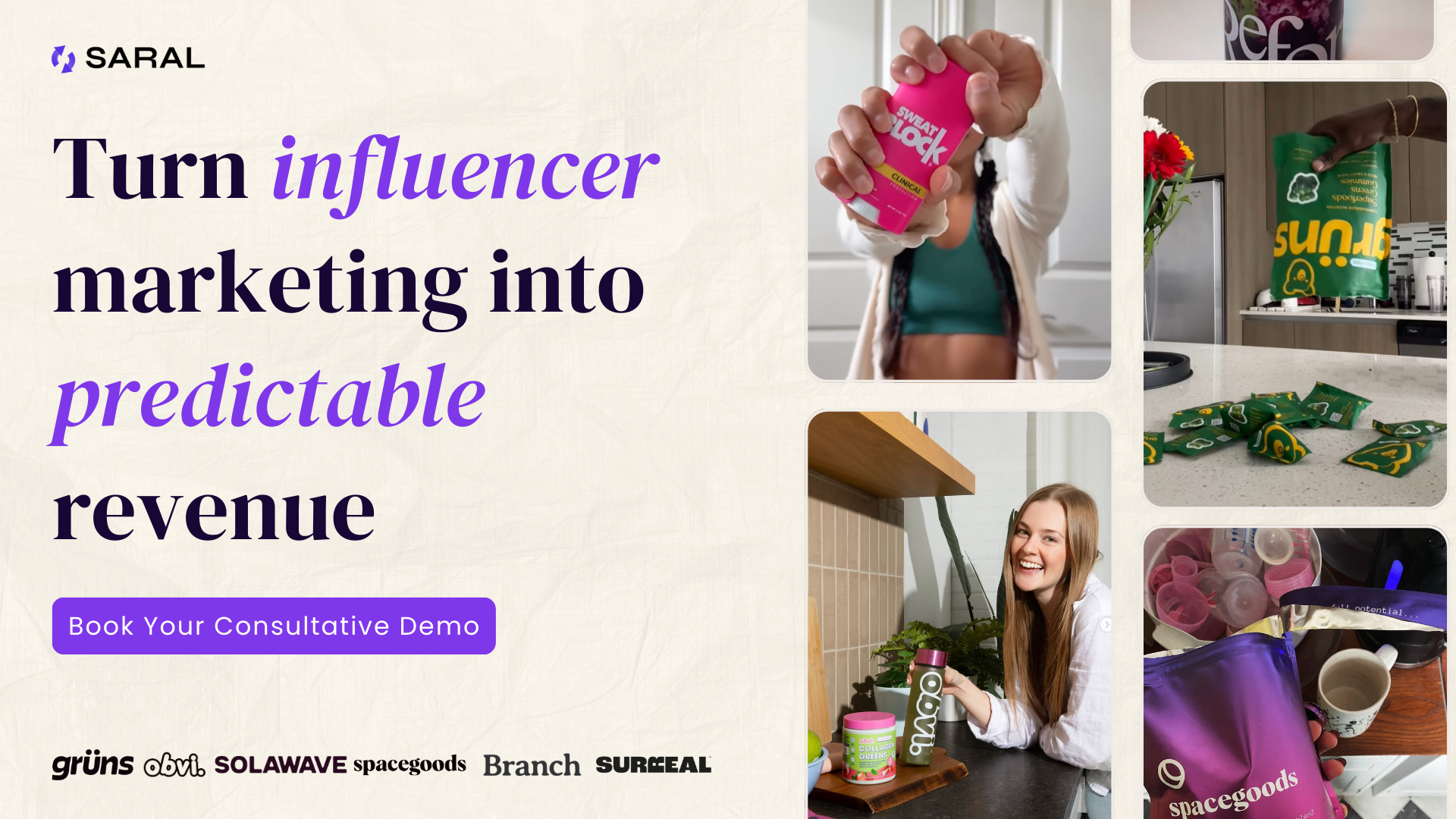
👀 Grüns, Solawave, Obvi, And Brez Do This To Scale Influencer Marketing
Most DTC brands run influencer marketing like a bet: find an influencer, pay $1,000, and hope it works. If it tanks, you're out money. If it performs, repeat until budget runs out. 💸
Brands that scale don’t gamble. They test.
Start with seeding. Send product to 100 influencers in your niche. Maybe 30 post, 10 get traction. You find your biggest influential fans for just free products sent.
Turn winners into affiliates. Pay on sales and see who drives 3x vs 10x ROI. Offer retainers to influencers who’ve earned it.
👉 SARAL makes the playbook runnable for 250+ brands: find influencers, automate outreach, track performance, sync with store.
👏 That’s how Spacegoods built 1,000+ active partnerships with two people.
Want $500 off + a free influencer program audit?
* sponsored
🏆 Spikeball’s Email Flows Under the Microscope
Spikeball is a sports equipment brand founded in 2007 by Chris Ruder.
After reviving the largely forgotten 1980s game, Ruder grew Spikeball from a basement side project into a global brand with millions of players and tournaments worldwide.
The company surpassed $1 million in revenue by 2013 and continued scaling after national exposure on 🦈 Tank, helping the sport spread across college campuses, beaches, and parks.
Today, Spikeball sells portable roundnet kits online and through major retailers while supporting a growing international community of competitive and recreational players.
Few brands lean into fun as hard as Spikeball does. The yellow-on-black color palette, scrappy visuals, and tongue-in-cheek copy all signal competition, community, and chaos—in the best possible way.
That identity shows up everywhere: in their tournaments, their community events, and the playful voice across their marketing.
Spikeball has built something most brands struggle to manufacture: genuine player culture.
But when you zoom in on the Welcome and Abandoned Cart flows, that energy doesn’t always translate into conversion efficiency yet. The personality is strong. The structure just needs tightening.
Below, the Pilothouse email team analyzes Spikeball’s Welcome and Abandoned Cart flows and highlights where they can convert more revenue.
🎉 The Welcome Flow
Spikeball’s Welcome Series is on-brand, but it’s inconsistent around the one thing new subscribers care about most: the discount.
Across all three emails, the offer isn’t clearly promoted in the subject lines or hero sections. For a subscriber who signed up expecting 10% off, that creates unnecessary friction.
The subject lines are also slightly disconnected from the content. Lines like “Your ex was wrong about you” and “this is getting awkward” feel playful, but they don’t clearly connect to the message inside the email.
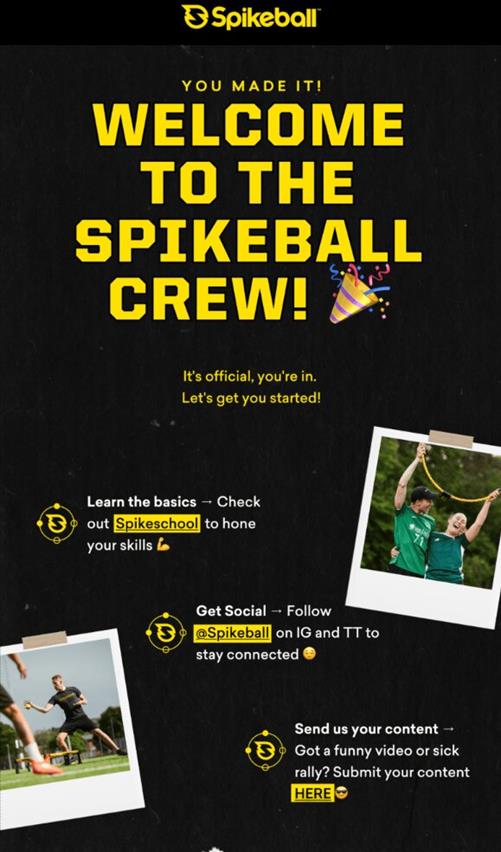
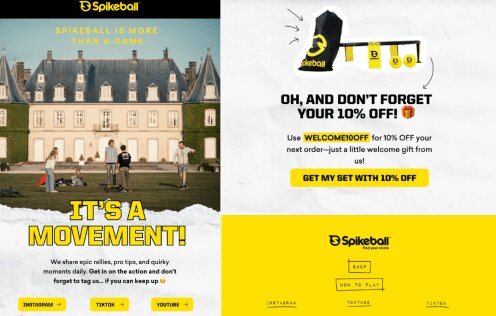
In the first Welcome email, the brand focuses more on social follows and user-generated content than the incentive itself. While the discount is present, subscribers need to scroll to find it, which can reduce conversions.
Visually, the flow improves as it progresses.
Later emails feature stronger product imagery, while the first leans heavily on oversized emojis and minimal structure. Scrappy works for this brand, but the structure could be a bit tighter.
The third email introduces a quiz to help customers choose the right set.
This is a strong addition. It helps guide purchase decisions while allowing Spikeball to capture valuable data such as experience level, age, and preferred play environment (outdoor vs. indoor).
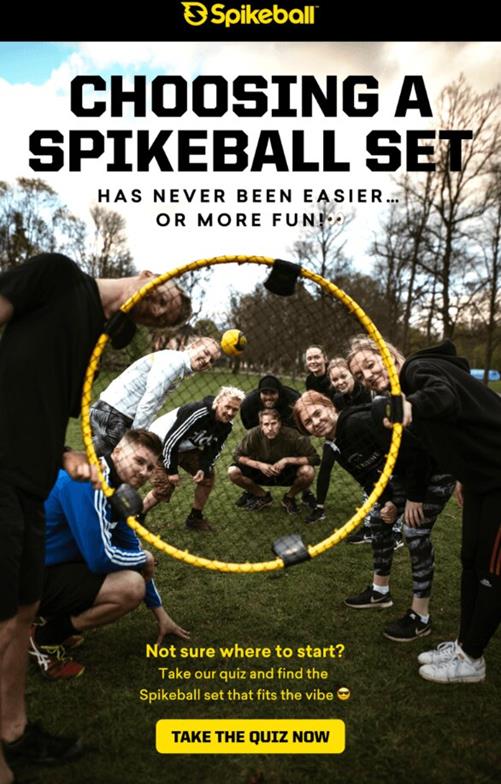
However, the discount once again appears far down the email.
Pilothouse Tips:
✅ Lead with the discount: Clever subject lines are great, but they shouldn’t overshadow clarity. The incentive should be front and center — in the subject line, in the headline, and visually reinforced in the hero section.
✅ Add social proof earlier: There’s a missed trust-building opportunity: reviews. For a social, community-driven game like Spikeball, UGC and testimonials should appear by Email 2 or 3 at the latest. Social proof would reinforce that this isn’t just a backyard game — it’s a movement.
✅ Introduce educational content sooner: Helping customers choose the right set is smart — it just appears a little late. Bringing that guidance earlier in the flow would reduce friction and speed up purchase decisions. A bold, product-forward hero in Email 1 would instantly elevate perceived value.
✅ Expand the welcome flow: Three emails is a lighter sequence than many brands run. With multiple sets, accessories, and a strong community angle, this flow could comfortably expand to four or five touchpoints without fatiguing subscribers.
🛒 The Abandon Cart Flow
Subject lines like “Whoa, what happened?” and “Okay fine, here's 10% off” feel fun, slightly chaotic, and very on-brand. The voice works well.
However, there are opportunities to improve both timing and structure.
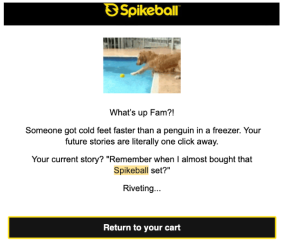
The first email triggers just 10 minutes after abandonment. Aggressive — but not necessarily wrong.
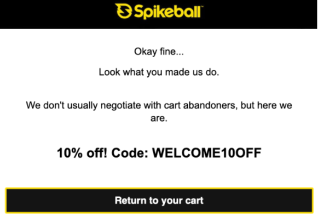
The second email, however, waits a full day before following up. That’s a large gap during peak purchase intent for many shoppers. An 8-hour follow-up would maintain purchase momentum more effectively.
There’s also a friction point with the discount code. The abandoned cart email uses the same code as the Welcome Flow.
This creates an issue for shoppers who already used the code during the Welcome Series. If they return later and abandon a cart, the incentive no longer works.
Pilothouse Tips:
✅ Create a separate abandon discount code: Using a dedicated code for abandoned carts ensures shoppers who previously redeemed the welcome offer can still convert without friction.
✅ Test timing adjustments: A 10-minute send may feel aggressive. Testing a 20-minute delay could strike a better balance while still capturing high intent.
✅ Show the abandoned product clearly: Another opportunity is visual hierarchy. Instead of featuring the abandoned product as the hero image, the email highlights a lifestyle photo of a dog retrieving a ball in a pool. It’s fun and on-brand, but showing the abandoned product more prominently could improve conversion.
Visually, the second email also borders on text-only. For a brand this bold, it feels underbuilt. A stronger hero and clearer product reminder would strike the right balance between scrappy and polished.
Finally, two emails may leave revenue on the table. High-intent flows like this should span at least three messages, ending with a final urgency-driven reminder or a prospect-only incentive.
Conclusion
Spikeball has what most brands can’t manufacture: authentic energy. The voice is strong, the community is real, and the brand clearly understands its audience.
The brand just needs to sharpen the mechanics: lead with the discount, educate earlier, and tighten abandoned timing.
When your product is built around movement and momentum, your flows should move just as fast.

Connor Shelefontiuk breaks down why most DTC brands fail at CRO and offer testing, pointing to common mistakes like prioritizing test volume over test quality and focusing on the wrong variables. Read more →
Disney+ launches Verts, a TikTok-style short-form video feed rolling out to U.S. mobile users, letting viewers swipe through clips and jump directly into shows! Read more →
Puma taps singer Rosé to front a surreal global campaign reviving its 1990s H-Street sneaker, blending the brand’s retro track heritage with a tech-infused suburban fantasy. See more →
📥 Got a B2B Biz?
Join dozens of B2B companies finding demand-gen success through our niche community of 150k brand leaders and founders this year. Talk to our team to learn more.
Don’t forget to rate the DTC Podcast on Apple (⭐️⭐️⭐️⭐️⭐️)
DTC Newsletter is written by Rebecca Knight and Frances Du. Edited by Eric Dyck.
Please note that items in this newsletter marked with * contain sponsored content.
.svg)


.svg)


.svg)


.svg)
.svg)
.svg)