SPONSORED BY:



Good morning,
Here’s what you’ll find in today’s DTC:
1️⃣ How incremental attribution can unlock better reach and more stable performance
2️⃣ Building hyper relevant content for target personas
3️⃣ Why affiliate marketing is a dream channel for brands
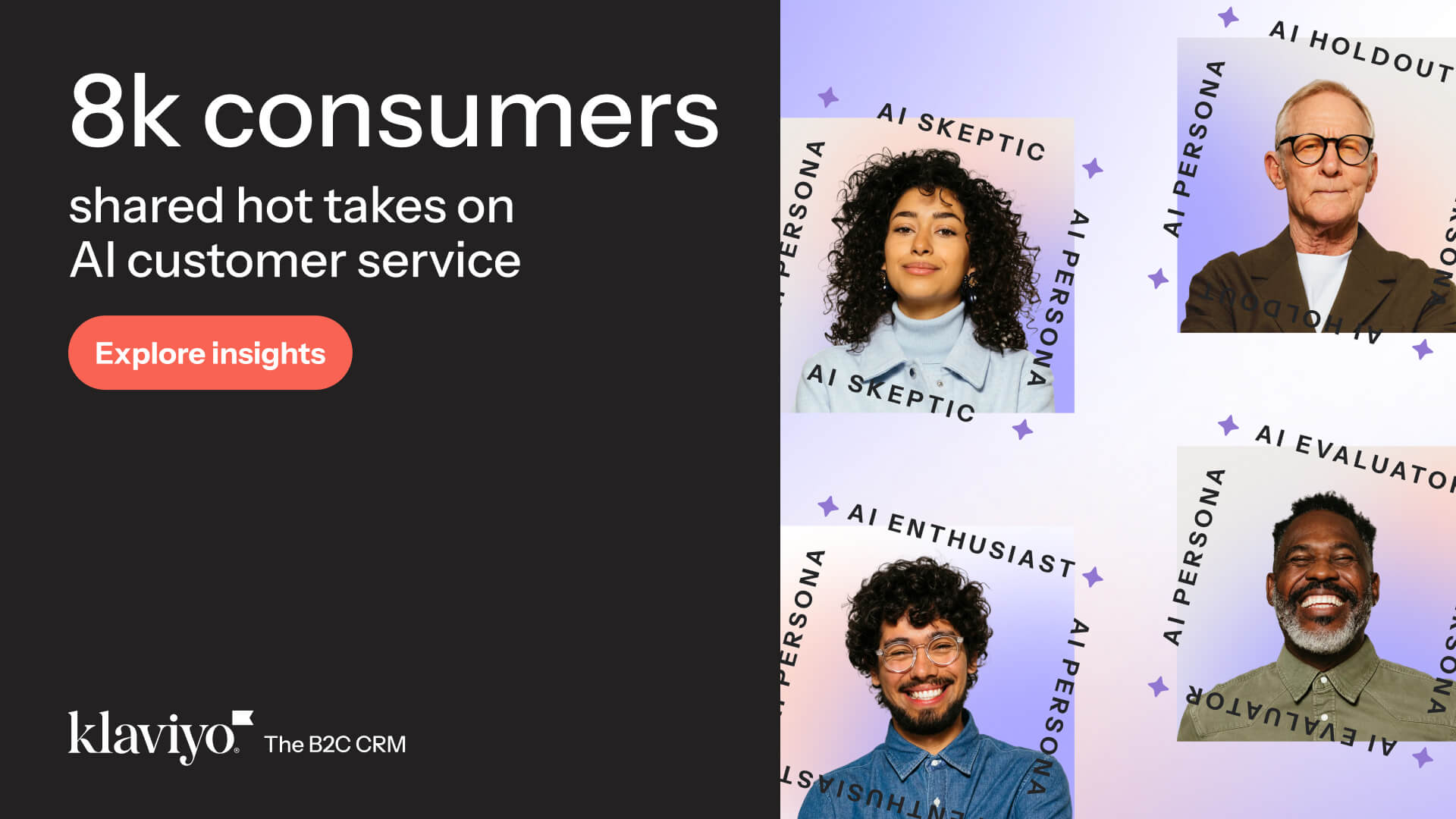
🤖 Does Your AI Service Strategy Build Trust… Or Is It Actually Driving Customers Away?
Now’s the time to get clarity. 💡
👉 Klaviyo’s new AI Customer Service Playbook breaks down the insights you need to hone your marketing strategy, based on their latest global survey of 8,000 consumers.
Get your free playbook now to discover tactics that actually resonate with four new consumer personas: the AI Enthusiast, AI Evaluator, AI Skeptic, and AI Holdout.
The AI Customer Service Playbook reveals:
Look beyond the AI hype and get the real data you need to plan your next moves.
* sponsored

🚀 Why Incremental Attribution Is Quietly Becoming A Growth Lever
Over the past year, there’s been a noticeable shift in how advertisers evaluate performance on Meta.
Traditional attribution models, while still useful, are starting to show their limits, especially in accounts focused on scaling efficiently.
That’s where incremental attribution on Meta is gaining traction.
What is incremental attribution? A measurement approach using machine learning and holdout tests (control groups) to determine the true causal impact of ads, identifying conversions that would not have occurred without ad exposure.
Rather than simply crediting conversions within a fixed window, incremental attribution aims to measure what actually wouldn’t have happened without the ad.
And in practice, this shift in perspective can unlock very different optimization decisions.
Here are four reasons why marketers are leaning into incremental attribution:
1️⃣ It unlocks truly incremental reach
Many campaigns appear to grow but are just re-engaging the same users.
Incremental attribution pushes delivery toward colder, less saturated audiences by prioritizing conversions that are less likely to happen organically, resulting in meaningful lift in net-new user acquisition.
👉 Audit your audience overlap before and after switching to incremental optimization. If new user rates rise, that's your confirmation signal.
2️⃣ Higher revenue quality per visitor
Campaigns optimized for incrementality tend to filter out low-intent users who would have converted anyway.
What remains is a more qualified segment, people whose purchase decision was genuinely influenced by the ad, resulting in higher value per visit.
For example, a geo-lift test on Meta is an incrementality experiment that splits geographic markets into test and control regions to measure whether your ads are truly causing conversions or simply taking credit for ones that would have happened organically.
Rather than relying on Meta's reported ROAS or CPA, it compares BAU performance across regions (some with ads running normally and others with ads paused or reduced) to isolate the true incremental impact of your spend.
Optimize toward locations with the highest incremental conversions. Treat this geo-lift testing as an ongoing cycle, not a one-time test.
👉 Don't optimize for conversion volume alone. Track revenue per visitor by audience type. Incremental segments should consistently outperform standard attribution traffic over time.
3️⃣ Cleaner new customer acquisition
Incremental-focused campaigns drive a disproportionately high percentage of new customers: less overlap with existing users, less retargeting leakage, and fewer conversions that would have happened regardless.
You're expanding your customer base, not just generating orders.
Pilothouse recently conducted a geo-lift test for a fashion brand making $2M in revenue a year.
They ran ads normally in New York, and paused ads in California for 4 weeks to measure incremental impact.
The result? +28% above-baseline revenue in NY vs. +10% in CA.
This suggests the campaign drove ~18% incremental sales growth beyond normal market demand.
👉 Run a geo-lift test across 2–3 market pairs. Pause ads to control geos for 4 weeks minimum before drawing conclusions.
4️⃣ More stable performance over time
Once campaigns exit the learning phase with sufficient conversion data, performance tends to normalize and compound more predictably — less volatile than standard attribution setups driven by short attribution windows.
This makes incremental attribution particularly valuable for brands focused on long-term scaling.
👉 Give campaigns more runway before making optimization calls. Evaluate performance on 4–6 week windows rather than week-over-week, especially in the post-learning phase.

💰 New Seller Savings 2026
Sell better. Sell more. Sell with Walmart.
Sign up now to unlock up to $75K in New-Seller Savings to build your business on Walmart Marketplace*. 🛒
🛍️ Reach more customers. Shoppers on Walmart are looking for products like yours.
⚡ Tap into a network of millions. Each week more than 270 million customers shop with Walmart.*
🌐 Expand globally. Easily extend your business to any of their global marketplaces.
Maximize your reach with discounts on referral fees:
*Walmart first-party data.
*Conditions apply. Offer subject to eligibility criteria, promotional savings will vary by seller. See full terms and conditions for offer details.
* sponsored

How To Use Content Muses to Build Hyper Relevant Ads
Most brands guess what their customers want to see.
Aves builds a system to know what customers want by tracking the exact creators and celebrities shaping their audience’s feed.
This episode breaks down a simple but powerful workflow for creating hyper-relevant content by mapping your target persona to real-world “muses”—the people influencing their taste, attention, and buying behavior.
You’ll learn:
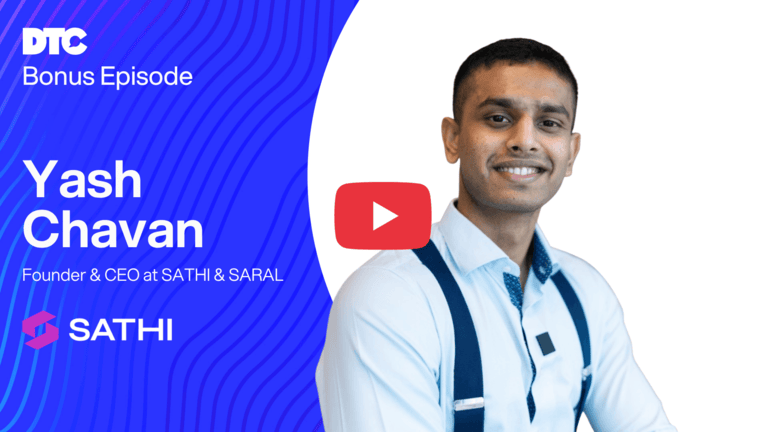
How DTC Brands Scale Affiliate Marketing Without Fraud or Bad Attribution
Affiliate marketing is getting a lot of attention right now and for good reason.
In this episode, Yash Chavan, Founder and CEO of SATHI & SARAL, breaks down why the channel looks so attractive on paper, where it falls apart in practice, and what brands can do to make it perform like a real growth engine.
👉 Claim your free trial and 20% across all pricing plans at mysathi.io with the code DTC!*
We cover:
Reach more high-intent shoppers. YouTube launches Commerce Media Suite which connects Demand Gen campaigns to a retailer’s first party data. Read more →
Side by side ads. Google confirms this format for livestreams is now available on mobile after launching on desktop last year. Read more →
📥 Got a B2B Biz?
Join dozens of B2B companies finding demand-gen success through our niche community of 150k brand leaders and founders this year. Talk to our team to learn more.
Don’t forget to rate the DTC Podcast on Apple (⭐️⭐️⭐️⭐️⭐️)
DTC Newsletter is written by Rebecca Knight and Frances Du. Edited by Eric Dyck.
Please note that items in this newsletter marked with * contain sponsored content.
.svg)


.svg)


.svg)


.svg)
.svg)
.svg)