SPONSORED BY:



Good morning,
Here’s what you’ll find in today’s DTC:
1️⃣ Why doing this is the key to growth for mature brands
2️⃣ Raise your June revenue with this Father’s Day campaign playbook
3️⃣ We analyze Artizia’s email program and how most brands are missing this one critical flow
You’re reading this newsletter along with new subscribers from: ShopVision, Romi Matcha, and Nespresso. 👋
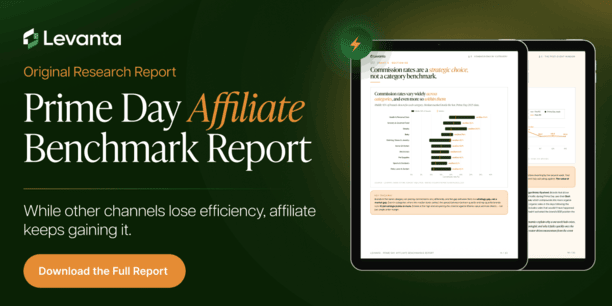
📊 This 390-Brand Prime Day Analysis Could Change Your 2026 Budget
Prime Day 2025 already happened. But the budget decisions it should inform are happening now.
Levanta tracked a same-store cohort of 390 brands across two Prime Days, and the numbers told two very different stories:
Two channels. One event. Moving in opposite directions.
📈 Brands that pulled ahead were running affiliate programs that compounded across the full event window:
👉 If you're making channel mix or budget decisions before Prime Day 2026, you're either using this report or you're guessing.
* sponsored
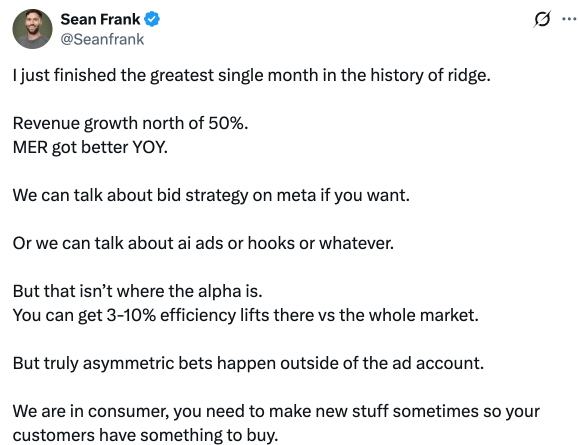
Sean Frank, CEO of Ridge, shares that optimizing your Meta bid strategy won’t radically scale a mature brand. But new products will.
He shares that Ridge just had their best month by investing in new products. 50% of revenue growth came from launching new stuff, not from media buying tweaks.
Product velocity and SKU expansion is the real unlock to drive explosive top-line growth.
What can you do? Map a product pipeline.
Identify logical SKU expansions or complementary products that naturally unlock fresh creative angles and drive repeat purchases from your existing customer base.

🧢 Father’s Day Campaign: Who You’re Talking To And When
Father's Day is just a few weeks away. That means the window to reach customers is right now.
But before your campaign goes live, make sure you’re updating your creative to target these key audiences and maximize revenue.
Targeting Three Key Audiences and When They Buy
Father's Day campaigns fail most often because brands treat all shoppers as one person. They aren't.
These are the groups you need to hone in on:
1️⃣ The Gifters: They are the customers who buy early (two weeks out from the holiday).
To get them interested, use explicit “Father’s Day” language in your creative. No subtle nods. Be direct and use large text.
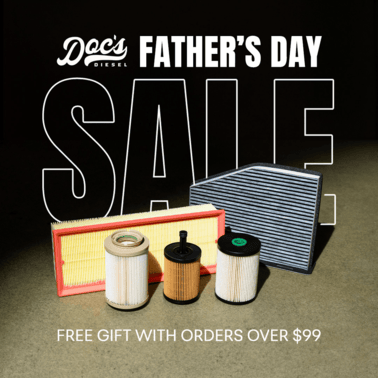
The majority of your audience doesn't register that the holiday is approaching until something external reminds them. Your ad is that reminder.
2️⃣ The Procrastinators: This group tends to purchase right before the shipping cutoff date.
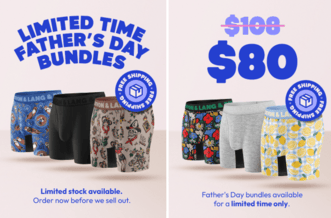
The harder it is to pick a gift, the less likely they are to convert. This is where bundles earn their keep.
3️⃣ The Self-Purchasers: As Father's Day weekend approaches, the audience shifts in the final days. Dads are purchasing gifts for themselves, so your creative and copy should reflect this change in behavior.
Language like "Treat yourself" or "You deserve this one" aligns directly with their motivation. Running gifting-focused creative at that stage is a misalignment between message and buyer.
Pilothouse shares tips for building a Father’s Day campaign that continues to perform over the next two weeks.
1 week out from Father’s Day
Now through one week out: Target Gifters and Early Buyers
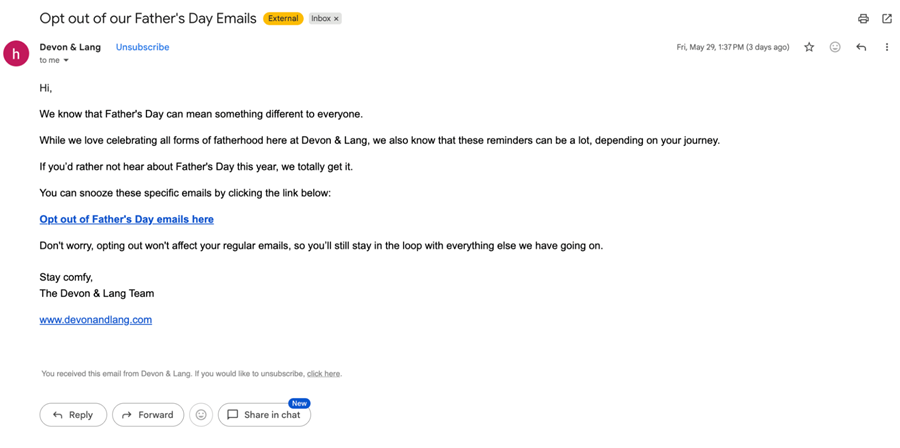
Father's Day is a sensitive occasion for some subscribers. Going with an empathetic approach gives customers the option to skip Father's Day messaging while staying on your main list. It protects the relationship and reduces unsubscribes.
The Devon & Lang example below does this nicely: a short, plain text email with a single link to opt out. Send this out a week before your campaign push.
Using holiday language is both a conversion lever and a media efficiency play.
A pre-configured bundle removes the decision-making burden and simultaneously increases average order value. The gifter doesn't have to think. They just have to click.
One week out through shipping cutoff: Target procrastinators and urgency buyers
Father’s Day weekend: Target self-purchasers
💡 Self-purchase framing removes friction for buyers who would otherwise feel odd buying themselves a gift during a holiday campaign. Give them direct permission.
Gifters are making decisions this week. Brands that show up now with clear messaging, pre-built bundles, and a plan to shift creative as the date approaches will outperform the ones that recycle their Mother’s Day playbook with a blue background and swapped headlines.
The Essential Flow Everyone Is Missing and Aritzia’s Inbox Feature
Most brands have the same retention strategy: Send a welcome email, then dump subscribers straight into campaigns.
In this episode, Jordan breaks down a lifecycle flow almost nobody builds: the Essentials Flow.
Using Aritzia as a real-world example, he shows why new product drops bring shoppers back, but core products are often what actually convert.
He walks through how to identify high-intent visitors, structure an Essentials Flow, and create automated revenue without endlessly adding more campaigns.
What you'll learn:
Google unveils AI search tracking. New Search Console reports help brands understand their site’s visibility inside Google's AI Overviews, AI Mode, and Discover. Read more →
Meta tests episodic Reels. The new format looks to bring back audiences repeatedly and build stronger viewing habits. Read more →
Reebok taps Belmont Cameli. The sneaker brand names the Off Campus star as a global ambassador in a multi-season deal. Read more →
Did you find this valuable? Support us by checking out our businesses:
Don’t forget to rate the DTC Podcast on Apple (⭐️⭐️⭐️⭐️⭐️)
DTC Newsletter is written by Rebecca Knight and Frances Du. Edited by Eric Dyck.
Please note that items in this newsletter marked with * contain sponsored content.
.svg)


.svg)


.svg)


.svg)
.svg)
.svg)