Good morning,
Here’s what you’ll find in today’s DTC:
1️⃣ How to get customers to pay for shipping without killing conversions
2️⃣ Tips on using AI to scale creative volume
3️⃣ News and more
You’re reading this newsletter along with new subscribers from: Clementine’s, Equator Coffees, and Motto Mortgage. 👋

Before you jump into today’s content, first select a response in this quick poll:
What do you use DTC for?
1️⃣ A quick and easy read to stay informed and up to date - CLICK TO VOTE
2️⃣ For deep dives and to get tactics you can use - CLICK TO VOTE
💰 How to Charge for Shipping Without Killing Your Conversion Rate and Margins
A beverage brand doing $2M in annual revenue had a problem: customers were abandoning checkout the moment they hit the shipping screen.
The knee-jerk reaction for many founders is simple: offer free shipping everywhere. But that’s rarely sustainable. And for this brand, the margins didn’t support it.
Instead of absorbing the cost, they changed how shipping was presented and introduced a strategic free shipping threshold.
The result? Average order value increased by $30 without discounting a single product.
The key insight: customers don’t hate paying for shipping. They hate when it feels unfair or surprising.
Here are four ways to prevent shipping costs from hurting conversions.
1️⃣ Increase the Perceived Value of the Product
Customers judge shipping fees relative to what they’re buying.
If a product feels like a commodity, even a small shipping charge can feel unreasonable.
But when a product feels premium, unique, or hard to find, customers are far more comfortable covering delivery costs.
This is why low-priced, generic products struggle most with shipping fees. Discounting the product to “offset” shipping only makes the margin math worse.
The real lever is perceived value, not shipping discounts.
2️⃣ Eliminate Surprises
Few things kill ecommerce conversions faster than a surprise fee at checkout.
Customers who discover unexpected shipping costs after entering their details often abandon the purchase entirely. Hidden fees and vague delivery timelines create distrust.
Instead, prioritize predictability:
When customers know exactly what to expect, they’re far more willing to pay.
3️⃣ Frame Shipping as a Service
The language around shipping matters more than most brands realize.
Compare these two checkout labels:
Before:
“Shipping: $8”
After:
“Tracked & insured — dispatched within 24 hours”
The second reframes shipping as part of the brand experience rather than a simple fee. It communicates speed, security, and care.
That framing should appear everywhere: product pages, carts, checkout, and post-purchase messaging.
Even better, emphasize free shipping whenever possible. When tested against a discount of equal value, free shipping consistently wins because customers perceive it as gaining something rather than avoiding a penalty.
4️⃣ Set the Right Free Shipping Threshold
The highest-leverage tactic is a free shipping threshold, but most brands set it incorrectly.
Instead of guessing, use a simple formula:
Free Shipping Threshold = (Average Shipping Cost ÷ Gross Profit Margin) + Average Order Value
This gives you a roughly margin-neutral threshold, meaning orders above it become incremental profit.
Once calculated, set the threshold slightly higher and reinforce it with a cart message like:
“You’re $X away from free shipping.”
This simple nudge encourages customers to add another item to their cart.
For the beverage brand, implementing this approach increased AOV by $30 per order.
The takeaway?
Shipping isn’t just an operational cost. It’s a conversion lever.
When framed correctly and paired with a strategic threshold, it can increase order size, improve margins, and reduce checkout friction without relying on discounts.
Instead of asking whether shipping should be free, the better question is: How can shipping encourage customers to buy more?
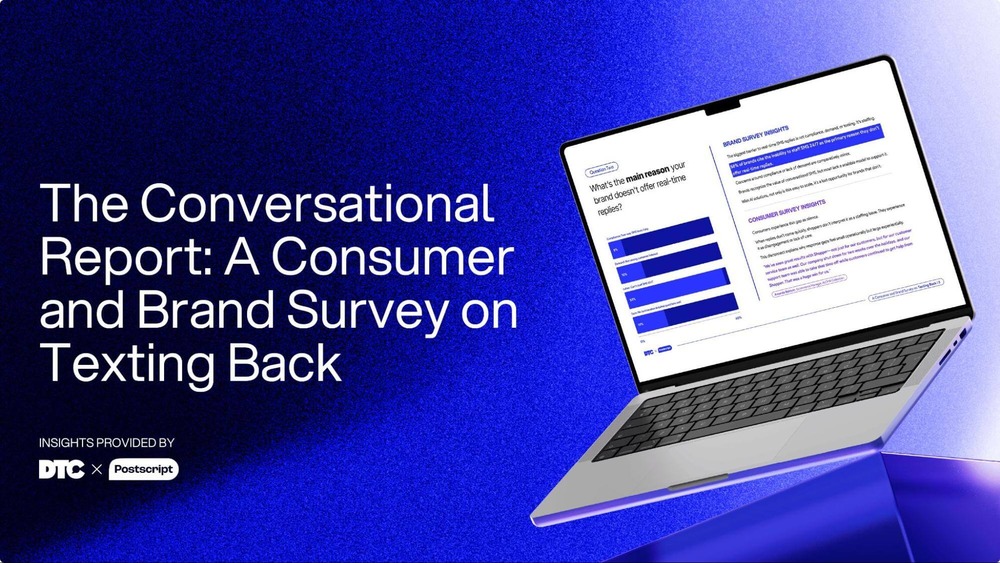
🚨 Consumers Think SMS is a Conversation. Most Brands Still Treat It Like a Broadcast.
That mismatch shows up fast when customers reply with purchase questions and wait… and wait.
New data from 840+ operators and 1,000 consumers reveals where response expectations are rising and where brands are still behind.
If SMS is part of your retention stack, this is a gap worth measuring.
The report is free.
* sponsored
Using AI To Scale Creative Volume Without Looking ‘AI’
Braydon from Pilothouse shares how he uses AI to create more winning ads without torching brand trust or wasting time prompting.
In this episode, we dive into:
🛍️ Build, grow, and elevate your ecommerce business with one of the most trusted names in retail. Start selling on Walmart Marketplace. *
🔍 Meta combats scam ads. The platform takes legal action against groups responsible for celeb-baiting ads. Read more →
🌐 WhatsApp is now an ad platform. Status ads and promoted channels are now live globally. Read more →
🤖 Amazon’s AI investment. The retail giant agrees to invest $50B into OpenAI, now valued at $840B. Read more →
* sponsored
📥 Got a B2B Biz?
Join dozens of B2B companies finding demand-gen success through our niche community of 150k brand leaders and founders this year. Talk to our team to learn more.
DTC Newsletter is written by Rebecca Knight and Frances Du. Edited by Eric Dyck.
Please note that items in this newsletter marked with * contain sponsored content.
.svg)


.svg)


.svg)


.svg)
.svg)
.svg)