SPONSORED BY:


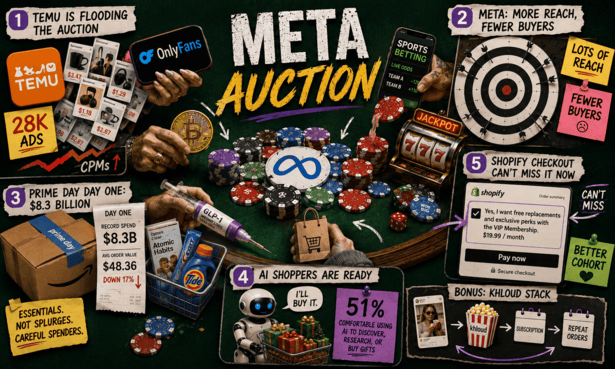
Good morning to the wild world of DTC. It’s not just you… Meta’s systems buckling, CPMs are spiking, but customers are showing up in force for Prime Day, and brands like Khloud are khrushing (today’s deep dive), so keep your chin up.

📉 Meta got much better at finding people. Much worse at finding buyers.
@codyplof is seeing it, hearing it from everyone, and Oddity's last earnings back it up. Reach is way up. New visitor volume is way up.
The quality of what's coming through is way down. Not cold-audience-needs-warming down. Just worse.
His take in this tweet (where he shared @BryanBumgardner's tweet) is that Meta pushed too hard into expansion at the expense of intent. More Reels delivery, more reach, more new faces, fewer people who actually buy. Bad macro isn't helping. Beauty coming off a high isn't helping. But the expansion push is the primary suspect.
📈 Your CPMs spiked this week. Temu's part of it.
Herrmann got seven Temu partnership ads an hour. Their Meta ads library had over 28,000 ads running (I checked).
When Temu spends, they spend at a scale that drags CPMs up across home, beauty, and fashion. Remember when Etsy's CEO was blaming them for platform-wide ad inflation back in 2023?
This year they can't sit still. They cut US spending 51% in March, then ramped back in April. It’s suspected that that stop-start has been swinging CPMs a ton week over week. It's also Prime Day so you can't pin all of it on them.
If you're in home, beauty, or fashion, you're in the blast zone.
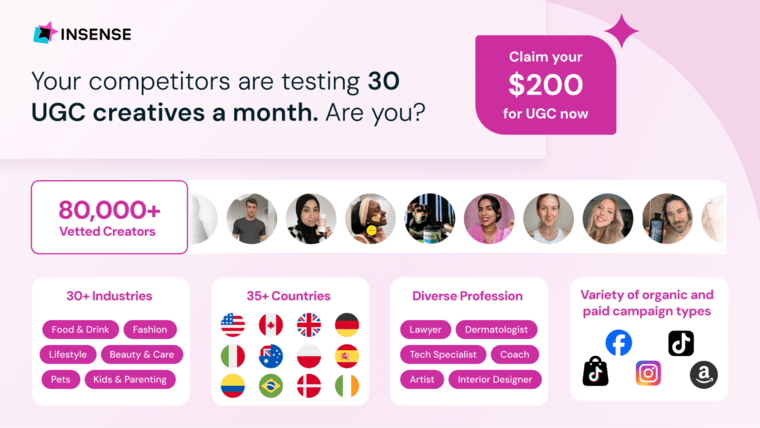
Skip the frustration. There's a simple way to grow your brand with responsive creators and source high-quality UGC content for organic & paid social, within 14 days.
Join major DTC marketing teams using Insense, like:
Book a free strategy call by July 10 and get $200 for your first UGC campaign.
* sponsored
Prime Day day one: $8.3B record, slowest growth in years
Day one hit $8.3B in US online spend, a fresh record and ahead of Adobe's forecast. But it grew just 5.3% over last year's $7.9B, the softest day-one jump in years.
Where this Prime Day sits against the last four:
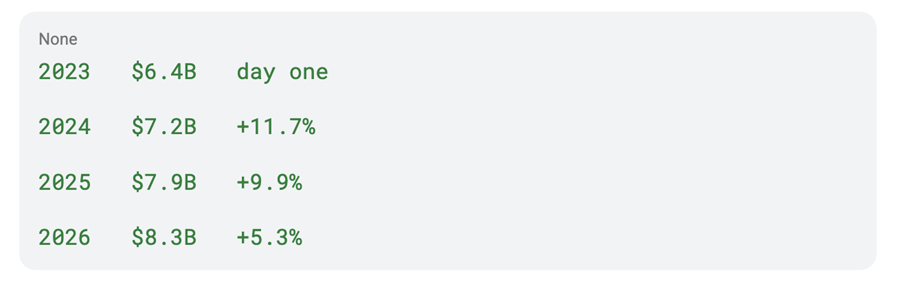
2023 ran $6.4B. 2024 jumped 11.7% to $7.2B. 2025 added 9.9% to reach $7.9B. This year, 5.3%. Records keep falling. The pace behind them keeps cooling.
Under the hood, smaller baskets. Numerator pegs average order size at $48.36, down about 17% from $58.37 a year ago, with household spend down 16% to roughly $89. More people buying, each one spending less. They loaded up on essentials and books, the stuff shoppers pull forward to beat tariff increases, and skipped the big electronics and fashion splurges.
Outlook: Adobe still forecasts $26.3B across the four days, up 9%, which leans on the back half to carry the event.
Same signal we've flagged all month. People are spending, and they're spending carefully. Go read your own numbers this week with that frame. A rising top line can still hide a shrinking basket.
💳 Shopify made your subscription disclosure impossible to miss. Here's the silver lining.
@binghott caught it: the subscription disclosure on Shopify checkout is now bolded and moved above the Pay Now button. Some operators are seeing conversion soften. Prime Day noise makes it impossible to isolate right now.
@chadkettner's take is important: the people opting out because they actually read the disclosure are probably the ones who would've charged back or churned angry on renewal. Lower opt-in rate, cleaner cohort. Watch retention and dispute rate over the next few weeks before you panic about take rate.
Shopify Plus: you can edit the disclosure wording FYI.
🛍️ Half your Q4 shoppers are fine letting AI do the buying
Salsify surveyed holiday shoppers and the demand picture is better than the headlines suggest. 23% plan to spend more this Q4, 18% less. 40% say global instability doesn't impact their gift budgets at all.
51% say they're comfortable using AI to discover, research, or outright buy gifts. That's this holiday season, not some future trend.
If an AI agent can't parse your catalog, you're not in the consideration pile. Product feed quality and structured data just became as important as your ad creative.
Feed quality used to be an ops problem. Now it's a revenue problem.
🎰 You're bidding for ad space against OnlyFans. And losing.
@SeanFrank said in a way only he could: "We are trying to sell spinach and oatmeal in an ad auction full of ALL YOU CAN EAT AND DRINK AND SMOKE BUFFETS, FOR FREE."
OnlyFans. Crypto. Gambling apps. GLP-1 lead gen. Zero COGS, addiction-driven LTV, infinite unit economics. They're all in the same Meta auction as your ecom brand and they will always be able to outbid you on pure economics. Really makes you start to understand why your MER keeps sliding.
It's a structural problem that's been compounding since 2020. Brands that can't operate at sub-2x MER have either stopped growing or gone out of business. That's the game now.
Khloé Kardashian's high protein popcorn brand Khloud is growing fast.
The snack brand has done a great job of attracting new customers with its colorful and whimsical packaging, plus driving repeat consumption on its site.
Last month, the brand pulled in roughly 500K on Shopify.
Here are three Shopify apps Khloud is using to own each stage of the customer journey: awareness, subscription revenue, and returns.
1. Instafeed
For a snack brand, social proof is the top of the funnel. Buyers want to see the product in real hands before they add to cart.
Khloud uses Instafeed to pull its Instagram posts, Reels, and user-generated content directly onto the homepage in a section called “See How We’re Snacking”.
Posts auto-sync, products get tagged automatically, and customers can add to cart straight from a piece of content.
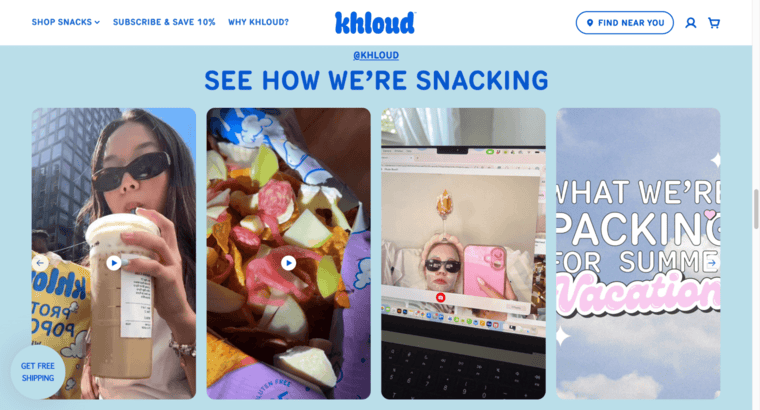
Embedding live social content on the store converts passive scrolling into on-site purchases without sending traffic elsewhere.
2. Awtomic Subscriptions
For a highly consumable product, the real margin is in reorders.
A one-time popcorn buyer isn’t worth as much as a subscriber.
Awtomic runs Khloud's subscription program: recurring delivery schedules, build-a-box bundling, add-ons and upsells, and a passwordless portal where customers manage their own plans. It also handles failed-payment recovery and churn mitigation on the backend.
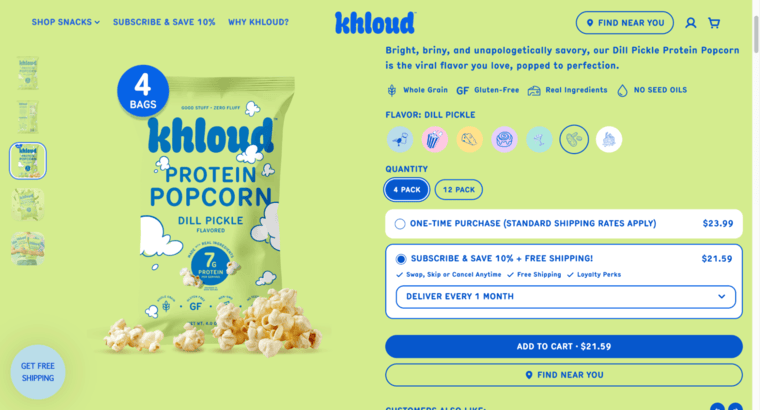
Subscriptions convert a snack purchase into predictable monthly revenue, and the self-service portal plus automated churn tools mean that revenue holds without manual account management eating into the team's time.
3. Redo
Post-purchase friction quietly erodes loyalty. Returns and exchanges handled badly cost both margin and repeat customers.
Redo gives Khloud a self-service returns and exchanges portal with automated approvals, store credit, and an exchange-first flow that steers customers toward keeping their spend with the brand. AI handles routine support inside a unified inbox.

In this episode, Jordan Gordon breaks down Pilothouse’s latest 2026 segmentation research, including the tests they ran, what failed, what worked, and why tighter mailability standards are becoming essential for sustainable email revenue.
▶️ Watch here | 🎧 Listen on Spotify
📸 Still paying for product shoots? Turn any product image into listing photos, mockups, and ad creatives in minutes. No studio. No agency bill. Try Kittl here. *
📈 YouTube just made it easier to find trend data. Its new Google Ads Insights Finder gives advertisers a more granular read on what’s topical per category on the video platform. Check out the tool here.
* sponsored
Did you find this valuable? Support us by checking out our businesses:
Please note that items in this newsletter marked with * contain sponsored content.
.svg)


.svg)


.svg)


.svg)
.svg)
.svg)